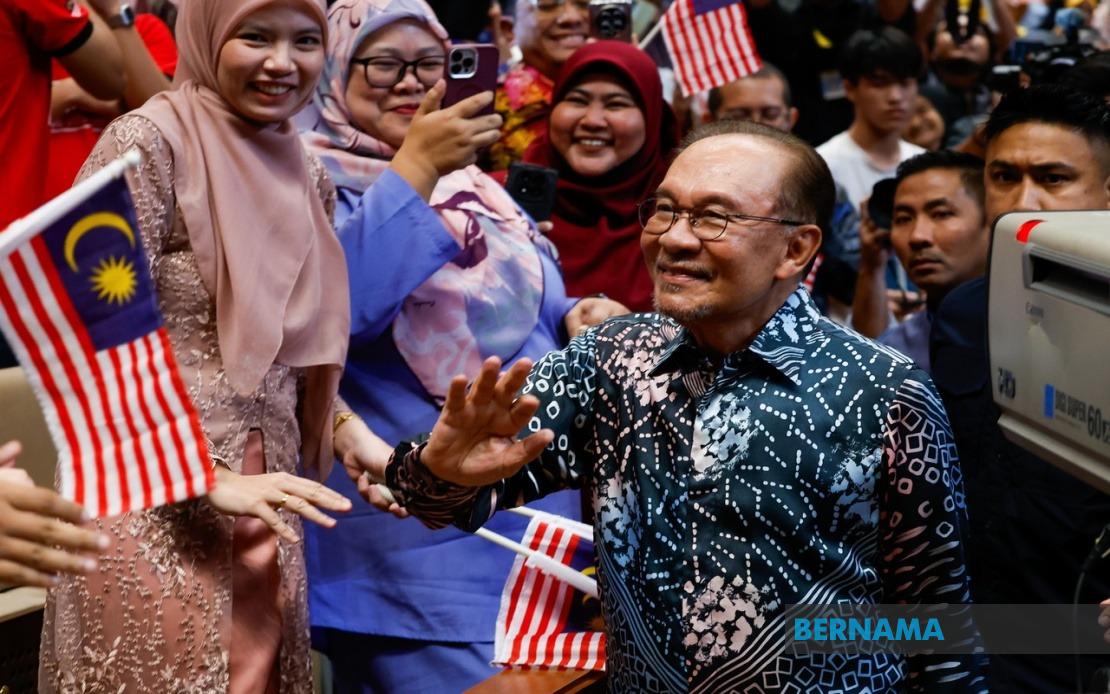
Prime Minister Datuk Seri Anwar Ibrahim has stressed that the spirit of independence must be cultivated within every Malaysian, transcending beyond the formal structures and institutions that govern the nation. Speaking at the Putrajaya International Convention Centre during the National Day address on August 30, Anwar articulated a vision where independence becomes a lived value embedded in the consciousness and character of the people, rather than merely existing as a political or administrative framework.
The Prime Minister's remarks reflected a deeper philosophical understanding of what national independence means in the contemporary Malaysian context. He distinguished between independence as a historical event—the separation from colonial rule—and independence as a continuous spiritual and psychological orientation that each generation must actively maintain and transmit to the next. This distinction carries particular significance for Malaysia, where nearly seven decades have passed since Merdeka, and questions about national identity and cohesion periodically resurface in public discourse.
Anwar characterised the internalization of the independence spirit as the greatest challenge Malaysia currently faces in its developmental trajectory. He argued that merely rebuilding institutions and systems without simultaneously rebuilding the inner resolve and principled conviction of citizens would be insufficient for the nation's progress. This suggests a concern that material or institutional development, while necessary, cannot substitute for the moral and intellectual foundations upon which genuine independence rests.
Central to the Prime Minister's vision is the principle of inclusive unity that goes beyond superficial coexistence. He specifically invoked the philosophical legacy of Malaysia's founding generation, which he characterised as deliberately transcending narrow divisions based on ethnicity, geography, or administrative boundaries. Instead, Anwar advocated for a framework where unity is generational—each cohort of Malaysians bearing responsibility for perpetuating and renewing the social contract that binds the nation together.
The reference to Malays and Bumiputeras forming the core of this united framework reflects the constitutional and historical foundation of Malaysia's political settlement, while his explicit call for all communities to participate actively signals an inclusive interpretation of this arrangement. This nuanced positioning attempts to balance constitutional recognition of Bumiputera status with the practical necessity of genuine participation from all demographic groups in the project of nation-building.
Anwar's emphasis on defending rights and upholding justice as pillars of the independence spirit addresses contemporary concerns about governance, accountability, and the rule of law in Malaysia. By connecting these principles to the historical independence struggle, the Prime Minister frames them not as modern liberal additions but as essential continuities from the nationalist project itself. This rhetorical move lends weight to arguments for institutional reforms and transparent governance as acts of fulfilling, rather than departing from, the independence legacy.
The speech was delivered before a gathering that included Deputy Prime Minister Datuk Seri Dr Ahmad Zahid Hamidi, Communications Minister Datuk Seri Fahmi Fadzil, and Chief Secretary to the Government Tan Sri Shamsul Azri Abu Bakar, indicating the formal and governmental nature of the occasion and Anwar's intention to establish a clear policy orientation around these themes.
For Malaysian observers, this address reflects broader patterns in how contemporary leadership articulates national identity in an era when Malaysia faces multiple pressures—from regional geopolitical competition to domestic economic challenges to generational shifts in political engagement. By grounding his vision in the independence spirit, Anwar situates current governance challenges within a historical continuum rather than presenting them as novel crises, potentially fostering a sense of collective continuity and purpose.
The emphasis on an "independent spirit" rather than mere institutional independence also carries implications for how Malaysia positions itself internationally. A population animated by genuine commitment to independence principles, in this framing, would be more resistant to external pressures and more capable of making autonomous decisions about the nation's strategic direction. This becomes particularly relevant in Southeast Asia's multipolar environment, where questions of sovereignty and strategic autonomy occupy central importance.
Anwar's conception of unity as transcending race, district, and region while specifically recognizing Bumiputera and Malay primacy represents an attempt to resolve one of Malaysia's enduring political tensions: how to maintain the constitutional bargain that underpins the federation while genuinely including all citizens as equal stakeholders in the national project. Whether this vision can be operationalized through concrete policies remains an open question, but the rhetorical commitment signals a particular direction in how the government frames national cohesion.
The framing of independence as something requiring continuous renewal and internalization in each generation also subtly shifts responsibility for national unity from elites and institutions to individual citizens and communities. This populist dimension suggests that the success of Malaysia's development depends not primarily on what government does, but on what each Malaysian chooses to embody and practice in their daily civic engagement.

