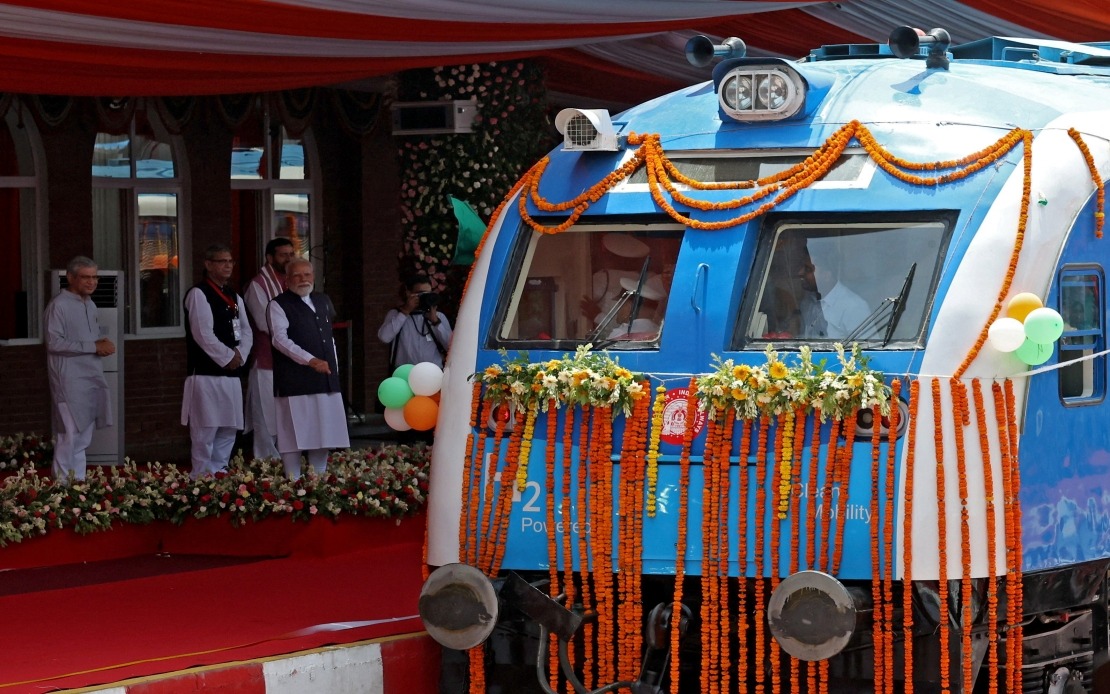
India has taken a significant step forward in sustainable transportation with the inauguration of its first hydrogen-powered train by Prime Minister Narendra Modi on Friday. The milestone service will operate between Jind and Sonipat in Haryana state, covering a distance of 89 kilometres. This achievement represents a watershed moment for the country's railway sector, which has long depended heavily on diesel locomotives that contribute substantially to both air pollution and carbon emissions across major transport corridors.
What distinguishes this development is that the technology has been indigenously designed and manufactured within India rather than imported from abroad. This accomplishment reflects growing capacity in the nation's research and development ecosystem, particularly in advanced energy systems. The hydrogen fuel cell train joins an elite group of nations already operating similar technology on commercial routes—specifically China, Germany, Japan and the United States—indicating that India can now compete at the frontiers of clean rail innovation.
The train's propulsion system is built around a 1,200-kilowatt Proton Exchange Membrane Fuel Cell, or PEMFC, which represents the heart of this technological achievement. The mechanism operates through an electrochemical reaction between hydrogen and oxygen gas, generating electrical power that drives the train's motors. This process is fundamentally different from conventional combustion engines, which ignite fossil fuels and release harmful pollutants including nitrogen oxides, particulate matter and greenhouse gases. Instead, the only outputs from hydrogen fuel cell technology are water vapour and waste heat—making it arguably the cleanest form of rail propulsion technology available to transport planners today.
The 10-coach train has been certified to operate safely at a maximum speed of 75 kilometres per hour for regular service, though its engineering design permits operation at speeds up to 110 kilometres per hour. This performance specification positions it as a viable replacement for existing diesel-hauled commuter and regional services on comparable routes throughout the country. The operational parameters suggest that hydrogen trains could eventually serve medium-distance passenger corridors that currently rely on diesel traction, which would yield substantial environmental benefits across India's vast railway network.
For Malaysia and Southeast Asia more broadly, India's hydrogen train initiative carries important implications. The region faces mounting pressure to decarbonise its transport sector amid accelerating climate commitments and growing urban air quality concerns. Several ASEAN nations operate significant railway networks that remain dependent on diesel locomotives—particularly Malaysia's KTM Berhad and other regional operators. India's successful deployment of indigenous hydrogen rail technology offers a viable pathway for other developing economies to transition toward zero-emission rail systems without requiring dependence on expensive imported technology or licensing arrangements.
The environmental case for hydrogen trains extends beyond direct operational emissions. India's railway network transports over a billion passengers annually and moves enormous quantities of freight, making it a critical infrastructure system for national economic activity. Transitioning even portions of this network to hydrogen propulsion would reduce transportation-related air pollution in heavily trafficked corridors, potentially yielding substantial public health benefits through improved air quality in cities and towns along rail routes. The cumulative environmental impact could be transformative given the scale of Indian rail operations.
The hydrogen supply chain presents both opportunity and challenge for scaling this technology across India's expansive railway system. Currently, hydrogen production in India relies primarily on steam methane reforming of natural gas, which generates carbon dioxide as a byproduct. However, the government has set ambitious targets for green hydrogen production using renewable electricity through water electrolysis, which would create genuinely zero-carbon fuel. Success in developing domestic green hydrogen capacity would further enhance the environmental credentials of hydrogen-powered trains and create new industrial opportunities.
From a technological perspective, this achievement demonstrates that Indian engineers and manufacturers can develop and implement sophisticated fuel cell systems comparable to those deployed in advanced economies. This capability has implications extending beyond railways—hydrogen fuel cell technology is equally applicable to heavy-duty road vehicles, industrial equipment, and stationary power generation. The expertise developed through this train project creates foundation for broader hydrogen economy development within India.
The Jind-Sonipat route serves as an appropriate testbed for this emerging technology. The corridor experiences significant daily passenger traffic while operating within a relatively compact geographic area, permitting comprehensive monitoring and evaluation of operational performance. Data collected during the initial operational phase will inform decisions regarding deployment on other routes and potential scaling across different railway regions. This measured approach to technology adoption reduces risks while building institutional knowledge within Indian Railways about hydrogen train operations and maintenance requirements.
International partnerships have likely played a supporting role in this achievement, though the emphasis on indigenous development distinguishes India's approach from simpler technology transfer arrangements. Building local expertise in advanced rail technologies reduces long-term dependence on foreign suppliers and creates opportunities for Indian manufacturers to eventually export hydrogen train systems to other developing nations. This competitive advantage could yield significant commercial benefits for India's rail equipment manufacturing sector in coming years.
The broader context encompasses India's commitment under climate agreements and domestic climate action policies. As one of the world's largest greenhouse gas emitters in absolute terms, India faces mounting pressure to reduce transportation sector emissions while accommodating growing mobility demand from rapidly urbanising population centres. Hydrogen trains represent one of several technologies—alongside electrification, battery-electric vehicles and modal shift—that collectively contribute toward India's climate mitigation objectives. The strategic emphasis on hydrogen technology reflects recognition that no single solution can decarbonise transportation across such a geographically vast and economically diverse nation.
Looking ahead, the success of this pilot service will significantly influence railway procurement decisions across India and potentially throughout South Asia. If the Jind-Sonipat operation demonstrates reliability, cost-effectiveness and passenger acceptance comparable to diesel alternatives, Indian Railways could prioritise hydrogen train deployment on additional regional and commuter routes. The cumulative impact of widespread adoption could position India as a global leader in hydrogen rail technology while simultaneously achieving substantial environmental benefits. For neighbouring countries including Malaysia, this trajectory offers both technological inspiration and practical demonstration of how clean rail technology can be effectively implemented in developing economy contexts.

