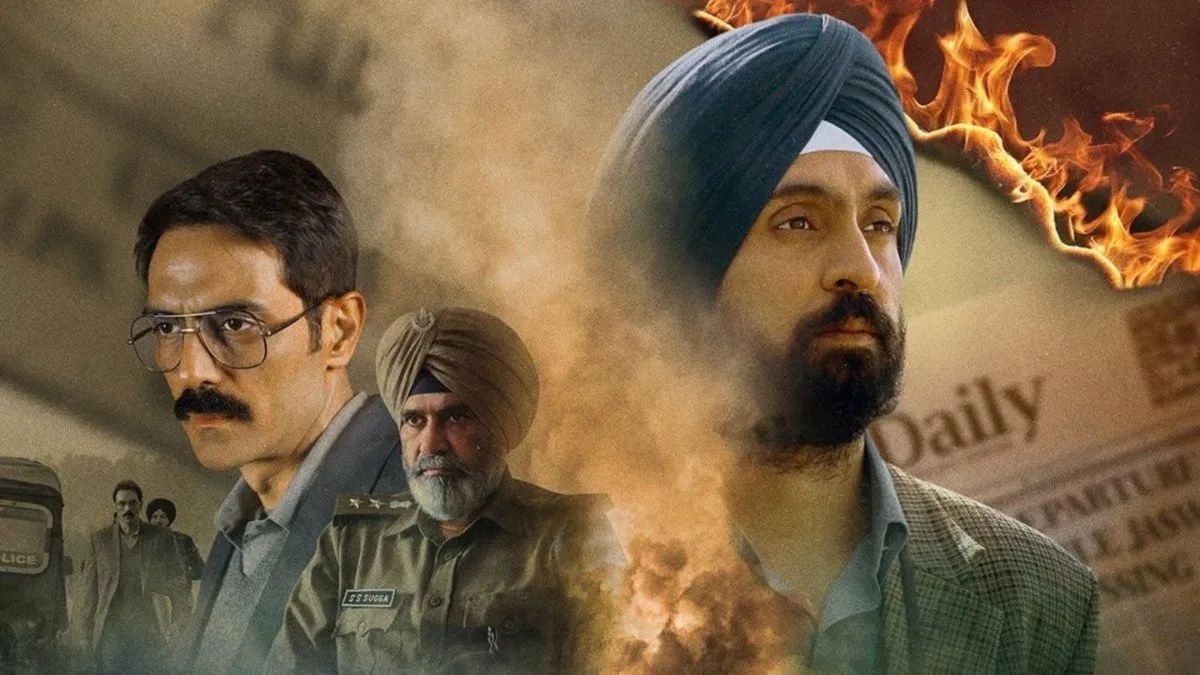
Filmmaker Honey Trehan spent four years negotiating with Indian authorities over "Satluj," a biographical film centred on Jaswant Singh Khalra, a Sikh human-rights advocate who documented extrajudicial killings and state brutality during Punjab's turbulent counterinsurgency period in the 1980s and 1990s. The censorship board issued 127 specific alteration demands before Trehan abandoned the theatrical route and uploaded the film to ZEE5 in early 2025. Within forty-eight hours, the streaming platform removed it without detailed explanation, with reporting attributed to unnamed officials suggesting government pressure over "security concerns."
Trehan characterises the sequence of events as emblematic of what he views as systematic governmental interference in creative expression. "This is not the sign of a healthy nation," he stated, arguing that India's Ministry of Information and Broadcasting weaponises content regulation to control narratives rather than address legitimate public policy concerns. His assessment reflects anxiety among creative professionals that film regulation has transformed from a technical certification mechanism into a political instrument.
The removal of "Satluj" represents merely the latest instance in an escalating pattern. Parliamentary data reveal that 3,033 films required modifications during fiscal 2025—a figure that has more than doubled compared to four years prior. Yet these statistics lack granularity: the government provides no breakdown of which scenes faced cuts, which thematic elements triggered intervention, or what justifications authorities offered. The Central Board of Film Certification, India's primary regulatory body, has published no comprehensive annual report since 2017, creating an opaque administrative environment where standards appear to shift without public accountability.
India's regulatory architecture differs fundamentally from Western democracies. Unlike age-based classification systems prevalent in North America and Europe, India's board possesses authority to mandate editorial changes before public exhibition. This distinction grants government-appointed officials direct influence over which narratives reach audiences, rather than merely signalling age-appropriateness. The structural imbalance places filmmakers in a subordinate position: they must either accept mandated modifications or forfeit theatrical distribution entirely.
Critics observe that content restrictions have sharpened considerably since Narendra Modi's 2014 ascendancy to national leadership. Sadanand Dhume, a senior fellow at the Council on Foreign Relations specialising in South Asian affairs, notes that "the politics of the country has taken a sharp turn since the advent of Modi in 2014, and Bollywood is facing the downstream effects." The observation suggests that evolving political dynamics have permeated institutional decision-making across cultural sectors.
The "Satluj" controversy carries particular sensitivity given India's contemporary geopolitical anxieties. Jaswant Singh Khalra's documentary work exposed police massacres during Punjab's violent separatist period, an episode the government successfully suppressed militarily but which remains politically fraught. The Modi administration's Bharatiya Janata Party maintains profound wariness toward any messaging touching separatism or independence movements. This sensitivity intensified following Canada's 2023 allegations that Indian government agents participated in assassinating Sikh activist Hardeep Singh Nijjar in Vancouver—an accusation India rejected but which amplified international scrutiny of Indian state conduct toward Sikh communities.
Recent cases demonstrate systematic pattern rather than isolated incident. In 2025, censors demanded twenty-four post-release alterations to "L2: Empuraan," a Malayalam-language commercial success, after Hindu nationalist organisations protested its portrayal of 2002 religious communal violence. Filmmakers behind "Phule," a biographical project examining nineteenth-century caste-reform pioneers, received instructions to excise caste-related terminology. "Homebound," India's Academy Awards entry for 2026, secured clearance only after accepting eleven cuts targeting religious and caste references. Conversely, films celebrating patriotic themes and national security operations encounter minimal resistance: "Dhurandhar," a 2025 spy thriller depicting Indian intelligence activities against Pakistan, received routine certification and became the highest-grossing Hindi-language film historically.
Filmmaker Onir, who operates professionally under a single name, articulates the cumulative frustration. "I feel that it's one of the worst phases of Indian cinema because the variety of cinema, the kind of narratives that one wants to see, all kinds of stories - that is disappearing slowly," he observed. His 2023 film "Pine Cone" illustrates the arbitrary nature of scrutiny: censors flagged the word "gay" appearing in a scene involving a nine-year-old character, requiring its removal before approval. Such interventions target not explicit content but conceptual vocabulary itself, effectively restricting representation of entire categories of human experience.
Despite administrative barriers, "Satluj" has found unexpected pathways to audiences. Trehan organised a private international screening at the 2025 Cannes Film Festival, bypassing domestic distribution channels. The film had been selected for Toronto's International Film Festival in 2023 but was withdrawn before its scheduled premiere due to ongoing legal disputes with Indian authorities. Trehan described the abandonment as devastating: "I was very heartbroken. I was having five gala premieres at Toronto."
Grassroots distribution now sustains the film's circulation. Throughout Punjab, viewers who downloaded the content before its streaming removal are organising screenings in Sikh temples, community centres, and village squares. Trehan reports that these gatherings transcend the film's biographical subject matter, attracting religiously and economically diverse participants. "The film is getting screened - Hindu, Sikh, every caste, rich, poor, all sitting together," he reflected. The unintended consequence of government suppression has been the film's transformation into a communal event that paradoxically strengthens its social resonance. "It became a celebration," Trehan concluded. "What this film did, it brought the entire Punjab together."
For Malaysian and Southeast Asian observers, the Indian experience raises questions about regulatory overreach in democracies navigating sensitive historical and communal terrain. India remains the world's largest film-producing nation by volume, and its regulatory decisions shape global entertainment industries. The apparent tightening of content controls suggests that major democracies continue grappling with tensions between public order concerns and artistic freedom—tensions that similarly preoccupy regional governments managing diverse, multireligious societies.

