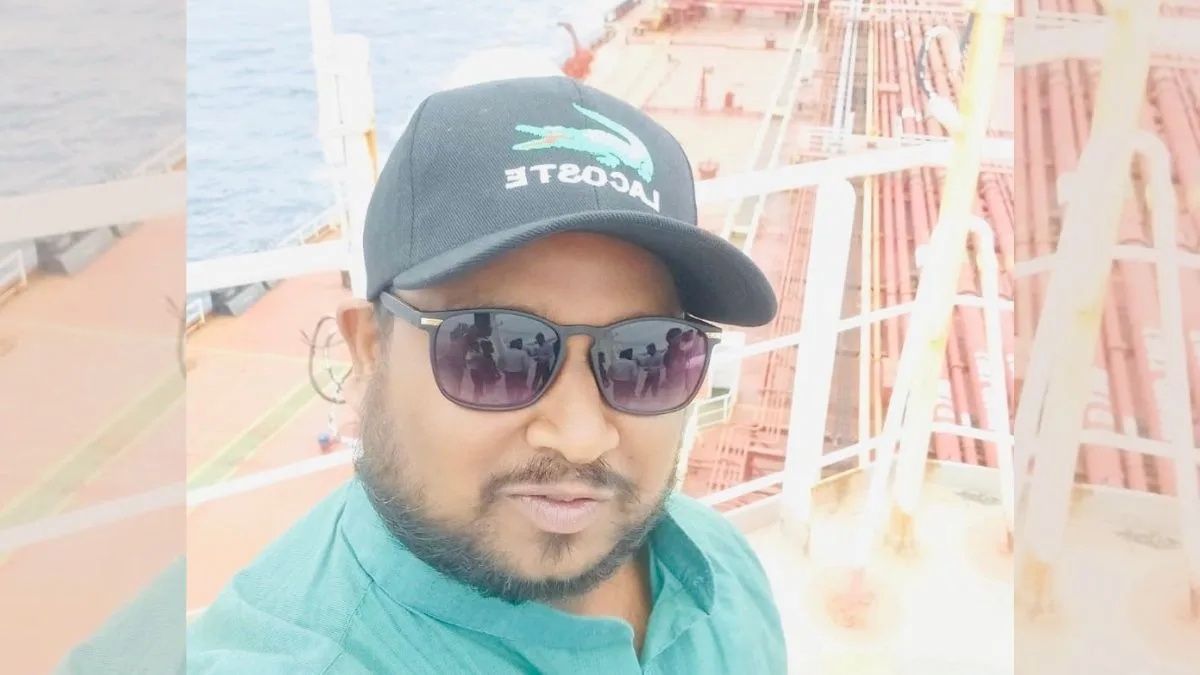
An Indian seafarer's mysterious death in Venezuela has ignited a diplomatic and humanitarian crisis, with his family and maritime unions now demanding government intervention after discovering his repatriated body had been stripped of every major internal organ. Rakesh Chauhan, a 33-year-old from Deoria district in Uttar Pradesh, travelled to work aboard a merchant vessel in November 2025, but his story took a dark turn when the shipping company first reported a fall onboard and critical injuries, then announced his death within hours—all with minimal transparency about what had actually happened.
The sequence of events that followed raises troubling questions about accountability and oversight in international maritime operations. According to his family's account, company officials initially claimed Chauhan had sustained injuries from falling aboard the vessel and was receiving treatment. The very next morning, they were told his survival chances had plummeted to just five percent. By afternoon the same day, he was declared dead, with the company attributing his demise to injuries from the fall. Yet remarkably, no detailed medical records, autopsy findings, or official Venezuelan documentation accompanied this swift conclusion about a crew member's death.
The family's grief deepened when the body's return to India was inexplicably delayed. Although the shipping company promised Chauhan's remains would arrive within seven days of his death in early May 2025, his body did not reach India until June 4—a gap of nearly thirty days. This prolonged absence, combined with the lack of transparent communication, set alarm bells ringing among the family and union representatives who feared something fundamental was being concealed.
When doctors in Deoria initially examined the body, they immediately recognized signs that an autopsy had already been performed in Venezuela. Fresh examination ordered by the District Magistrate would reveal a grotesque catalogue of missing organs. The Indian post-mortem report documented extensive surgical incisions: one running from the neck down to the pubic symphysis, and another stretching from the left ear to the right ear across the back of the skull. More troubling still was the inventory of what was absent—the brain, heart, both lungs, liver, kidneys, spleen, pancreas, stomach, intestines, thyroid, hyoid bone, larynx, trachea, and major blood vessels had all been removed. Crucially, doctors recorded that the cause of death could not possibly be determined because the very organs required for such analysis had vanished.
The Federation of Seafarers' Unions of India responded with alarm and demands for accountability. In statements posted publicly, the FSUI emphasized that not a single vital organ remained in the body, and that the case represented an unacceptable breach of protocol in the treatment of deceased maritime workers. The organization called the situation deeply disturbing, noting that seafarers seemed increasingly to be treated as expendable, their bodies vulnerable to irregular handling once international borders were crossed. The federation demanded multiple interventions: a complete investigation by Venezuelan authorities, immediate diplomatic pressure from the Indian Embassy in Venezuela, release of the complete Venezuelan autopsy report, and compensation for the family.
Beyond the missing organs themselves, the handling of administrative details has raised additional red flags that suggest possible intentional obfuscation. The receipt accompanying Chauhan's mortal remains bore a name—Anjana Chauraisya—that the federation says does not match the intended recipient, Ranjana Chaurasiya, identified as signing on behalf of Chauhan's wife. The federation also uncovered a discrepancy between the vessel listed in Chauhan's employment contract and the actual vessel on which he was deployed, raising questions about whether proper documentation protocols were followed or deliberately circumvented.
These irregularities have prompted the FSUI to raise alarming questions about whether organs were removed without family consent or knowledge, and whether the body's extended time in deep freeze—from May 7 to June 5—was intended to obscure evidence. The organization has explicitly raised concerns about possible organ trafficking, a criminal activity that preys on vulnerable migrant workers far from home and governmental oversight. Without the organs needed for forensic examination, determining whether Chauhan died from a fall as claimed or from some other cause has become impossible, effectively erasing the possibility of justice or truth.
For Malaysia and the broader Southeast Asian region, this case carries immediate relevance. Thousands of workers from across Southeast Asia and South Asia are employed in maritime industries, often working on vessels that cross multiple jurisdictions with minimal oversight of worker safety and death protocols. Malaysian seafarers, particularly those employed aboard merchant vessels operating in Latin American waters or other distant regions, face similar vulnerabilities when accidents or deaths occur far from home. The Chauhan case illustrates how geographical distance, language barriers, and weak coordination between nations can enable serious irregularities in handling worker deaths.
The implications extend beyond individual tragedy to broader concerns about worker protection in maritime commerce. Seafaring remains one of the few industries where workers regularly operate beyond the effective reach of their home nation's labor protections or medical oversight. When a worker dies abroad, the chain of custody and documentation often breaks down, particularly if the country where death occurred lacks robust oversight mechanisms or has limited cooperation with the worker's home nation. Malaysian authorities should take note of how the absence of immediate, independent investigation into Chauhan's death allowed irregularities to multiply.
The family's struggle to obtain truth and accountability reflects a systemic vulnerability in international maritime employment. Shipping companies operate across borders with corporate structures that can obscure responsibility, and workers or their families often lack resources to demand transparency or pursue investigations independently. The delays in repatriating Chauhan's body, the absence of official Venezuelan documentation, and the subsequent discovery of organ removal all suggest either gross negligence in handling a death or something far more sinister. Either way, the result is the same: a family denied answers and the possibility of justice.
Indian diplomatic channels are now expected to engage with Venezuelan authorities to demand explanations and investigation. However, the effectiveness of such requests often depends on bilateral relationships and political willingness to prioritize a single worker's case. For Malaysian workers and families, the lesson is stark: employment overseas, particularly in maritime industries, carries inherent risks that extend beyond occupational hazards to encompass vulnerability to irregular treatment of one's remains and death circumstances.
The Chauhan case underscores the need for stronger international maritime protocols regarding death investigation, mandatory autopsy standards, family notification procedures, and consequences for irregularities. Regional maritime unions and seafarer organizations across Southeast Asia should be monitoring this case closely, as the outcomes could set precedent for how future maritime deaths are handled. Whether Venezuelan authorities cooperate with Indian investigations, whether the Indian government pursues diplomatic remedies vigorously, and whether any accountability emerges will send powerful signals about whether workers from developing nations can expect their deaths abroad to be treated with dignity and transparency.

