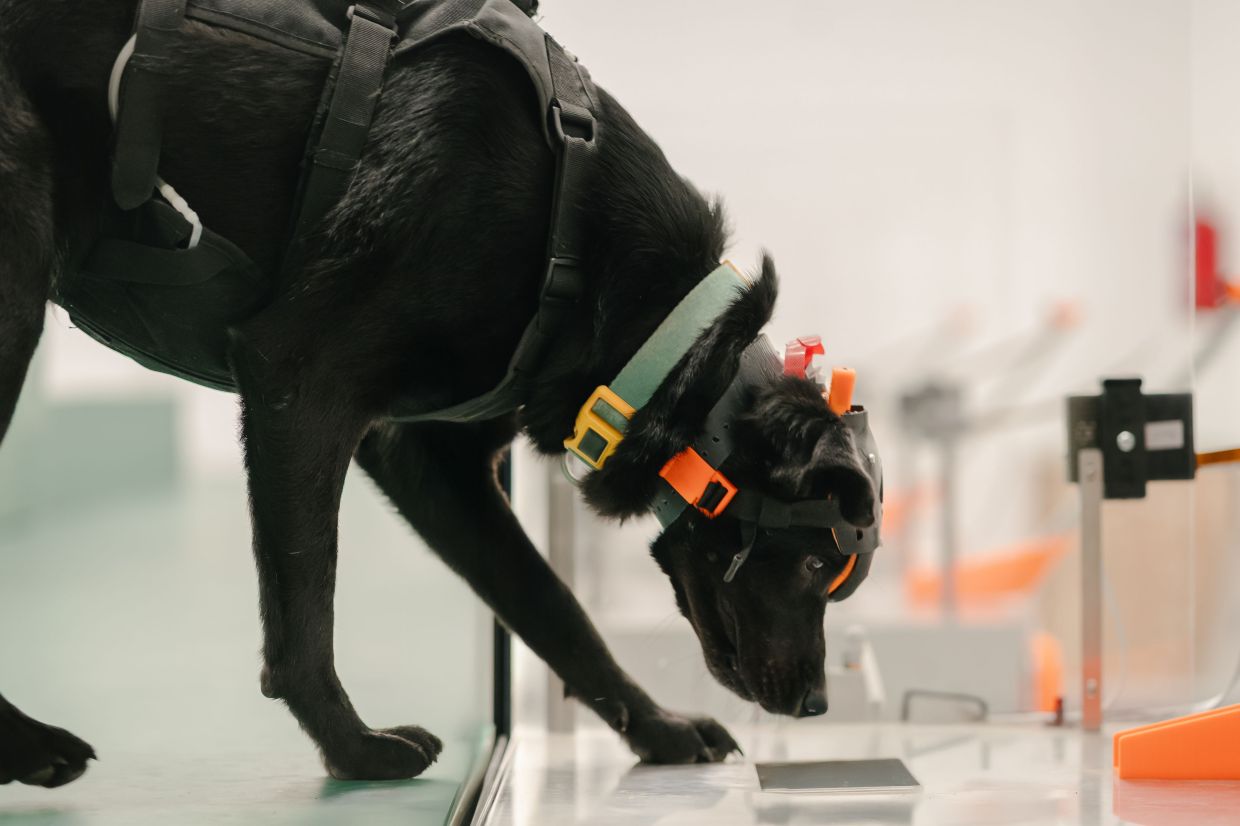
A two-acre facility on the outskirts of Bengaluru houses an unconventional medical workforce: beagles, labradors and Dutch shepherds trained to identify the molecular signatures of cancer in human breath. These animals, including Billy, Jessie and Banu, represent a novel approach to healthcare diagnostics in India where routine cancer screening remains prohibitively expensive and inaccessible to most of the population. The startup behind this initiative, Dognosis, is redirecting the remarkable olfactory abilities of dogs—traditionally employed for detecting drugs and explosives—toward a mission that could fundamentally reshape how early-stage malignancies are identified in resource-constrained regions.
The technology operates through a deceptively simple mechanism that capitalizes on the canine nose's extraordinary sensitivity. Patients breathe into masks at home and mail the samples to Dognosis's laboratory, where trained dogs are exposed to each breath sample. Rather than relying on conventional diagnostic methods such as imaging scans, blood tests or tissue biopsies, the system employs artificial intelligence to analyze the dogs' behavioral responses—their movements, breathing patterns, neural activity and body language—to determine whether cancer markers are present. This non-invasive approach addresses one of the fundamental barriers to cancer screening in developing economies: the prohibitive cost and infrastructure requirements of traditional diagnostic pathways.
The scientific validation for this approach is robust. In a Phase 2 clinical trial published in the Journal of Clinical Oncology, Dognosis demonstrated approximately 90 percent sensitivity for early-stage cancers spanning seven broad categories and more than 20 distinct cancer types, including breast cancer. Perhaps more intriguingly, co-founder Akash Kulgod reports that dogs trained to recognize the scent signatures of ten cancer types successfully identified an eleventh type they had never previously encountered, suggesting the system's capability extends beyond its initial training parameters. This generalization ability could prove particularly valuable as the technology develops, potentially allowing the approach to identify emerging or rare malignancies.
India's cancer burden makes this innovation particularly timely and consequential. According to the International Agency for Research on Cancer, India ranks third globally in new cancer case incidence, with an estimated 1.5 million new diagnoses and over 900,000 deaths recorded in 2024 alone. The epidemiological data presents a stark picture: approximately one in ten Indians face the prospect of developing cancer before age 75. Breast cancer represents the most frequently diagnosed malignancy, followed by cancers of the lip, oral cavity, lung and cervix. Yet the screening infrastructure remains severely underdeveloped, with surveys from 2019 to 2021 revealing that only 1.9 percent of Indian women had undergone cervical cancer screening, while merely 0.9 percent had received breast or oral cancer examinations. Among men, just 1.2 percent reported oral cancer screening.
This diagnostic gap extends broadly across Southeast Asia, where similar patterns of high cancer burden coupled with minimal screening prevalence characterize the public health landscape. Malaysian and other regional healthcare systems face comparable challenges in expanding preventive services to populations with limited access to specialist facilities. The affordability question becomes paramount in this context, as does the acceptability of novel screening methods. Dognosis plans to launch an at-home multi-cancer prescreening test in India next year at a cost of several thousand rupees—dramatically more accessible than conventional diagnostic pathways that require multiple specialist visits, expensive imaging studies and invasive procedures.
The company's expansion trajectory reflects confidence in its technology and market potential. Dognosis has secured funding of US$1.5 million through a pre-seed round in 2024, supplemented by additional capital from investors including Accel India and San Francisco-based Caffeinated Capital, with the combined resources sufficient for operations over the next two years. The startup's ambitions extend well beyond India's borders, with Kulgod indicating plans to establish a US facility by late 2027 or early 2028. Domestically, Dognosis aims to process 1 million tests annually, expand its canine workforce from the current level to 30 dogs and reduce turnaround times to a single week—a logistical and operational challenge that will test the scalability of the approach.
The practical implementation of this system requires both technical sophistication and careful attention to animal welfare. The dogs at Dognosis's facility undergo regular daily walks and recreation periods, spending 30 minutes to one hour performing detection work structured deliberately as play rather than labor, with treats serving as rewards for identifying positive samples. This approach reflects a recognition that sustainable operation depends on maintaining the physical and psychological wellbeing of the animals. During a recent demonstration, a two-year-old beagle named Whiskey worked through ten samples, correctly identifying a positive sample at the sixth position through characteristic behaviors—pausing, sniffing, moving away, then returning to circle the sample for several seconds before the AI system registered confirmation.
The validation phase now underway will prove critical to establishing whether these impressive laboratory results translate to real-world performance. Dognosis launched its Phase 3 trial in April with ten hospitals across India, planning to recruit approximately 10,000 participants over twelve months. This study will assess asymptomatic individuals at elevated cancer risk alongside survivors vulnerable to disease recurrence. Crucially, participants identified as potentially positive will receive conventional follow-up including imaging and biopsy to verify the dogs' initial findings. Success in this phase would represent a watershed moment for non-traditional diagnostic approaches in India.
Regulatory pathways have been thoughtfully considered, with Kulgod asserting that Dognosis's prescreening tool does not require Indian regulatory approval since it functions as a screening device rather than a diagnostic instrument—a distinction the Indian regulatory framework explicitly recognizes. This regulatory positioning may facilitate speedier market entry while raising questions about appropriate oversight standards for emerging diagnostic technologies. The company plans to launch in Bengaluru next year before expanding nationally through partnerships with established diagnostic chains and healthcare providers, potentially creating a distributed network for sample collection and processing.
Cautionary voices within the medical community underscore the importance of rigorous validation. Pankaj Chaturvedi, deputy director of the Centre for Cancer Epidemiology at Tata Memorial Centre in Mumbai, emphasizes that emerging technologies should complement rather than supplant existing screening programs. This measured perspective reflects the legitimate concern that enthusiasm for novel approaches could inadvertently divert resources from proven prevention and screening strategies. The international landscape already contains parallel initiatives, with New Jersey-based SpotitEarly reporting similar canine cancer-detection trial results, though commercialization remains pending.
For Malaysian and broader Southeast Asian healthcare systems, Dognosis's model presents intriguing possibilities. The region shares India's demographic profile: large populations with rising cancer incidence, limited screening infrastructure and economic constraints on implementing expensive diagnostic programs. Should the technology prove robust across larger, more diverse populations and achieve cost-effectiveness at scale, it could fundamentally reshape how regional health systems approach early cancer detection. The fundamental challenge remains standardizing and scaling the canine olfactory capability—a bottleneck Kulgod identifies as the central technological and operational hurdle. Resolving this challenge will require not only refining the AI interpretative framework but also building the complex logistics necessary to handle millions of breath samples annually while training and managing expanding canine workforces.

