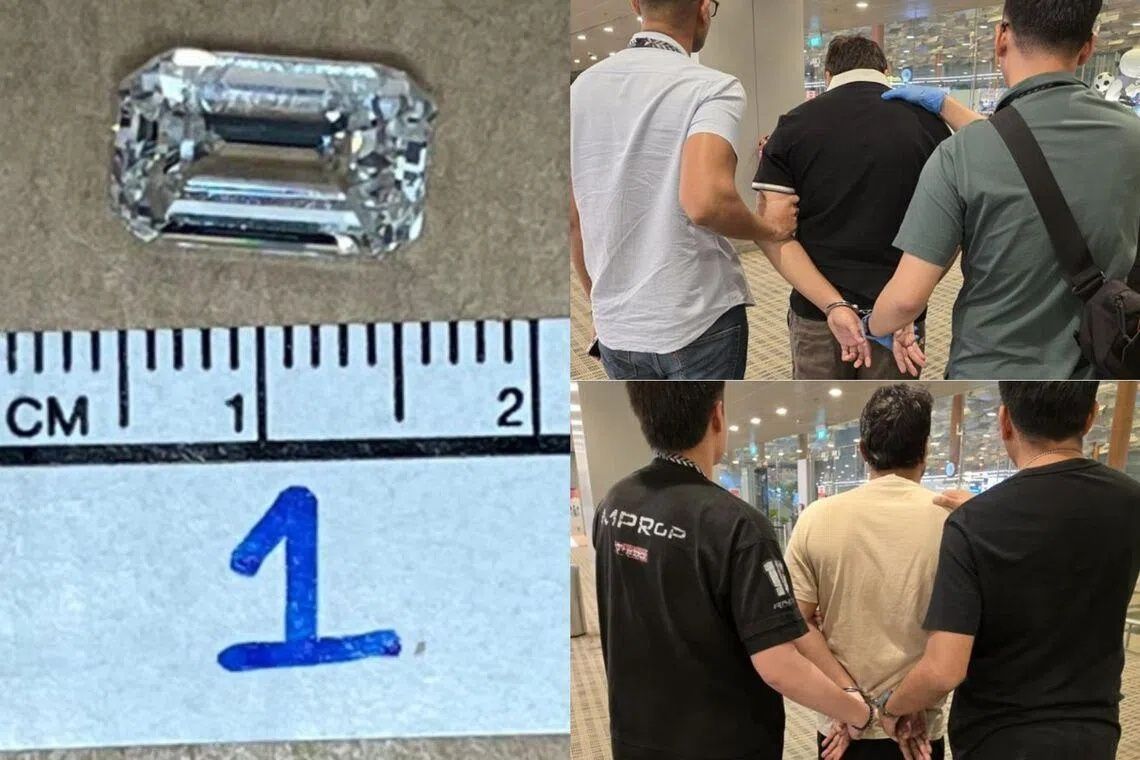
An Indian national has been handed a prison sentence of two years, two months and two weeks after masterminding an elaborate diamond theft at a Chinatown jewellery outlet in Singapore. Mangroliya Manojkumar Kurjibhai, 41, pleaded guilty to the theft charge on Friday, July 17, bringing the first phase of a carefully orchestrated scheme to its legal conclusion. His accomplice, Serasiya Milan Ramnikbhai, 30, remains before the courts with his case still pending, as investigators piece together the full extent of the conspiracy.
The audacious heist unfolded on June 19 at Dianoche jewellery store located along Kreta Ayer Road in the heart of Singapore's Chinatown district. The pair had arrived in Singapore that very morning, suggesting they travelled to the city-state with the express intention of executing the theft. Their planning, however, had begun much earlier in India, where they commissioned a counterfeit diamond with meticulous attention to detail. The fake stone was engineered to match not only the physical appearance of the genuine article but also its specifications and serial number, demonstrating a level of sophistication that required advance knowledge of the target jewel.
According to State Prosecuting Officer Yip Cheng Yee's account presented to the court, the operation began around 3pm when both men entered the Dianoche store. Serasiya had concealed the counterfeit diamond inside his mouth before entering the premises—a desperate but seemingly effective method of smuggling the fake into the shop without arousing suspicion. Mangroliya then approached a sales manager requesting to examine a 4.95-carat diamond valued at approximately US$154,000, equivalent to over S$199,000. This diamond represented a substantial sum, reflecting the high-stakes nature of their criminal enterprise.
To facilitate the swap, Mangroliya employed a psychological tactic designed to divert the sales manager's attention. He requested to view several additional items from the store's inventory, compelling the manager to repeatedly leave his sales position to retrieve pieces from the secured display areas. With the manager occupied and away from his workstation on multiple occasions, an opportunity presented itself. Following Mangroliya's signal, Serasiya expelled the counterfeit diamond from his mouth and completed the exchange by placing the genuine stone into his own mouth. The entire operation was conducted with practiced efficiency, suggesting the pair may have rehearsed their roles extensively.
After completing the transaction, Mangroliya informed the sales manager that they would take time to consider whether to proceed with the purchase. The two men then casually exited the store, their behaviour seemingly normal to any observer unaware of what had just transpired. However, the store's security systems would ultimately become the downfall of their scheme. The Dianoche outlet was equipped with closed-circuit television cameras that recorded the entire exchange. When the sales manager later examined the diamond left behind using an optical gemstone identification machine, the fraud was immediately exposed—the stone was definitively counterfeit.
Following their departure from the jewellery store, the pair moved swiftly to cover their tracks. They checked out of their hotel accommodation and proceeded to purchase airline tickets for a flight back to India. The evening of June 19 appeared to mark their intended escape window, with their flight scheduled to depart that night. However, Singapore's airport security procedures would prove impenetrable to their plans. Officers from the local authorities intercepted both Mangroliya and Serasiya at Changi Airport Terminal 3 at approximately 9pm, just hours after they had left the jewellery store. The genuine diamond was recovered from Serasiya's haversack, securing the critical evidence needed for prosecution.
The swift police intervention reflected the seamless coordination between Singapore's law enforcement agencies and its airport security operations. The fact that the arrest occurred before the pair could clear immigration demonstrates the effectiveness of border controls and information-sharing protocols at Changi. Once in custody, Mangroliya chose to cooperate with investigators by pleading guilty, accepting full responsibility for orchestrating the theft. His guilty plea suggests either overwhelming evidence against him or a strategic legal decision to demonstrate remorse to the court.
The sentencing framework applied to Mangroliya reflects Singapore's stern approach to organised theft and fraud. Under the Penal Code provisions applicable to theft offences, perpetrators face potential imprisonment of up to seven years and substantial fines. The sentence imposed—over two years in jail—represents a significant custodial punishment that underscores the seriousness with which Singapore treats organised diamond theft and criminal conspiracy. This sentencing sends a clear message to would-be thieves targeting Singapore's jewellery sector that the city-state's courts will impose weighty penalties for sophisticated criminal schemes.
The case holds particular relevance for Southeast Asia's tourism and retail sectors, as it highlights vulnerabilities in jewellery store security despite modern technological safeguards. While the store employed CCTV and optical detection systems, the theft was only prevented because of rapid police response and airport vigilance rather than preventative measures within the store itself. Jewellers across the region may need to reassess their operational procedures, particularly the placement and duties of staff when high-value items are being examined. The incident also underscores how transnational criminal networks can quickly assemble, finance sophisticated counterfeits, and attempt execution across international borders.
Pending the resolution of Serasiya's case, the full details of how the two men identified and researched their target diamond remain unclear. The court documents have not revealed whether they had inside information from a shop employee or conducted preliminary reconnaissance. This gap in the public record suggests investigators may still be pursuing ancillary charges or investigating whether other parties were involved in the conspiracy. The case also raises questions about the source of the counterfeit diamond and whether the individuals who created it in India have been identified by authorities.
For Malaysia and other Southeast Asian nations with significant jewellery retail sectors, this case serves as a cautionary tale about the evolving sophistication of international theft gangs. The incident demonstrates that even major retail outlets with security systems can fall victim to well-coordinated schemes involving multiple operatives and advance planning. Regional law enforcement agencies may use this case as a training resource to identify similar modus operandi and to strengthen inter-agency communication protocols. The rapid apprehension at Changi Airport shows how coordinated border security and intelligence sharing can disrupt criminal networks before they escape with stolen goods.

