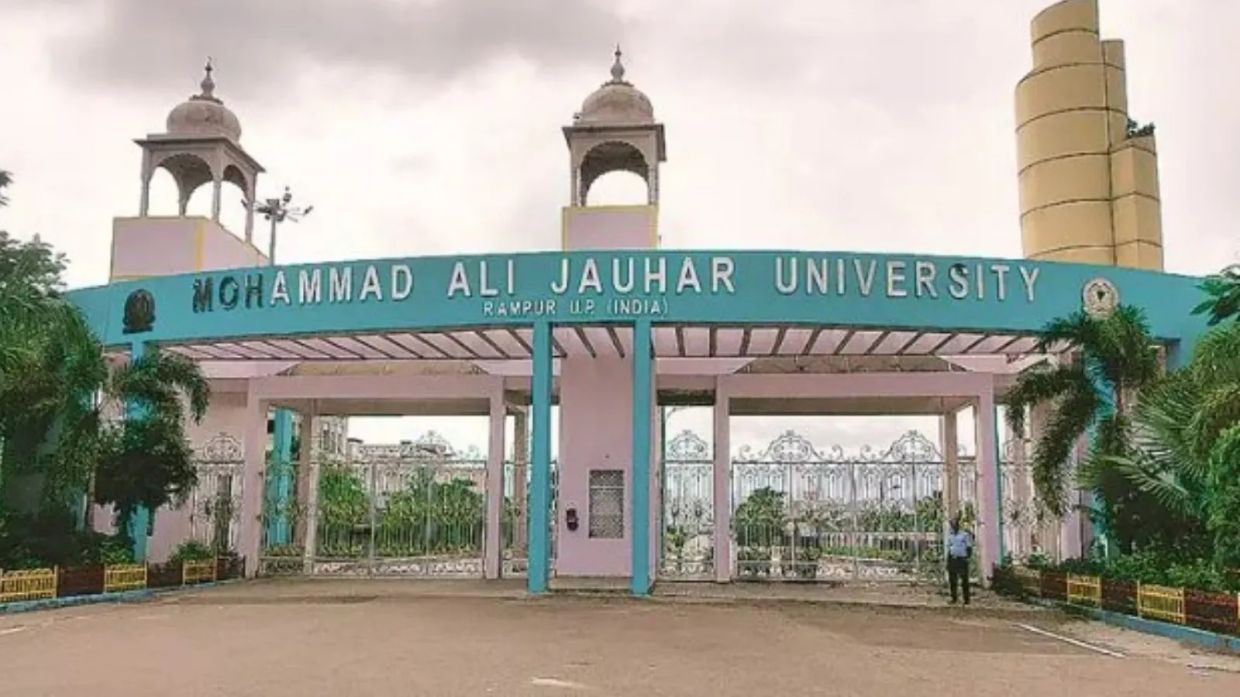
The Rampur Development Authority has ordered the immediate demolition of nearly all structures at Mohammad Ali Jauhar University in Uttar Pradesh, signalling a dramatic escalation in the regulatory challenges facing the institution. Out of 40 buildings standing on the university's sprawling 250-acre campus, authorities have designated 38 for removal, citing violations of construction regulations. The demolition directive was formally issued on Wednesday, July 15, according to local media accounts, marking a significant blow to an institution that has operated for nearly two decades.
The university, established in 2006, carries the name of Mohammad Ali Jauhar, a towering figure in India's independence struggle. However, the institution's founding and governance have become inseparable from the political fortunes and legal troubles of Azam Khan, the prominent Samajwadi Party politician who established it. Khan, widely recognised across northern India for his oratorical skills and community influence, created the university during a period when his political party held considerable power in one of India's most populous states. The institution was intended as an educational legacy, but it now finds itself at the centre of an institutional crisis that reflects deeper political tensions within India's states.
Azam Khan's political trajectory has been closely tied to the Samajwadi Party, which governed Uttar Pradesh until 2017 before losing power to the Bharatiya Janata Party in what proved a transformative election. The shift in state government marked the beginning of intensified legal and administrative scrutiny of Khan's political legacy and financial dealings. In a sequence of developments that Khan's supporters characterise as politically motivated persecution, he and his son Abdullah have been convicted and imprisoned in connection with forged document charges. The case represents one of several legal matters that have ensnared the family in recent years, constraining their ability to manage their business and educational interests.
The legal troubles have extended to Khan's wife, Tazeen Fatima, who faced imprisonment in relation to a birth certificate matter but subsequently secured bail. The family's mounting court convictions and imprisonments have effectively removed the institution's principal stakeholders from positions of influence, leaving the university vulnerable to regulatory action. Beyond the criminal proceedings, the family maintains that the cases constitute a coordinated political vendetta designed to dismantle their political base and institutional holdings. This narrative of persecution has resonated among certain sections of opposition supporters and civil liberties advocates, though the authorities maintain they are enforcing legitimate regulatory standards.
The demolition order itself raises profound questions about institutional governance and the independence of regulatory bodies in India. Universities, as centres of learning and research, occupy a special position within any democratic society. When administrative action against such institutions becomes entangled with the political circumstances of their founders, questions inevitably arise about whether regulatory decisions reflect genuine public interest or political calculation. The scale of the demolition—affecting 95 per cent of campus structures—suggests that if executed, it would fundamentally incapacitate normal university operations, leaving thousands of students without functional facilities for teaching, research, and residential purposes.
For Malaysian and Southeast Asian observers, the situation illuminates broader governance challenges across the region. The concentration of institutional control within single families, while not unique to India, creates vulnerabilities when political circumstances shift. Educational institutions that become too closely identified with individual politicians or their networks risk becoming casualties of political transitions, compromising educational continuity and student welfare. The Mohammad Ali Jauhar University case exemplifies how the absence of robust institutional separation from political patrons can expose universities to existential threats once their founders lose political influence.
The immediate humanitarian dimension cannot be overlooked. The university reportedly operates with a significant student body, and any demolition programme affecting the scale indicated would displace hundreds or thousands of students mid-academic year. Faculty members, administrative staff, and support workers would face unemployment and institutional collapse. The cascading consequences of such action extend beyond the university gates, affecting the local Rampur economy and educational services available to the region's population. These practical realities suggest that regulatory authorities, regardless of the legitimacy of their construction violations concerns, face obligations to implement any remedial action in ways that protect innocent third parties.
The case also highlights the precarious position of institutions in states where political competition is intense and transitions in power occur swiftly. Uttar Pradesh has experienced dramatic shifts between competing parties, and each transition has brought fresh regulatory scrutiny of predecessor administrations' projects and priorities. This pattern creates a chilling effect on institutional investment and long-term planning, as entrepreneurs and politicians cannot confidently build organisations expecting them to survive political cycles unchanged. Educational institutions require multi-generational stability to develop, and the uncertainty created by wholesale demolition threats undermines this foundational requirement.
Moving forward, the Mohammad Ali Jauhar University situation will likely hinge on legal appeals and potential intervention by higher judicial authorities. The university's administration may seek stays on demolition orders pending resolution of underlying disputes about construction compliance. Meanwhile, educational regulators will confront decisions about whether to demand comprehensive rebuilding to comply with standards, a phased remediation approach that preserves core functionality, or whether to permit selective demolition addressing only buildings with genuine safety risks. These decisions will telegraph much about how India's regulatory institutions balance formal rule enforcement against practical institutional continuity and student welfare.

