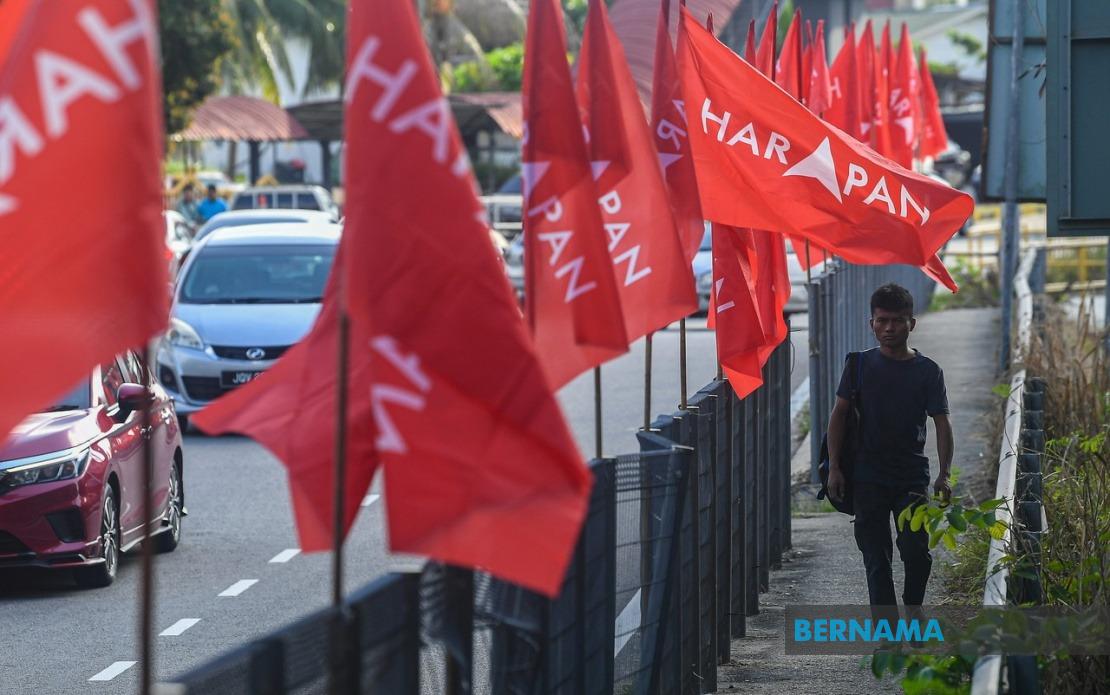
With the Johor state election scheduled for July 11, the Indian community's electoral participation has emerged as a potential deciding factor in determining the outcome of closely contested legislative assembly seats, according to senior Pakatan Harapan strategist Dr Gunaraj George, a PKR Central Leadership Council member and Sentosa Assemblyman. Speaking in Johor Bahru, Gunaraj emphasised that despite forming a minority within the state's population, Indian voters could swing results in approximately 25 State Legislative Assembly constituencies where the margin between rival candidates remains tight. His remarks underscore the growing recognition among political analysts and campaign strategists that electoral victories in Malaysia's federal and state contests increasingly hinge not on the size of individual voting blocs but on their concentration and turnout in strategically significant districts.
The appeal to Indian voters carries particular weight within the broader context of Pakatan Harapan's positioning for the Johor contest. The coalition intends to field candidates across all 56 state seats, signalling its ambition to retain control of the state government and consolidate the political momentum it has accumulated since taking federal office. For the Indian community specifically, the stakes involve more than simply choosing between competing parties; Gunaraj framed the election as a referendum on Malaysia's political direction, pitting the continuation of governance reform and economic stability against a return to the instability and investor uncertainty that previously undermined confidence in the nation's institutions.
Gunaraj grounded his appeal in the tangible benefits that the MADANI Government has delivered to the Indian community during its tenure of more than three and a half years in office. He highlighted the elevation of the Malaysian Indian Transformation Unit's allocation from RM100 million to RM150 million, a figure that had remained stagnant for nearly a decade under earlier administrations. This budgetary adjustment carries symbolic as well as material significance, signalling governmental willingness to increase support for community-focused initiatives after a prolonged period of budgetary neglect. Prime Minister Datuk Seri Anwar Ibrahim has additionally committed to progressively expanding MITRA's funding beyond its current level, suggesting a medium-term trajectory of enhanced resource allocation rather than a one-time adjustment.
Beyond the MITRA augmentation, Gunaraj enumerated a range of policy initiatives implemented by the MADANI Government that affect Indian communities across multiple dimensions of civic life and economic participation. Tamil National-Type Schools, which remain culturally and educationally significant institutions within Malaysian Indian society, have received increased budgetary allocations. The government has also channelled maintenance grants toward places of worship including temples, addressing long-standing concerns about infrastructure preservation and religious facility upkeep. Technical and Vocational Education and Training programmes have expanded in scope, creating alternative pathways for Indian youths seeking skills-based employment credentials. Simultaneously, targeted cash assistance schemes including Sumbangan Tunai Rahmah and Sumbangan Asas Rahmah have been deployed to alleviate immediate financial pressures on lower-income households, while dedicated support mechanisms have been established for small and medium-sized enterprises operated by Indian entrepreneurs.
The MADANI Government's governance reform agenda constitutes another dimension of Gunaraj's appeal to Indian voters, one that extends beyond direct economic benefit to encompass the quality and transparency of state institutions. He underscored the transformation of MITRA's administrative structure toward greater transparency, accountability, and systematic parliamentary oversight. This institutional shift reflects a broader governmental commitment to anti-corruption measures and improved governance standards, improvements that theoretically generate public confidence and reduce the friction costs associated with institutional dysfunction. Within the Indian community, which has historically articulated concerns regarding equitable representation in government resource allocation and transparent decision-making processes, such administrative reforms address substantive grievances that transcend purely fiscal considerations.
The timing of the Johor election occurs within a demanding international economic environment that Gunaraj explicitly referenced as underpinning the necessity for stable governance. Global economic uncertainties, escalating geopolitical tensions, and rising living costs create headwinds for Malaysian economic performance, circumstances that typically strengthen the political case for incumbent parties capable of demonstrating management competence and institutional continuity. Gunaraj's framing positions political stability not as an abstract virtue but as a prerequisite for investor confidence, capital inflows, employment generation, and real income growth—outcomes that disproportionately affect communities facing economic vulnerability. The Indian community, encompassing both established professional classes and significant populations engaged in lower-wage service sectors, faces particular exposure to economic disruptions resulting from policy inconsistency or governance paralysis.
Gunaraj's emphasis on Pakatan Harapan's demonstrable performance record represents a deliberate strategic choice to pivot the election discourse toward accountability and measurable outcomes rather than ideological positioning or personality-based politics. By marshalling specific data points—budgetary allocations, policy initiatives, reform commitments—and inviting voters to assess the government based on its performance and track record, he advances a pragmatic argument calibrated to appeal to communities primarily concerned with tangible improvements in material circumstances. This approach acknowledges Indian voters' sophistication in evaluating governmental effectiveness while simultaneously signalling that Pakatan Harapan takes seriously the concerns and interests of minority communities beyond rhetorical appeals during election campaigns.
The specific mention of nearly 25 mixed and marginal State Legislative Assembly seats where Indian voters could determine outcomes carries significant implications for Johor's electoral mathematics. In a state legislature comprising 56 seats, control typically requires commanding 29 seats. If Pakatan Harapan's performance in these 25 constituencies varies materially based on Indian voter engagement and turnout, the difference could easily determine whether the coalition retains its state government or forfeits control to opposition rivals. The emphasis on these marginal seats reflects sophisticated electoral analysis recognising that Malaysian state elections are increasingly determined not by overwhelming majority margins in specific constituencies but by narrow pluralities accumulated across numerous closely contested districts where demographic composition and turnout patterns exercise decisive influence.
For Malaysian and Southeast Asian observers, Gunaraj's appeal underscores the evolving complexity of electoral politics within multi-ethnic democracies navigating economic pressures and governance challenges. Indian communities across the region, while constituting minority populations in their respective nations, frequently occupy strategic electoral positions within mixed constituencies where their voting behaviour can determine outcomes. The willingness of major political coalitions to engage substantively with minority communities—articulating specific policy achievements and reform commitments rather than generic appeals—reflects both democratic maturation and the increasingly competitive nature of electoral contests in which margins have progressively narrowed.
The Indian community's decision regarding Pakatan Harapan will likely reveal not merely their satisfaction with current government performance but broader patterns regarding how minority communities evaluate political options when faced with choices between incumbent parties advancing claims of reform and governance improvement versus alternatives promising different policy directions. Beyond the immediate stakes of the Johor election, the results will provide insights into minority voter behaviour in an era of heightened economic uncertainty and globalised political competition, patterns potentially reverberating across other Malaysian state elections scheduled in coming years.

