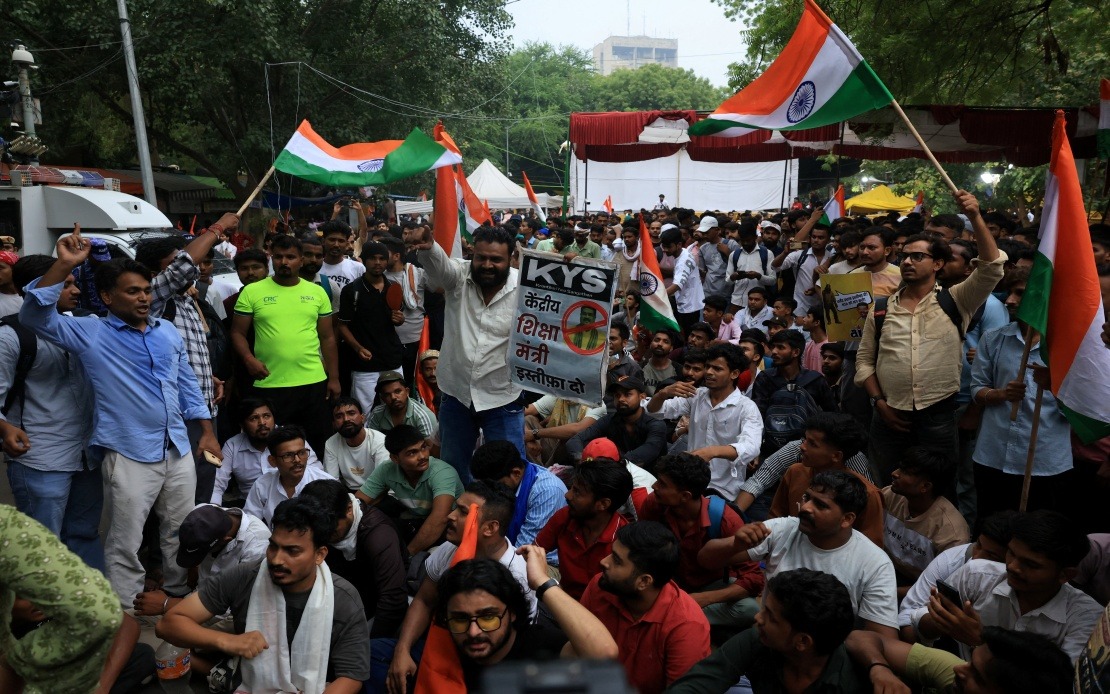
Thousands of demonstrators gathered in New Delhi on Monday in a show of discontent with India's educational framework, with the newly formed youth-driven movement escalating its campaign by attempting to reach the parliament complex. The action, organised under the banner of "Sansad Chalo" or march to parliament, quickly drew a forceful police response as security personnel deployed crowd-control tactics to prevent the rally from breaching established barricades around the legislature.
The timing of the protest coincided with the commencement of the Indian Parliament's Monsoon Session, a significant legislative period when key national matters are debated. The demonstration underscores growing frustration among younger Indians regarding the structure and effectiveness of their country's education system, with organisers leveraging digital platforms to mobilise support—the movement claims to command millions of online followers across social media channels.
India's education system has long faced criticism for its emphasis on rote learning, limited vocational training opportunities, and insufficient focus on skill development suited to modern labour markets. The reforms being sought by protesters likely address these structural shortcomings, reflecting broader concerns among Indian youth about whether their educational credentials adequately prepare them for employment in a rapidly evolving economy. This generational anxiety about education quality and economic opportunity is not unique to India but resonates across South Asia, including Malaysia, where similar debates about curriculum relevance and graduate employability continue.
The police response to the march illustrated the security posture authorities adopted during the parliamentary session. Prime Minister Narendra Modi departed from the parliament complex by convoy as law enforcement personnel coordinated crowd management in surrounding areas. The deployment of security measures reflected official concern about maintaining order during a period when the legislature conducts sensitive business, though such restrictions on public assembly have occasionally drawn criticism from civil liberties advocates.
The movement's youth-centric character suggests that organisers deliberately positioned themselves to appeal to India's substantial young population—a demographic that increasingly uses digital connectivity to organise politically. The reliance on online followings indicates a shift in protest tactics, where movements build critical mass through social media before translating that momentum into street-level demonstrations. For Malaysian observers, this pattern mirrors similar youth-led activism seen regionally, where digital natives seek to bypass traditional gatekeepers and directly mobilise constituencies around grievances.
Security arrangements were visibly heightened across critical infrastructure in New Delhi following the protest, indicating authorities treated the incident seriously. Enhanced checks and restricted access points became features of the national capital's landscape as officials sought to prevent any recurrence or escalation of the demonstrations. Such security tightening, while perhaps necessary from a law enforcement perspective, can also send messages about governmental tolerance for public dissent.
The specific focus on academic system reform speaks to deeper anxieties about India's development trajectory. Education directly influences social mobility, and if young Indians perceive their schooling as inadequate preparation for meaningful careers, discontent naturally crystallises around calls for systemic change. The protesters' emphasis on educational reform rather than broader political demands suggests they view the education system as a concrete, addressable problem rather than engaging in wider ideological contestation.
For Southeast Asia, India's education protest carries relevance as the region grapples with similar challenges. Malaysia's education system has undergone various reforms in recent years, yet debate persists about whether schools and universities adequately equip graduates for knowledge economy roles. The Indian movement's digital mobilisation strategy and its focus on intergenerational opportunity gaps offer lessons for how youth activism may evolve in the region.
The parliamentary context proves significant too. India's legislature was convened to address national priorities during the Monsoon Session, yet the government simultaneously faced organised street-level pressure to prioritise education issues. This dynamic—where executive agendas and popular demands intersect but may not align—characterises contemporary democratic governance across Asia, where policymakers balance competing institutional pressures and constituent expectations.
The outcome of this protest remains unfolding. Whether the Indian government will substantively engage with the reformist demands, conduct dialogue with movement leaders, or primarily maintain order remains unclear from immediate reports. Historical precedent suggests that large-scale youth protests occasionally catalyse policy reviews, though change typically moves slowly through bureaucratic systems. The movement's capacity to sustain momentum beyond the initial demonstration will likely determine whether this episode becomes a footnote or a catalyst for educational recalibration.

