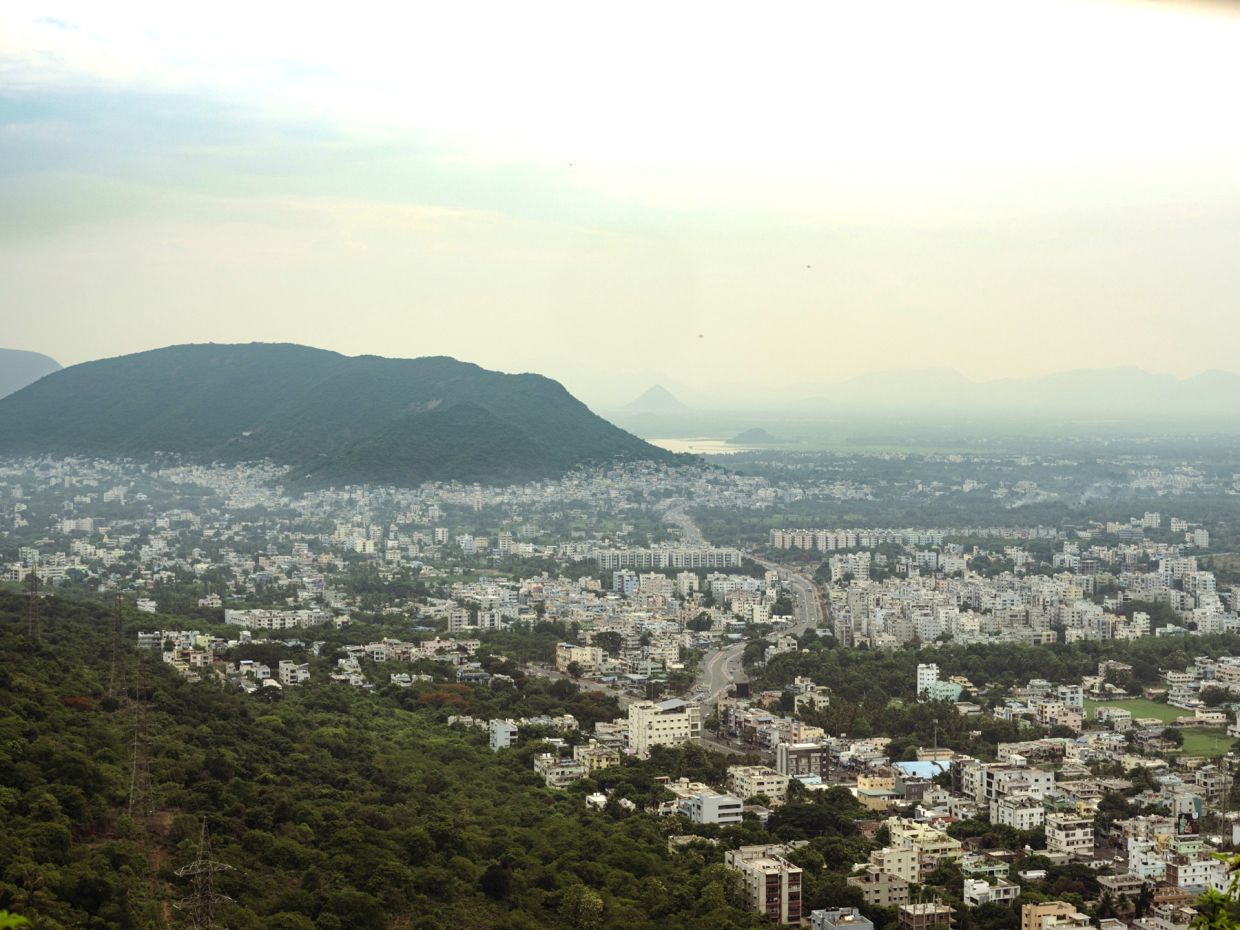
India's coastal city of Visakhapatnam is becoming a focal point in the nation's ambitious drive to secure a competitive position in the global artificial intelligence race, yet the rapid development is generating significant backlash from local communities concerned about environmental and social costs. Billboards welcoming Google to the region's Tarluvada village reflect government eagerness to attract the world's largest technology companies, but beneath the official enthusiasm lies growing anxiety among residents about whether the promised benefits will materialise or whether the burden of infrastructure will fall on ordinary citizens.
The scale of investment signifies India's determination to bridge a critical gap in the AI ecosystem. Google's project, valued at US$15 billion, includes the construction of a one-gigawatt data centre alongside subsea cable infrastructure, while a parallel facility developed by a consortium involving Brookfield Asset Management and India's Reliance Industries will add comparable capacity. Once operational, these two facilities alone will more than double India's data centre infrastructure relative to the end of last year, fundamentally reshaping the nation's technological landscape.
Government officials frame these investments as catalysts for broader economic transformation. Andhra Pradesh's information technology minister Nara Lokesh has articulated a vision extending far beyond the data centre itself, emphasising how the projects are expected to attract manufacturers of complementary technologies including power electronics and air conditioning systems. This ecosystem approach appeals to policymakers desperate to demonstrate that attracting global technology corporations generates cascading benefits across multiple industries and supply chains.
However, the fundamental tension underpinning these projects reflects a broader structural reality about India's position in the global technology hierarchy. Despite possessing vast populations, substantial technical talent, and a significant share of global data generation, India remains positioned as a deployer of artificial intelligence technologies rather than an innovator at the frontier. A Morgan Stanley analysis characterised India as a "laggard" in building independent AI capabilities, highlighting how billions in capital investment have flowed toward Taiwan and South Korea, which possess advanced semiconductor manufacturing capabilities that India lacks.
The specific challenges facing Visakhapatnam illustrate the practical complications arising from rapid infrastructure expansion in resource-constrained environments. Data centres consume enormous quantities of electricity and water, yet create relatively few permanent employment opportunities once operational. This dynamic has already generated fierce opposition in the United States, where communities have successfully delayed or blocked data centre projects worth tens of billions of dollars. India's government is offering extensive subsidies encompassing discounted land, reduced energy costs, minimal water charges, and comprehensive tax breaks to overcome such resistance, raising questions about whether such concessions represent genuine economic development or merely socialising infrastructure costs.
Local critics argue that environmental regulations have been compromised to facilitate construction in ecologically sensitive areas within a region already characterised by chronic water stress and seasonal supply disruptions. The opacity surrounding project planning has deepened concerns, with limited public information available regarding water sourcing, electricity supply arrangements, or mechanisms for cost distribution among affected populations. Human Rights Forum campaigner VS Krishna has articulated the fundamental grievance, questioning why projects described as developmental rather than defensive should proceed without transparent public deliberation about their implications.
The involvement of billionaire Gautam Adani as Google's local partner introduces additional political dimensions. Adani's wealth has expanded dramatically during Prime Minister Narendra Modi's twelve-year tenure, and he has cultivated a reputation for successfully navigating regulatory approval processes for major projects. This alignment raises suspicions among project critics that political connections rather than genuine environmental compliance may be facilitating rapid approvals.
Official responses emphasise that project planners have incorporated environmental safeguards from inception. Google executives and Adani subsidiary representatives have stated that cooling technologies will minimise water consumption while remaining independent from municipal drinking water supplies, and that clean energy generation investments will ensure no cost shifting to local residents or the state government. These assurances have failed to convince sceptical populations, particularly given historical patterns of corporate commitments not materialising as promised.
Job creation claims have become a focal point of credibility struggles between government boosters and project sceptics. Officials assert that construction phases will generate approximately 120,000 positions while permanent operations will sustain roughly 60,000 jobs. Critics counter that these figures bear no resemblance to employment patterns observed at comparable data centre facilities globally, and that project documentation submitted for environmental clearance—detailing parking requirements and toilet flushing water volumes—suggests far smaller permanent workforce requirements. The discrepancy exposes the tension between political incentives to oversell employment benefits and technical realities of heavily automated infrastructure.
Beyond immediate employment concerns, India confronts a structural economic challenge that data centre expansion may exacerbate rather than alleviate. The International Monetary Fund has warned that artificial intelligence deployment could generate a "tsunami hitting the labour market," with potential disruption to technical support services that constitute a crucial component of India's current global economic positioning. As the nation attempts to generate meaningful employment for its 1.4 billion population, massive investments in capital-intensive, labour-minimising infrastructure may deepen rather than resolve foundational economic tensions.
Former senior Indian government official EAS Sarma, whose background encompasses energy planning and finance ministry service, articulates perhaps the most damaging critique: that Adani's political connections render environmental and fiscal discipline largely irrelevant to project approval decisions. Sarma contends that transmission line infrastructure costs will ultimately be incorporated into electricity bills paid by ordinary residents, meaning that subsidies provided to technology corporations effectively represent hidden costs distributed across broader populations. This argument suggests that framing massive data centre investments as development projects obscures their redistributive consequences, transferring wealth from ordinary Indians to global technology corporations and their local partners.
Visakhapatnam's experience reveals fundamental contradictions embedded in India's AI strategy. The nation genuinely requires substantial technological infrastructure investment to avoid permanent relegation to the margins of artificial intelligence development, yet the financing mechanisms, regulatory shortcuts, and employment claims accompanying these projects suggest that costs and risks are being inappropriately distributed. As other Indian states compete fiercely to attract similar investments by offering accelerated approvals and expanded subsidies, Visakhapatnam serves as an early indicator of tensions that will likely intensify as India pursues technological advancement through partnership arrangements weighted heavily in favour of global corporations and connected domestic business groups.

