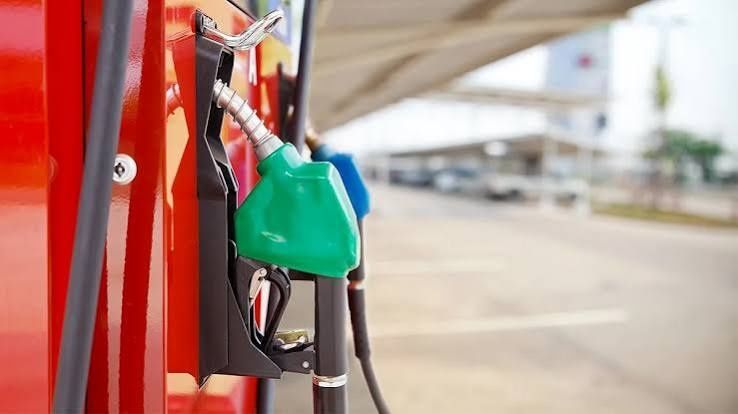
New Delhi is in damage-control mode after one careless comment has transformed the government's ethanol fuel initiative into a credibility crisis. The mandatory shift to E20—a blend containing 20 per cent ethanol—was supposed to reduce India's crude oil dependence while supporting farmers, but it has instead become a political liability for Prime Minister Narendra Modi's administration. Consumers across the country are increasingly vocal about their grievances, with organised protests planned and thousands of motorists sharing complaints on social media about reduced fuel efficiency and vehicle damage.
The mandate came into force last year with minimal public fanfare, but the controversy erupted dramatically this week when Attorney General R. Venkataramani described the policy as an "experiment" during a court hearing. Video footage of his remarks immediately went viral, giving ammunition to policy critics who had already been questioning the rollout's hasty implementation. Despite the government's subsequent denial that such language was used, the damage was done—the video evidence contradicted official denials, undermining the administration's narrative and public trust.
Venkataramani later claimed he was referring to the volume of ethanol supplies as experimental, not the policy itself, but this clarification has failed to restore confidence. For motorists already frustrated by the mandatory nature of the fuel and concerned about their vehicles' performance, the Attorney General's slip provided proof that even government officials viewed the programme with uncertainty. The fact that the highest legal officer seemed to view the policy as tentative raised uncomfortable questions about whether adequate testing had preceded the nationwide rollout.
The government's response has only deepened public scepticism. Rather than addressing substantive concerns about fuel efficiency and vehicle compatibility, officials dismissed critics as spreading "wild claims" and cautioned people not to "fall for the rage bait." Petroleum Minister Hardeep Singh Puri attempted a reassurance campaign by pointing to E20's use in racing vehicles, suggesting it actually improves performance, but this comparison rang hollow for ordinary drivers dealing with everyday problems in standard vehicles.
The emerging protest movement reveals genuine frustration among middle-class motorists who feel they have been conscripted into an experiment without consent. Tehseen Poonawalla, a New Delhi-based socialite with Congress party connections, is mobilising demonstrators against the policy, and he has reported thousands expressing interest in participating. This is significant because it represents not just consumer dissatisfaction but organised political opposition that the ruling party cannot easily dismiss as fringe sentiment. The fact that an E20 protest can gather thousands of interested participants suggests the policy has touched a nerve across demographic groups.
Complaints flooding social media paint a troubling picture of vehicle deterioration and unexpected repair costs. Hundreds of motorists have documented what they describe as reduced mileage and accelerated wear on engine components after switching to E20. A particularly viral video featuring a motorist named Manish Kashyap, viewed over 500,000 times, shows him in a workshop describing how his vehicle required extensive repairs just two months after exposure to the ethanol blend. These are not abstract environmental concerns but tangible, costly problems that affect household finances.
Opposition politicians are seizing the moment to challenge the government's environmental credentials and administrative competence. Congress state minister Priyank Kharge pointed out on social media that the rollout proceeded without meaningful consultation and suggested the government cannot demand that citizens prove harm when "your own data is still pending." This criticism cuts to the heart of the credibility problem—if the government lacks complete data on the fuel's effects, why impose it nationwide?
The E20 controversy reveals a broader tension in India's energy transition efforts. The government's intentions appear sound from a strategic perspective: reducing crude oil imports saves foreign exchange, supporting ethanol production boosts agricultural incomes, and lower carbon emissions align with climate commitments. India, as the world's third-largest automobile market, faces genuine pressure to improve fuel standards and environmental outcomes. However, the gap between policy objectives and implementation execution has become dangerously wide, turning what should have been a technical transition into a political liability.
For Malaysia and other Southeast Asian nations watching India's experience, the E20 controversy offers an instructive lesson about policy rollout and public communication. Mandatory fuel transitions require not just technical feasibility but extensive public consultation, transparent testing data, and gradual phase-in periods that allow consumer choice and vehicle adaptation. The Indian government's apparent assumption that environmental and economic rationales would override consumer concerns proved naive in a democracy where motorists represent an influential voting bloc. The viral spread of the Attorney General's "experiment" comment demonstrates how a single moment of perceived candour can unravel an official narrative and create space for wider questioning.
The incident also exposes how social media has fundamentally altered the dynamics of policy accountability. Motorists no longer depend on traditional media gatekeepers; they can broadcast their experiences directly and build solidarity with thousands of others facing similar problems. Video evidence of official remarks cannot be suppressed, making it essential that government communications align with reality. India's E20 story suggests that in the digital age, policy legitimacy depends increasingly on demonstrable competence and transparent communication rather than mere assertion of authority or appeal to national interest.
As the situation develops, the government faces a choice between doubling down on the policy or reconsidering its approach. Whether through improved communication, gradual transition mechanisms, or fundamental policy revision, New Delhi will need to restore confidence among motorists who feel their concerns have been dismissed. The protest planned in the capital on Sunday will provide a barometer of public sentiment and a test of whether the government's efforts to contain the backlash can succeed or whether the E20 controversy becomes emblematic of broader frustrations with executive overreach.

