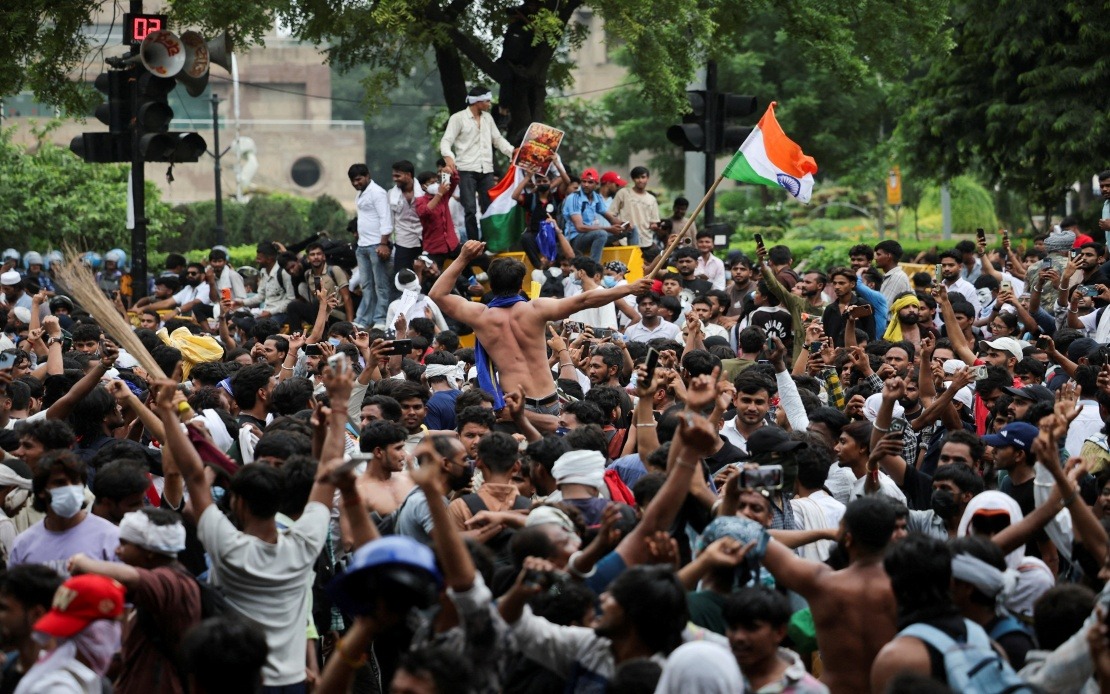
India's Education Minister Dharmendra Pradhan announced his resignation on Saturday, stepping down in response to escalating youth-led demonstrations across the country demanding comprehensive reforms to the nation's examination system. The minister's decision came after weeks of mounting pressure as thousands of students and young people camped at Jantar Mantar in New Delhi and held protests in other cities, angered by repeated instances of examination paper breaches that have jeopardised countless academic futures.
In his resignation statement posted on social media platform X, Pradhan cited the need to preserve national unity and prevent the situation from being exploited by what he termed anti-national forces. He emphasised his concern that prolonged unrest could entangle students in legal complications and distract them from their studies and career development. The minister's departure marks a significant concession by the Modi government to the persistent demands of the protesting youth, who have vocalised growing frustration with the reliability and integrity of India's competitive examination processes.
The catalyst for the broader unrest was a critical breach in May involving the National Eligibility cum Entrance Test for postgraduate medical programmes, a highly competitive examination that determines admission to prestigious medical institutions across India. This incident exposed systemic vulnerabilities in the examination administration infrastructure and raised serious questions about the preparedness of authorities to safeguard confidential test materials. The leak triggered alarm among aspiring medical professionals who worried that compromised examination integrity could undermine the credibility of their qualifications and the merit-based selection process.
The scale and sustained nature of the protests reflect deeper anxieties within India's student community about the adequacy of oversight mechanisms governing national examinations. Beyond the immediate concern about paper leaks, demonstrators have articulated wider grievances regarding the education system's responsiveness to student needs, accessibility of quality instruction, and the alignment of curriculum with contemporary employment requirements. The movement has transcended a single incident to become a platform for articulating long-standing dissatisfactions with how education is structured and delivered in India.
Recognising the gravity of the situation, senior government officials moved to engage directly with protest representatives. On Friday, two influential members of Prime Minister Narendra Modi's cabinet, J.P. Nadda and Jitendra Singh, held discussions with delegates representing the protesting students. These talks represented an acknowledgement that the unrest could not be dismissed as a temporary disruption but required substantive governmental attention. The dialogue, though limited in scope, signalled the administration's willingness to listen to grievances emanating from the youth segment.
For Malaysia and other Southeast Asian nations observing these developments, India's education crisis carries instructive lessons about the importance of maintaining robust systems for conducting national examinations and protecting the integrity of competitive selection processes. Educational institutions across the region similarly administer high-stakes assessments that shape academic and professional trajectories for millions of young people. The Indian experience demonstrates how administrative lapses can rapidly erode public confidence in institutional credibility and trigger widespread dissent when students perceive that their futures have been compromised.
The resignation of Pradhan reflects the political costs that can accumulate when governments are perceived as insufficiently responsive to youth concerns. In democracies across Asia, education remains a politically sensitive portfolio precisely because it affects such large constituencies of voters and their families. Ministers overseeing education systems must maintain not only actual competence but also the appearance of attentiveness to emerging problems. When examination integrity fails, the damage extends beyond immediate participants to encompass broader societal confidence in meritocratic systems.
Looking forward, India faces the challenge of implementing substantive reforms that address the vulnerabilities exposed by the May examination breach whilst also responding to the more expansive agenda articulated by protesting students. This will require comprehensive review of how examination papers are prepared, stored, distributed, and guarded against unauthorised access. Additionally, policymakers will need to engage in broader dialogue about how the education system can be restructured to better serve student aspirations and employment needs in a rapidly changing global economy.
The appointment of Pradhan's successor will carry symbolic weight, signalling whether the government intends to undertake meaningful reform or simply weather the current political storm. The new minister will inherit both the immediate task of restoring confidence in examination administration and the longer-term responsibility of charting a new direction for Indian education policy. The eyes of millions of students, along with the international education community, will be closely monitoring these developments as the government moves to contain the fallout from this crisis and chart a path toward institutional renewal.

