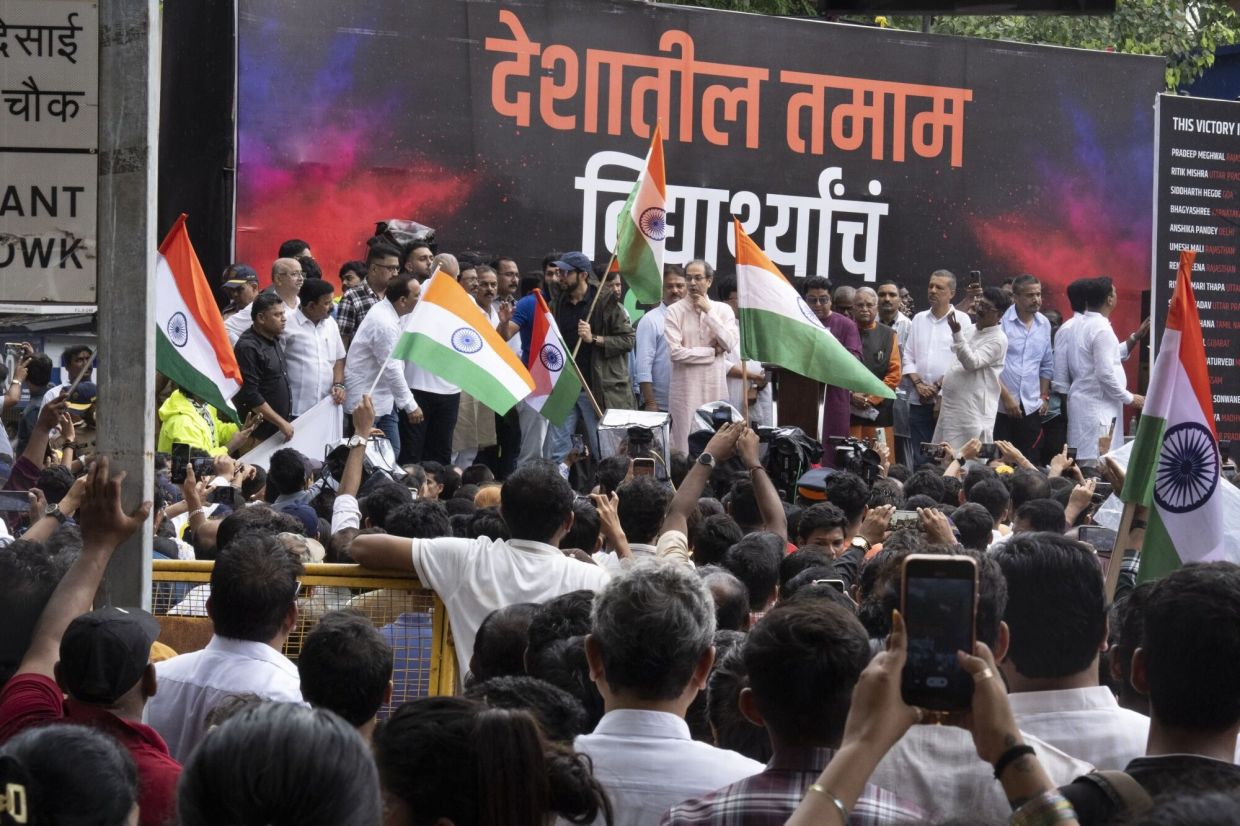
India's government is moving swiftly to address mounting public anger over examination standards, with Prime Minister Narendra Modi announcing Sunday the creation of a special reform panel in the wake of his education minister's departure. The announcement marks a significant capitulation to weeks of sustained grassroots pressure that saw thousands of demonstrators, predominantly young students, converge on New Delhi's Jantar Mantar in what has emerged as one of the country's largest anti-establishment mobilisations in recent years. The timing underscores how deeply examination irregularities and related educational concerns have resonated across India's youth demographic, forcing the administration to acknowledge systemic weaknesses that had previously been downplayed.
The protest movement, which gathered considerable momentum through social media channels, crystallised around the Cockroach Janta Party banner and succeeded in compelling the government to accept a series of substantive demands. Among these, the resignation of the education minister represents the most visible policy casualty, signalling that sustained public action can penetrate India's political establishment. The crowds at Jantar Mantar numbered in the thousands at their peak, reflecting widespread dissatisfaction that extended beyond examination fraud to encompass broader anxieties about educational quality and opportunities for India's youth cohort.
Modi announced the establishment of what he described as a "high-powered task force" through a video statement posted to X, the social media platform. Leadership of this body has been assigned to Nandan Nilekani, co-founder and prominent figure within Infosys, one of India's most recognisable information technology enterprises. This appointment signals the government's intention to bring technical expertise and credibility from the private sector to bear on an increasingly contentious policy domain. Nilekali's background in managing complex technological systems at scale suggests the administration views examination reform as fundamentally requiring sophisticated digital infrastructure and oversight mechanisms.
The task force's remit focuses specifically on examination reform, addressing what the government now acknowledges as failures in reliability and transparency. Modi's video statement emphasised three core principles that the reformed system must embody: dependability that ensures consistent, trustworthy administration across all examination venues; openness in processes and outcomes that allows stakeholders to scrutinise procedures; and maximised deployment of technology to reduce vulnerabilities to manipulation or error. This framing suggests the government recognises that manual, non-transparent examination administration has become untenable in contemporary India, where expectations of digital governance and procedural clarity have risen dramatically.
The visual aftermath of the protests at Jantar Mantar illustrated the intensity of the occupation that preceded the government's capitulation. On the morning following the education minister's resignation, municipal workers could be observed washing down pavements and roads leading to the protest site, where activist camps had maintained a physical presence for weeks. Just hours before the cleanup commenced, demonstrators had filled the location with protest songs, militant slogans, and sharp satirical graffiti that left indelible marks on the public space. This juxtaposition between the remnants of defiant occupation and the state's literal cleansing of the site symbolises the conclusion of one phase of contestation, though questions remain about whether the government's promised reforms will substantively address underlying grievances.
For Malaysian observers, India's experience carries particular resonance given regional parallels in education policy, examination integrity concerns, and the growing activism of youth cohorts. Southeast Asia's largest economy has demonstrated that concentrated student mobilisation, amplified through digital networks, can achieve concrete policy shifts even within a politically dominant administration. The Indian case illustrates how examination systems, commonly treated as technical rather than political matters, have become lightning rods for broader anxieties about meritocracy, social mobility, and governmental competence. When examination irregularities are perceived as systematic, they undermine the foundational legitimacy of educational credentials, thereby threatening social confidence in institutional mechanisms for advancement.
The appointment of Nilekali to lead the reform process reflects an emerging pattern across South and Southeast Asia whereby governments seek to address legitimacy crises in educational governance by recruiting prominent private-sector figures. This approach carries both advantages and potential pitfalls. On one hand, technology sector leadership brings genuine expertise in systems design, data security, and scalable administration that could materially improve examination management. Conversely, outsourcing educational governance to corporate figures risks deprioritising equity concerns and social welfare dimensions that may not align with profit-maximisation imperatives characteristic of commercial enterprises. The success of India's examination reform will therefore depend substantially on how comprehensively the task force incorporates safeguards against commercialisation of educational assessment.
The government's commitment to ensure examination credibility "as quickly as possible," as Modi stated in his video, suggests pressure to demonstrate tangible progress before public attention shifts. This timeline imperative creates both opportunity and risk. Rapid implementation of superficial reforms might appease immediate discontent while leaving fundamental structural issues unresolved, inviting renewed mobilisation when problems resurface. Alternatively, sustained focus on building genuinely robust, transparent, and technologically sophisticated examination systems could establish precedent for how Indian governance responds to organised public demand for institutional reform. The next examination cycle will provide critical data about whether the government's response represents substantive transformation or merely tactical concession.
The broader significance of these events extends beyond India's borders to regional observers assessing how democracy functions when popular movements challenge elite consensus. The student-led mobilisation succeeded not through violence or institutional disruption but through sustained presence and narrative dominance that made continued governmental dismissal politically costly. This pattern offers lessons for civil society actors across Southeast Asia and South Asia who seek to influence policy without depending on formal political representation. It simultaneously illuminates the vulnerability of even dominant governments when they lose credibility on matters that directly affect millions of citizens' life prospects, as examination outcomes determine educational and occupational trajectories.

