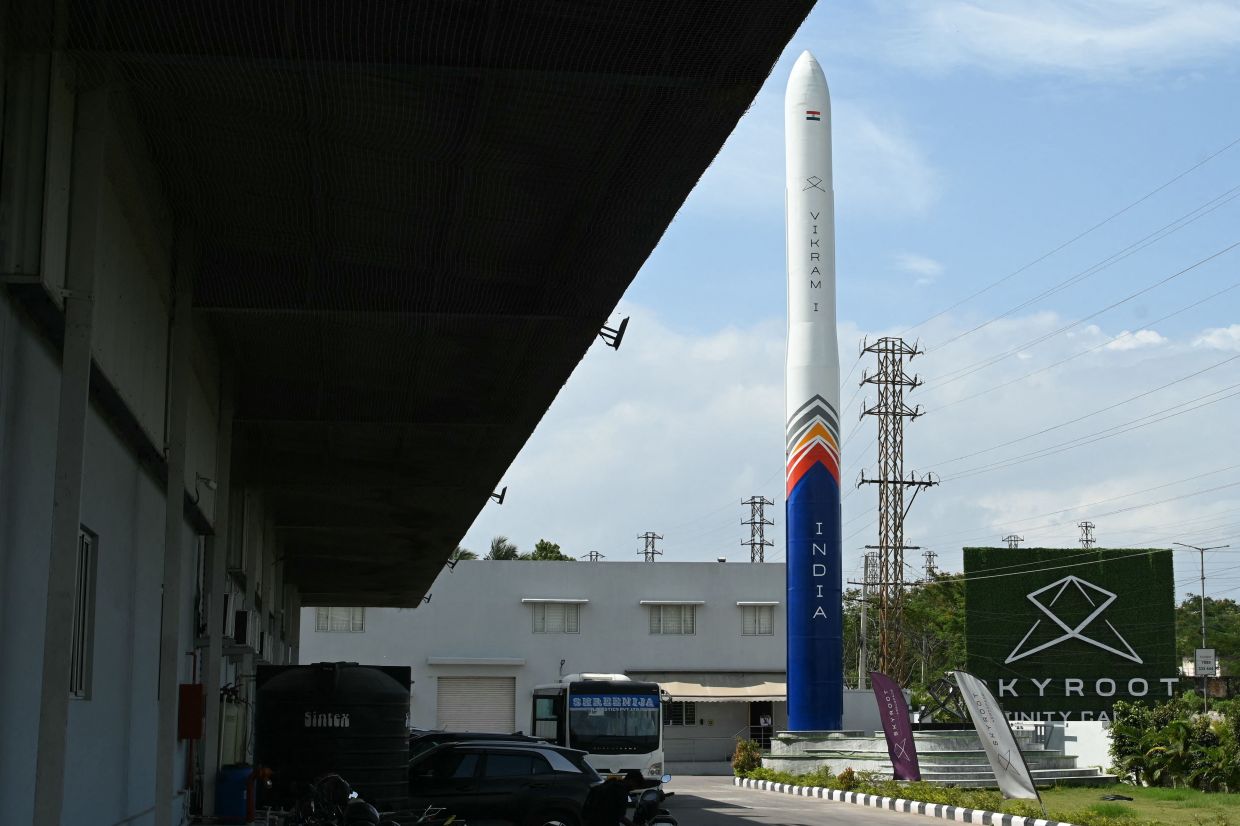
India stands on the cusp of a significant milestone in its space ambitions. Skyroot Aerospace, a homegrown startup, is preparing to send the Vikram-1 rocket skyward from the Sriharikota launch facility in Andhra Pradesh between July 12 and August 4, marking the nation's first attempt to launch a privately developed orbital-class rocket. This achievement represents far more than a single test flight—it signals India's evolution from a government-dominated space programme into a competitive, innovation-driven sector capable of attracting global investment and talent.
The transformation has been remarkably swift. When India's Department of Space opened the sector to private investment in 2020, few anticipated the explosive growth that would follow. Today, the Indian space economy is valued at $8.4 billion, with more than 400 space startups competing for market share. This proliferation of private players demonstrates how regulatory liberalisation can unleash entrepreneurial energy in high-technology sectors. For policymakers across Southeast Asia watching India's trajectory, the lesson is clear: managed private sector participation in strategic industries can accelerate innovation without compromising national interests.
India's space credentials run deep. The nation's achievements span decades of consistent technological progress, from becoming the first Asian country to place a spacecraft in Mars orbit in 2014, to the Chandrayaan lunar programme's remarkable progression. After the 2019 landing failure, India bounced back with a successful 2023 mission that deployed a rover, making India the fourth nation to land an unmanned craft on the Moon. This resilience—the ability to absorb setbacks and advance methodically—has become a hallmark of Indian space efforts. The upcoming fourth Chandrayaan mission, scheduled for 2027, aims to retrieve Moon samples, while a Venus orbit mission is planned for 2028. These projects position India as a serious player in deep-space exploration, competing alongside established space powers.
What makes India's programme particularly compelling is its reputation for cost-efficiency. Since ISRO—the Indian Space Research Organisation—built its first satellite launched on a Soviet rocket in 1975, the agency has refined techniques for achieving significant results with constrained budgets. This expertise has translated into substantial commercial success. ISRO has launched more than 430 foreign satellites, generating over $600 million in revenue, while deploying more than 144 of its own satellites. As global demand for satellite launches intensifies and emerging markets seek affordable access to space, India's proven ability to deliver economical missions positions it advantageously in the commercial satellite market.
The infrastructure supporting this growth is expanding deliberately. Sriharikota, the primary launch facility on India's southeast coast in Andhra Pradesh, is undergoing expansion, while a second spaceport is being constructed at Kulasekarapattinam in Tamil Nadu. These complementary facilities will enable higher launch cadences and reduce bottlenecks that currently constrain the programme. The Indian government projects that the domestic space industry will grow to $44 billion by 2033 and potentially reach $100 billion by 2040. These projections, while ambitious, reflect genuine structural growth in satellite communications, Earth observation, and emerging space-based services rather than mere speculation.
Private firms are driving much of this anticipated expansion. Skyroot Aerospace represents the most visible example, but competitors like Pixxel are building Earth observation satellites for agriculture and environmental monitoring—sectors with immediate commercial applications relevant to India's agricultural economy. Bellatrix Aerospace is developing satellite propulsion systems, while Agnikul Cosmos is manufacturing small satellite launch vehicles powered by 3D-printed rocket engines. This diversity of technological approaches reflects healthy competition and suggests that the Indian private space sector is not dependent on any single company's success. For regional observers, this distributed innovation ecosystem appears more robust than ventures concentrated in a single entity.
India's space programme has always benefited from international collaboration. Partnerships extend beyond traditional allies to encompass the European Space Agency, France, Germany, Italy, Japan, and Saudi Arabia. NASA cooperation adds significant technical credibility, while Russian support for India's manned spaceflight preparations demonstrates continued engagement despite geopolitical complexities. These international relationships provide access to advanced technologies and expertise that accelerate India's progress, while positioning Indian capabilities as valuable to global space architecture. This cosmopolitan approach to space development stands in marked contrast to more nationalist frameworks adopted elsewhere.
A complicating factor, however, is the deep intertwining of India's civil space and defence sectors. ISRO collaborates closely with the Defence Research and Development Organisation, and multiple government and private firms supply technologies to both civilian and military programmes. Launch rockets, propulsion systems, satellite electronics, and guidance systems that serve India's space ambitions simultaneously support the nation's expanding missile and military drone capabilities. The BrahMos missile programme, a joint India-Russia venture, draws on space technology expertise. While such dual-use development is not unusual internationally, the extent of integration in India's case creates potential complications for technology export policies and international partnerships, particularly as Western nations become more cautious about space technology proliferation.
Skyroot Aerospace's upcoming launch must therefore be understood within this broader context of civilian innovation, commercial aspiration, and strategic defence considerations. Success will validate India's regulatory framework for private space companies and likely trigger accelerated investment and competition. Failure, conversely, could prompt more conservative oversight that might slow the sector's momentum. The stakes extend beyond shareholders' returns; they touch on India's positioning in global space markets, its technological self-sufficiency, and its ability to compete with established space powers and emerging competitors like China. For Malaysia and other Southeast Asian nations, India's space sector development offers insights into how technological capacity-building can enhance strategic autonomy and create high-value economic opportunities, even for nations operating with constrained budgets.

