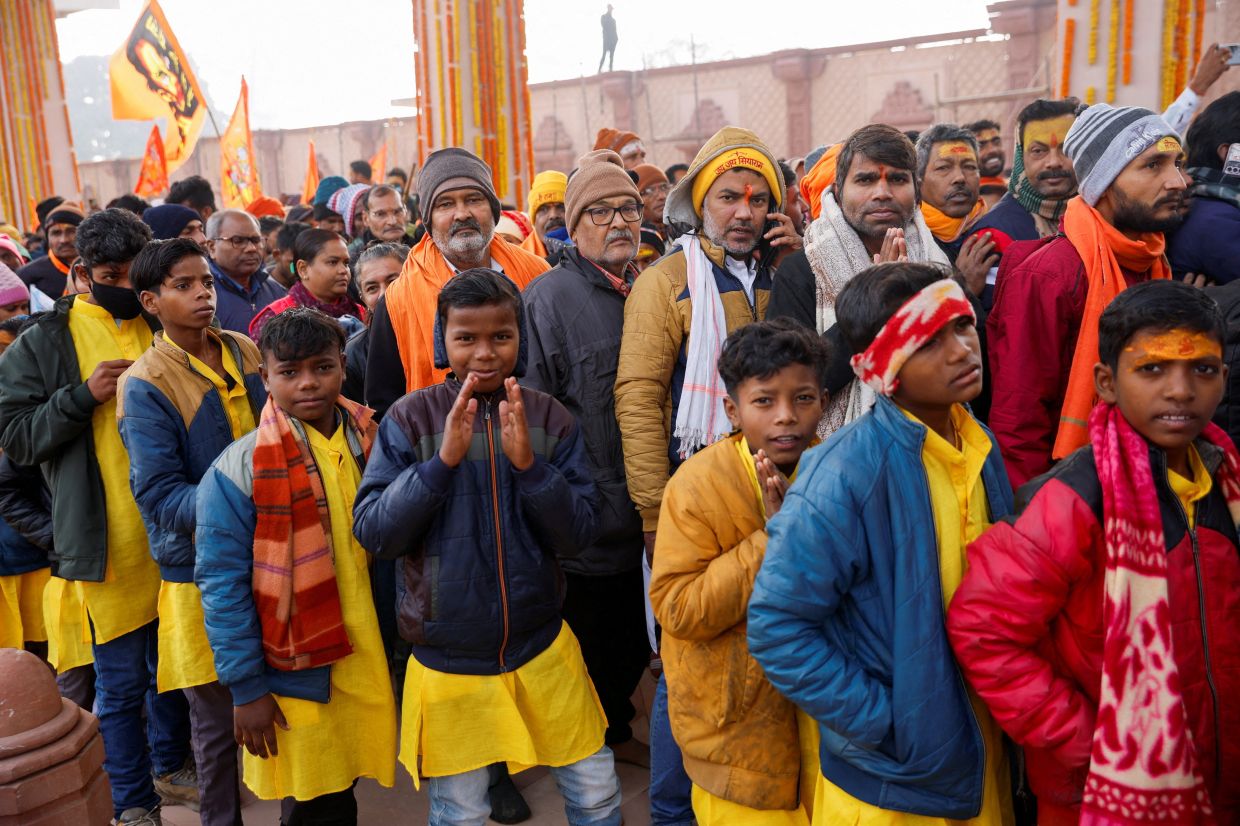
An investigation into alleged theft of donations at India's Ram temple in Ayodhya has brought urgent attention to how major religious institutions oversee the enormous financial resources they accumulate. The police inquiry, launched in June, resulted in the arrest of eight temple staff members accused of misappropriating funds. While authorities have kept the alleged theft amount undisclosed, media sources suggest the sum could reach 30 million rupees, equivalent to approximately US$314,000. The case reflects a troubling pattern at revered Hindu shrines where the handling of devotee contributions has become increasingly vulnerable to organised theft and mismanagement.
The Ram temple, inaugurated in 2024 by Prime Minister Narendra Modi, stands as one of India's most significant religious landmarks, welcoming around 90,000 visitors daily. Devotees contribute generously in various forms—currency notes, gold jewellery, silver ornaments, and other valuables—creating a continuous flow of offerings that temple staff must carefully collect, count, and secure. For ordinary believers like Ashok Prasad Kushwaha, an auto-rickshaw driver from Delhi who has made three pilgrimages in as many years, these donations represent far more than monetary transactions. They constitute spiritual investments rooted in faith that their hard-earned contributions directly serve divine purposes. The revelation that temple insiders systematically exploited counting procedures and surveillance gaps to siphon funds strikes at the heart of this trust relationship, transforming what should be sacred stewardship into a betrayal of religious devotion.
The Ram temple scandal arrives amid a broader series of financial irregularities at India's major pilgrimage destinations. The Badrinath shrine and Tirumala Tirupati Devasthanams, the latter commanding assets valued at approximately US$31 billion and ranking among the world's wealthiest temple organisations, have similarly faced allegations of misappropriated donations. These recurring incidents underscore that the problem extends far beyond a single institution or isolated bad actors. Instead, they point to fundamental structural deficiencies in how India's religious establishment manages enormous capital flows. Many temples now operate at a scale and financial complexity comparable to multinational corporations, yet they continue functioning under governance frameworks designed for smaller, community-based worship spaces. This mismatch between organisational sophistication and administrative capability creates numerous opportunities for dishonesty.
Hindu activist Rahul Easwar, who carries the hereditary title of descendant from Sabarimala temple's former chief priest, identifies the core vulnerability as an absence of meaningful transparency and accountability mechanisms. He advocates for comprehensive institutional reforms including mandatory written receipts for all donations, comprehensive digital accounting platforms that leave permanent electronic trails, surveillance systems monitoring donation collection areas, and genuinely independent external audits. These measures mirror standard practices at major commercial organisations and governmental bodies, yet remain exceptional rather than standard across India's religious institutions. The weakness becomes particularly apparent when examining how the Ram temple's accused staff exploited insufficient counting procedures and monitoring lapses—vulnerabilities that elementary institutional controls would have prevented or immediately exposed.
The Ram temple's position carries exceptional political and religious significance that amplifies the scandal's impact. The structure stands on land that became the centre of India's most protracted religious conflict, with Hindu tradition maintaining that Lord Ram's birthplace existed at that exact location over seven millennia ago, while historical records indicate a 16th-century Mughal mosque occupied the site. This religious controversy transformed into one of India's most destructive communal conflicts when Hindu activists demolished the Babri mosque in 1992, sparking communal violence that claimed over 2,000 lives. Following the 2019 Supreme Court verdict awarding the disputed location for temple construction, a nationwide fundraising campaign gathered approximately US$341 million. Given this fraught history and the immense national investment the temple represents, allegations of internal theft carry particular sting and invite intense scrutiny of institutional integrity.
The broader context of India's expanding religious economy amplifies these governance challenges. Consultancy firm IMARC valued India's religious and spiritual sector at US$70.14 billion during 2025, with projections suggesting expansion to US$135.41 billion by 2034. This explosive growth reflects rising middle-class disposable incomes, increasing religious participation among urban populations, and expanding temple tourism. However, institutional frameworks governing financial oversight have failed to evolve proportionally. Legal expert Sonam Chandwani from KS Legal & Associates emphasises that no uniform national legislative framework establishes consistent financial transparency requirements across religious institutions. Instead, diverse temples operate under multiple overlapping legal regimes and tax classifications, creating a patchwork of standards that some institutions exploit to avoid rigorous scrutiny. This regulatory fragmentation permits temples in certain jurisdictions to maintain minimal disclosure requirements.
Special challenges emerge during mass pilgrimage events like the Kumbh Mela, where millions of devotees converge and collection volumes exceed the capacity of conventional administrative systems. Easwar points out that managing the financial chaos of such mega-events—with countless individual collection points and immense donor flows—strains even well-intentioned institutions. The logistical complexity of documenting every contribution, securing funds in real time, and preventing losses requires infrastructure and expertise that traditional temple management structures rarely possess. These seasonal surges in donation volume inadvertently create windows of vulnerability where determined insiders can exploit administrative confusion.
Political analyst Anurag Naidu contends that contemporary temples have fundamentally transformed from traditional worship spaces into vast financial and social enterprises requiring institutional governance comparable to major public sector organisations. Modern temples operate hospitals, educational institutions, pilgrimage infrastructure, and substantial real estate portfolios, alongside their core religious functions. Yet many continue operating under governance structures rooted in historical temple management practices rather than modern institutional norms. This gap creates a persistent tension between the spiritual mission of temples and their practical operating requirements. Without deliberate institutional modernisation, temples risk allowing a small percentage of dishonest staff to undermine the integrity that enables millions of ordinary devotees to participate confidently.
The implications of inadequate temple governance extend beyond financial losses into the fabric of religious participation itself. Devotees depend fundamentally on institutional trustworthiness when contributing valuables to temples; their faith constitutes both spiritual investment and practical sacrifice. Each documented case of internal theft incrementally erodes this foundational trust relationship. However, the scandal also presents an opportunity for systematic institutional reform. Several Indian states have begun implementing more rigorous financial oversight for major temples, and some prominent institutions voluntarily adopted digital accounting systems and external audits. These emerging best practices could form the foundation for national standards that preserve temples' spiritual functions while establishing the transparency and accountability that modern financial management demands.

