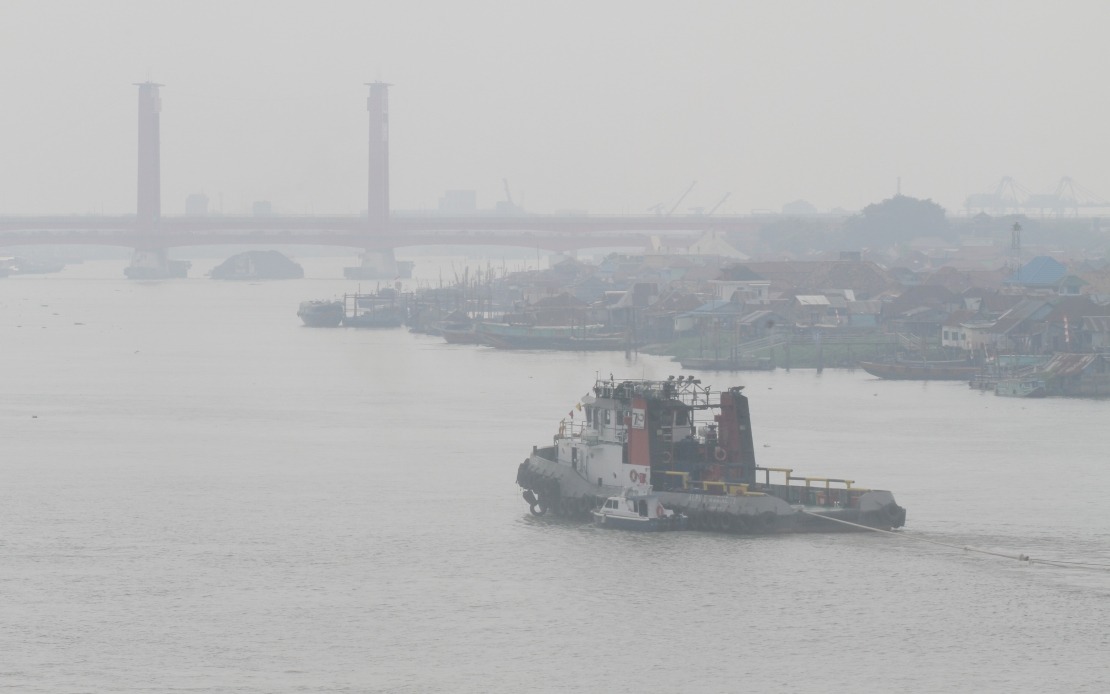
Indonesia has moved to formalize its response to the recurring transboundary haze crisis affecting both nations, announcing that coordinated weather modification operations will anchor its joint efforts with Malaysia. The initiative represents a significant escalation in the two countries' commitment to addressing seasonal smoke that regularly blankets Southeast Asia, with Indonesian officials signalling a willingness to explore technical interventions alongside traditional firefighting approaches.
The deteriorating air quality across West Kalimantan has created an urgent backdrop for this deepened cooperation. Smoke from extensive forest and land fires has severely compromised air quality readings across Sarawak, with the Air Pollutant Index climbing to 195 in certain locations as of Friday morning—pushing dangerously close to the 201-plus threshold that designates air conditions as very unhealthy. This represents a significant deterioration compared with recent years, making 2025 notably more severe than the relatively haze-free period experienced in 2024.
According to Berton Panjaitan, Acting Head of the Data, Information, and Disaster Communication Centre at Indonesia's National Disaster Mitigation Agency, the two neighbours have moved beyond preliminary discussions toward concrete operational frameworks. Malaysia has been granted explicit permission to enter Indonesian airspace for cloud-seeding operations, a technical measure designed to encourage precipitation and suppress smoke accumulation. The approval signals Jakarta's recognition that bilateral mechanisms must include active atmospheric intervention rather than passive monitoring alone.
The deepening partnership follows ministerial-level engagement between Malaysia's Natural Resources and Environmental Sustainability Minister Datuk Seri Arthur Joseph Kurup and Indonesian Environment Minister Jumhur Hidayat on August 24. During those discussions, both sides committed to intensifying prevention measures and coordinating firefighting capabilities. Malaysia simultaneously conveyed its readiness to deploy firefighting resources should Indonesia formally request them, though Jakarta has not yet sought direct assistance such as water-bombing aircraft.
Panjaitan indicated that while immediate requests for aerial firefighting support have not materialised, the government remains receptive to such collaboration within established bilateral mechanisms. This measured approach suggests Indonesia prefers to exhaust domestic firefighting capacity before escalating to international asset-sharing, yet maintains open channels should conditions worsen beyond current management capabilities. The positioning reflects both Jakarta's commitment to demonstrating autonomous crisis response and pragmatic acknowledgement that Malaysian support may become necessary.
The haze's geographical reach has expanded significantly within Malaysia itself, with unhealthy air quality readings now affecting major urban centres beyond Sarawak. Kuala Lumpur, Selangor, Penang, Kedah, and Perak have all experienced degraded air conditions, suggesting that smoke plumes have travelled substantial distances across the region. For Malaysian readers in these states, the haze represents not merely an environmental nuisance but a genuine public health concern requiring behavioural adjustments and health precautions.
Malaysia's diplomatic and humanitarian presence in Kalimantan has undertaken immediate protective measures for its registered nationals. The Malaysian Consulate in Pontianak reported that approximately 577 Malaysians—predominantly expatriate workers distributed across Kalimantan—have been advised to comply with local authorities' directives including mask usage, online schooling, and minimised outdoor movement. The consulate's focus on citizen welfare reflects the substantial Malaysian economic presence in the Indonesian region, where many individuals work in resource extraction, manufacturing, and commercial sectors vulnerable to operational disruptions caused by hazardous air conditions.
Historically, Malaysia has demonstrated practical commitment to West Kalimantan's firefighting infrastructure. In 2023, the Pontianak consulate contributed six water pumps to the West Kalimantan Governor's Office—a tangible asset transfer supporting local suppression efforts. This precedent establishes a pattern of Malaysian investment in collaborative fire management rather than merely responding to transboundary smoke impacts on its own territory, positioning Kuala Lumpur as a stakeholder in regional fire prevention rather than a passive victim of Indonesian environmental challenges.
The current haze episode underscores persistent vulnerabilities in Southeast Asian environmental governance. Despite recurring annual cycles of seasonal fires and haze, neither nation has developed foolproof prevention systems. Weather modification represents a symptom-management approach rather than root-cause prevention. Underlying drivers—including agricultural land-clearing practices, peatland drainage enabling combustion, and enforcement challenges across vast territories—remain largely unaddressed. The bilateral coordination framework, while valuable, operates within structural constraints that limit long-term efficacy.
For Malaysian policymakers and businesses, the coordination announcement signals both commitment and limitation. Malaysian companies operating across Kalimantan and Indonesian firms with Malaysian operations face renewed supply chain and workforce mobility challenges during haze seasons. The reliance on weather modification to manage transboundary smoke rather than preventing fires' initiation suggests that operational disruptions will likely recur annually unless fundamental land management practices shift across Indonesia's fire-prone regions.
The weather modification strategy, while technically sound, depends heavily on atmospheric conditions aligning with cloud-seeding requirements. Success remains inconsistent and meteorologically contingent, particularly during extended dry seasons when fires are most widespread. Indonesian and Malaysian scientists continue refining these techniques, yet their effectiveness has never replaced comprehensive fire prevention and rapid suppression as primary mitigation strategies. The current diplomatic framework thus reflects pragmatic effort to manage an ongoing regional challenge while acknowledging that permanent solutions require more fundamental policy shifts in land management and agricultural practices across Indonesia's territorial expanse.

