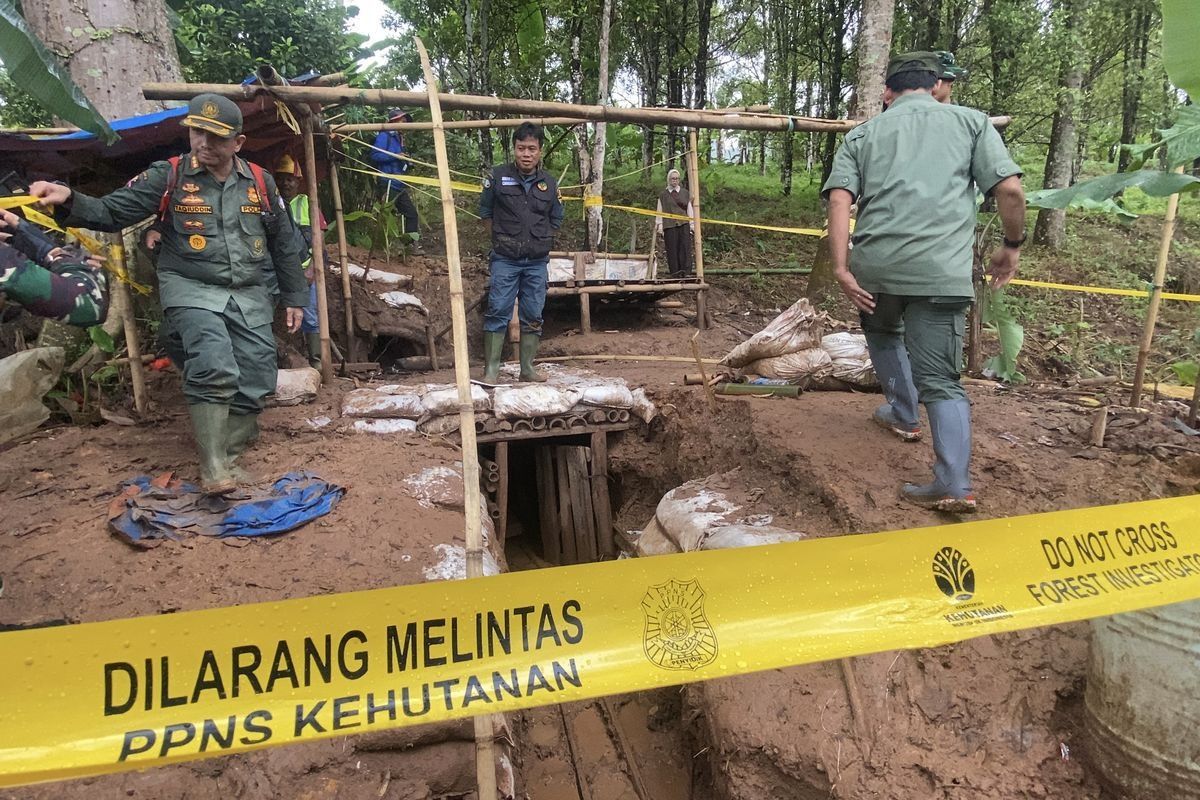
Indonesia's energy ministry has taken formal action against 24 foreign nationals accused of participating in an illegal gold mining enterprise operating within the Maluku region, marking another significant enforcement effort against unauthorised extraction activities in the resource-rich eastern archipelago. The charges relate to an operation centred around the Gunung Botak area, where authorities allege the suspects engaged in criminal activity by establishing supporting infrastructure for the mines. Energy ministry official Jeffri Huwae announced the development in a statement released Thursday, June 25, indicating that the investigation has progressed from initial detention to formal charges in the criminal justice system.
According to ministry statements, the foreign nationals are accused of constructing extensive infrastructure networks specifically designed to facilitate illegal gold extraction and processing. These facilities allegedly included access roads, processing plants, and other equipment necessary to operate an unlicensed mining enterprise. The scale of infrastructure development suggests a well-organised operation rather than ad-hoc artisanal mining, pointing to a structured enterprise with considerable capital investment and coordination. Such operations typically require multiple levels of planning and execution, raising questions about the extent of local involvement in facilitating access to the mining sites and providing logistical support.
The legal framework under which the charges proceed carries substantial consequences for those convicted. Indonesian law provides for maximum prison sentences of five years for such violations, a penalty that reflects the government's classification of illegal mining as a serious criminal matter with significant implications for national resource management and environmental protection. This sentencing range represents Indonesia's commitment to enforcing its mining regulations, though the actual sentences handed down will depend on individual circumstances and the extent of each suspect's involvement in the operation.
State news agency Antara previously reported that 24 Chinese nationals detained in the Gunung Botak area were working under the sponsorship of a local company identified as PT Harmoni Alam Manise. This detail is significant as it indicates potential complicity or involvement by Indonesian entities in facilitating the illegal mining operation, either through active participation or by providing the administrative and logistical framework necessary for the foreign workers to operate. The involvement of a registered local company suggests that illegal mining in Indonesia sometimes operates through a veneer of legitimacy, with unlicensed extraction occurring under the cover of supposedly authorised enterprises.
The current enforcement action has resulted in a split situation regarding suspect custody. Authorities have detained twelve of the foreign nationals within Indonesian jurisdiction and have initiated criminal proceedings against them. However, twelve additional suspects remain at large and have left Indonesia, placing them beyond the immediate reach of Indonesian law enforcement. This geographical division complicates prosecution efforts and raises questions about enforcement mechanisms for prosecuting suspects who flee the country. International cooperation and extradition procedures may be necessary to bring these individuals to justice, adding complexity and potential delay to the legal process.
Beyond the foreign nationals, Indonesian authorities have expanded the investigation to include two Indonesian citizens named as criminal suspects. Their involvement likely extends beyond the foreign workers and may encompass organisational roles, provision of local knowledge and access, bribery of officials, or other facilitative actions. The inclusion of Indonesian suspects underscores that illegal mining operations typically require domestic participation and support, and that the problem cannot be attributed solely to external actors. This aspect of the case touches on potential corruption or negligence by local officials who may have allowed or enabled the illegal operation to proceed.
The specific nationalities of the suspects and the quantity of gold extracted remain undisclosed, with the energy ministry declining to provide these details publicly. This withholding of information may reflect ongoing investigations, diplomatic considerations, or standard prosecutorial practice to avoid compromising the case. However, the detail reported by Antara suggesting that the detainees are Chinese nationals has implications for Indonesia's relationship with a major regional power and investor, and for scrutiny of foreign worker practices in Indonesian resource extraction.
Illegal mining involving foreign nationals is not an isolated incident in Indonesia but rather reflects a persistent pattern of enforcement challenges across multiple regions. Police in Papua arrested four Chinese nationals in the Senggi district during the previous year, indicating that such operations continue despite enforcement efforts. These recurring cases suggest that conditions in Indonesia—whether related to weak enforcement capacity, attractive profit margins, or insufficient surveillance of remote areas—continue to draw foreign participants into unlicensed mining activities.
The Maluku region, like much of eastern Indonesia, possesses significant mineral resources and faces ongoing challenges in preventing illegal extraction. Balancing resource development with environmental protection and legal mining practices remains a central governance issue for regional authorities. The prevalence of illegal mining operations suggests that illicit extraction may offer financial advantages over licensed mining, or that compliance with regulatory frameworks creates sufficient barriers to deter legitimate operators from certain areas.
This enforcement action reflects Indonesia's broader push to strengthen control over its natural resources and reduce environmental degradation caused by unregulated mining. However, the fact that suspects remain at large and that similar operations continue to emerge indicates that the challenge requires sustained effort, improved monitoring capabilities, and potentially greater coordination between central and regional authorities. The case also highlights the transnational dimension of resource crime, requiring engagement with source countries and international law enforcement mechanisms to effectively combat such operations.

