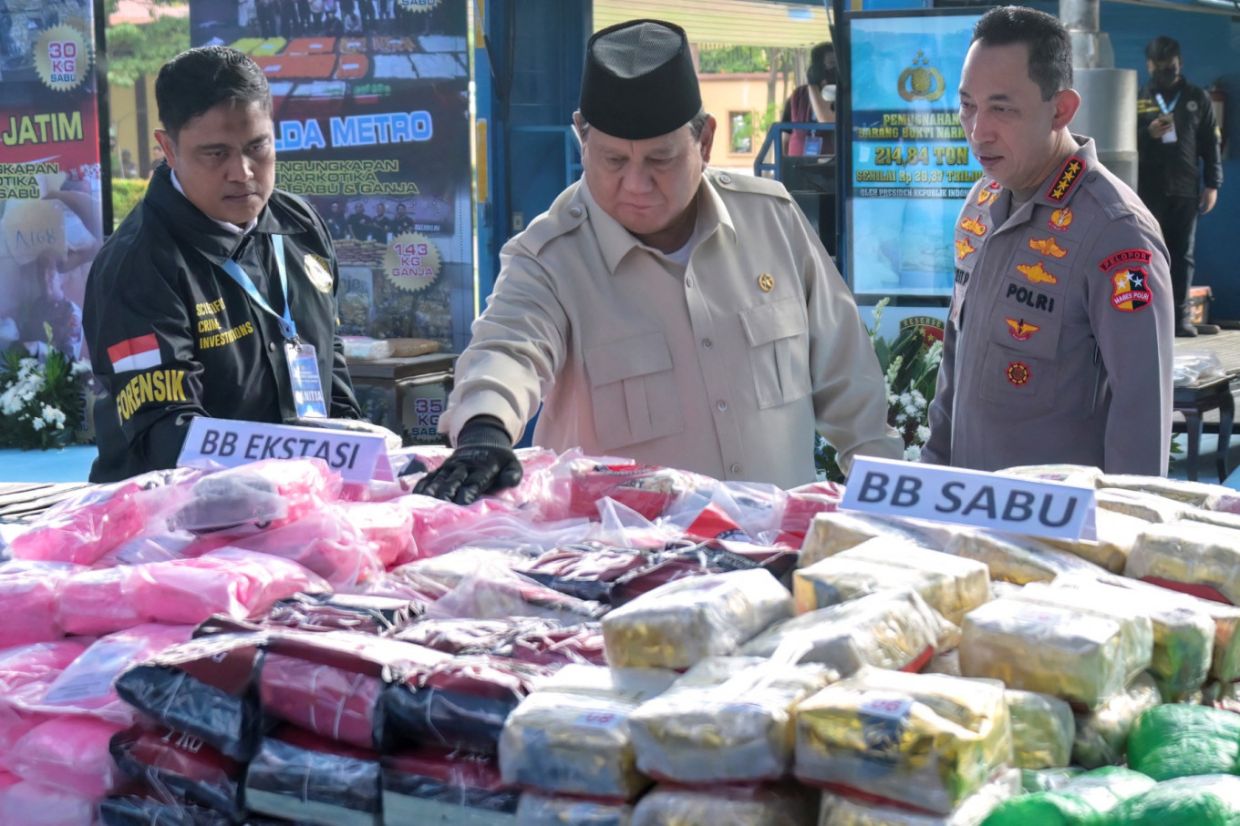
Indonesia has dismantled a significant drug trafficking operation with the seizure of 2.6 tonnes of liquid methamphetamine from a vessel operating under false credentials off the Riau coast, according to a statement released by the National Narcotics Agency late on Tuesday, August 18. The interception of the MV Rain Maker, which sailed under a Tanzanian flag, resulted in the arrest of 10 crew members and represents one of the country's most substantial narcotics busts in recent years, underscoring the persistent vulnerability of Indonesian waters to organised smuggling networks.
Intelligence operations had alerted authorities to the movement of a suspicious vessel that had departed from Sarawak in Malaysian waters and traversed the Andaman Sea, with intercepted communications and surveillance data suggesting it was transporting contraband destined for Indonesian distribution networks. The National Narcotics Agency coordinated with customs authorities to stage an interception operation near Bengkalis in Riau province late on Monday evening, deploying specialised boarding teams to conduct thorough inspections of the cargo hold and vessel systems. The tactical coordination between agencies reflected Indonesia's recognition that major trafficking operations require multi-institutional responses rather than single-agency responses.
Upon inspection, authorities discovered that the methamphetamine had been carefully concealed within eight water barrels and a dedicated water tank, a concealment technique commonly employed by trafficking syndicates attempting to evade detection by standard screening methods. According to Roy Hardi Siahaan, a senior official with the narcotics agency, the storage methodology indicated sophisticated operational planning and access to knowledge of port inspection protocols. The use of water containers as concealment reflects the adaptation of trafficking methodologies in response to enhanced security measures, with criminals consistently exploring new ways to obscure illicit substances from detection technologies and physical inspections.
Beyond the primary contraband, canine detection units identified and seized more than 1.5 million cigarettes of illegal origin stored throughout the vessel, suggesting the operation may have involved multiple trafficking enterprises utilising the same logistical infrastructure. The presence of large-scale cigarette smuggling alongside drug trafficking is not uncommon in Southeast Asian waters, as criminal networks frequently diversify revenue streams by consolidating multiple illicit commodities onto single vessels to maximise operational efficiency and spread the financial and security risks across multiple prohibited goods.
All ten crew members arrested during the operation were identified as Myanmar nationals, reflecting the established pattern of recruitment by trafficking organisations that draw personnel from neighbouring countries to reduce the risk of intelligence penetration and to complicate prosecution efforts across jurisdictional boundaries. The use of foreign crews, particularly from Myanmar, has become a standard operational practice for major trafficking syndicates operating in Southeast Asian waters, as it creates additional complications for law enforcement coordination and creates psychological and linguistic barriers between arrested personnel and interrogating authorities.
This latest seizure represents the second major drug interdiction involving a Tanzanian-flagged vessel in the region within a single month, suggesting either a coincidental clustering of operations or a deliberate pattern of using vessels registered under that flag as a trafficking strategy. On August 8, Indonesian authorities had previously seized 1.3 tonnes of ketamine from another vessel operating in waters surrounding the Riau Islands in proximity to Singapore's territorial boundaries. That operation resulted in the arrest of eight individuals, comprising seven Myanmar nationals and one crew member from Taiwan, indicating a consistent modus operandi across multiple trafficking attempts and suggesting some level of coordination or shared logistical networks among different criminal enterprises.
The Riau Islands and surrounding waters have emerged as a critical chokepoint in Southeast Asian drug trafficking networks, given their proximity to international shipping lanes, relatively porous border control mechanisms, and established distribution networks linking to major population centres across the region. The strategic location places these waters at the intersection of multiple trafficking routes originating from production centres in Myanmar, Laos, and Thailand, making Indonesian interdiction efforts crucial to disrupting supply chains that eventually reach markets throughout Southeast Asia and beyond. The geographic positioning also explains why Indonesian authorities have intensified surveillance and interception operations in these areas despite resource constraints.
Indonesia maintains some of the world's most stringent drug control legislation, including capital punishment provisions applicable to major traffickers involved in large-quantity operations. However, the country has observed a moratorium on executions for an extended period, creating a situation where the legal framework theoretically permits severe penalties while practical implementation remains suspended pending ongoing reviews of capital punishment policy. This distinction between statutory severity and actual enforcement creates ambiguity regarding the deterrent effect of Indonesian drug laws on international trafficking organisations calculating operational risks.
The persistent scale and sophistication of drug trafficking operations targeting Indonesian waters suggest that existing enforcement mechanisms, despite their intensity and the commitment of substantial resources, have not yet achieved sufficient deterrent or disruptive effects against major criminal syndicates. The rapid succession of significant seizures within short timeframes indicates either increased law enforcement vigilance detecting previously obscured operations or alternatively, a genuine expansion of trafficking volumes attempting to capitalise on market demand throughout the region. Both interpretations carry significant implications for maritime security policy and the allocation of naval and coast guard resources across Southeast Asian countries attempting to maintain effective control over their territorial waters.

