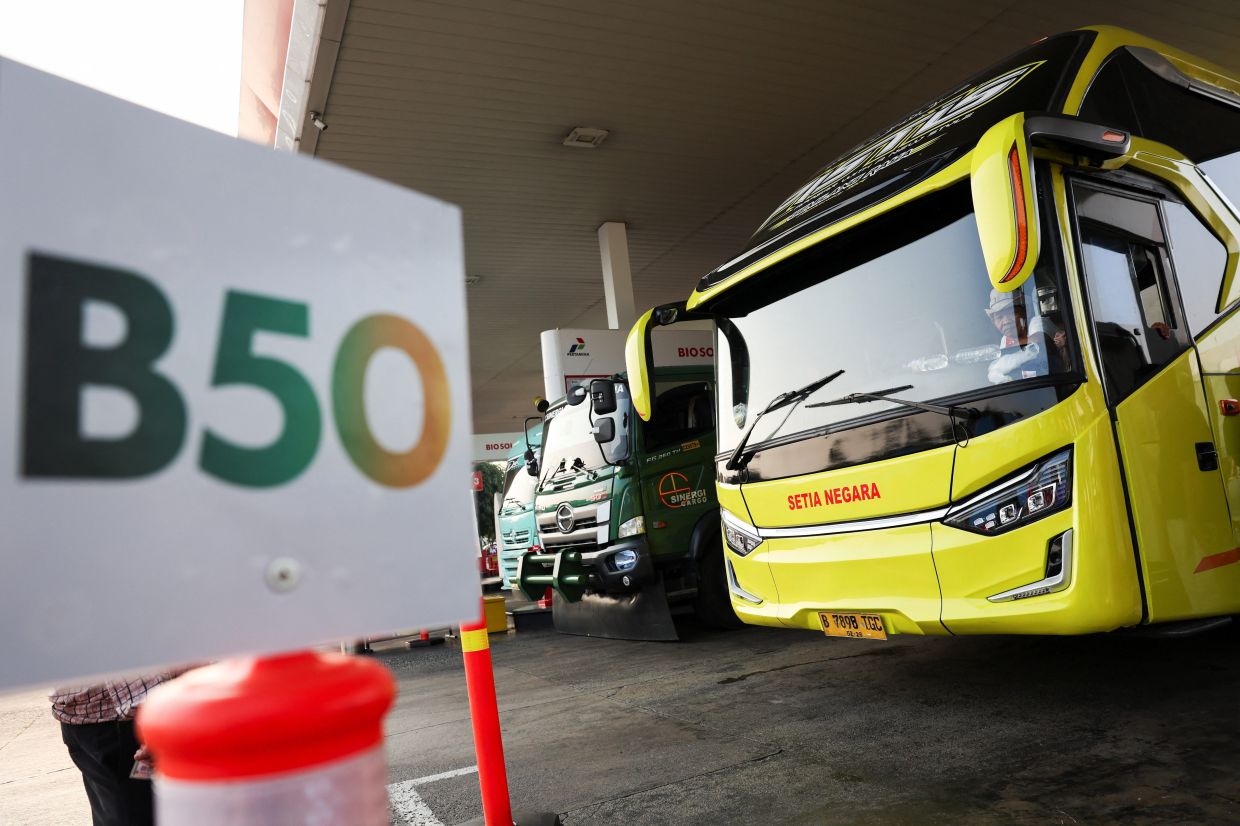
Indonesia has formally activated its B50 biodiesel initiative, a significant escalation in the country's strategy to leverage its dominant position in global palm oil markets while simultaneously reducing reliance on imported diesel fuel. Energy Minister Bahlil Lahadalia unveiled the details at a ceremony in Karawang, West Java, attended by President Prabowo Subianto, confirming that the 50% blend mandate will require between 16.3 million and 17 million metric tons of crude palm oil annually, up from the previous 15.2 million tons required under the B40 standard.
The programme represents one of the world's most aggressive mandatory biodiesel blending schemes and carries profound implications for the global palm oil market. As the planet's largest producer, Indonesia supplies roughly 60 per cent of the world's palm oil, making policy decisions in Jakarta consequential far beyond Southeast Asia. The B50 mandate will funnel substantially more domestic production into fuel applications, potentially tightening global supplies and supporting prices for an industry that underpins the livelihoods of millions of Indonesian smallholder farmers and plantation workers.
President Prabowo framed the initiative within a broader environmental narrative, asserting that Indonesia was spearheading global carbon reduction efforts through accelerated biofuel adoption. His remarks underscore a critical tension within Indonesia's energy and climate strategy: biodiesel expansion simultaneously addresses energy security and emission concerns whilst providing economic stimulus to the politically influential palm oil sector. Notably, Prabowo disclosed that he had advocated internally for an even more ambitious B100 mandate, whereby diesel would be entirely replaced by palm-based fuel. His ministerial team counselled against such an extreme approach, advising that the 50% blend would suffice to eliminate diesel imports entirely, yet Prabowo indicated his intention to pursue a 60% blend in the medium term.
The fiscal implications of this transition are substantial. Energy ministry projections indicate the B50 programme will reduce Indonesia's import bill by approximately 170 trillion rupiah (USD 9.41 billion) in the current fiscal year, compared to savings of around 133 trillion rupiah anticipated for 2025. These figures highlight the dual benefit Indonesia seeks: slashing foreign currency outlays whilst simultaneously creating domestic demand for a commodity that generates significant tax revenue and export earnings. For a nation frequently constrained by balance-of-payment pressures, such savings represent a material contribution to macroeconomic stability.
Implementing this transition requires careful coordination across Indonesia's sprawling energy and agricultural sectors. Under the preceding B40 scheme, the government allocated 15.64 million kilolitres of biodiesel this year, representing a 4.68 per cent increase from 2024's consumption of 14.94 million kilolitres. The B50 mandate will necessitate far larger allocations, with ministry officials projecting requirements between 16.7 million and 18 million kilolitres of fatty acid methyl ester (FAME), the technical term for processed biodiesel. However, the government has yet to issue definitive additional quotas for the new programme, a gap that has created uncertainty amongst industry participants still awaiting official allocation guidance.
The transition timeline includes a practical adjustment period for stakeholders holding existing B40 inventories. Businesses have until the end of September to deplete remaining B40 stocks before the system fully transitions to B50 distribution. This phasing mechanism, whilst administratively sensible, creates a window during which supply chains must adapt and refineries, distributors, and retailers must recalibrate operations. The relatively compressed timeframe underscores the Indonesian government's determination to implement this policy swiftly, though it may strain operational flexibility for some market participants.
From a regional perspective, Indonesia's aggressive biodiesel expansion carries knock-on effects for ASEAN economies. Several Southeast Asian nations maintain their own biofuel mandates or blending requirements, and Indonesia's decision to absorb substantially more domestic palm oil production may influence regional feedstock availability and pricing. Malaysia, which ranks second globally in palm oil production, could see competitive dynamics shift as Indonesia's policy creates additional demand within its own borders rather than in international trade.
The prospective advancement toward 60% blends, should Prabowo's ambitions materialise, would position Indonesia even further ahead of global peers in mandatory biofuel stringency. Few nations mandate blends approaching such levels, making Indonesia a geopolitical outlier in its commitment to palm-based fuel displacement of conventional diesel. This strategic positioning reflects Jakarta's conviction that it can sustainably expand palm oil production whilst simultaneously addressing energy security and climate objectives—a calculus that remains contested among environmental and sustainability advocates.
The ministry's commitment to initiate research into 60% and potentially higher blends signals that B50 functions as an intermediate step rather than an endpoint. This developmental trajectory suggests Indonesian policymakers view biodiesel expansion as a long-term structural feature of the country's energy mix. Such permanence would have lasting consequences for agricultural land use patterns, rural development patterns, and global commodity markets that depend on Indonesian palm oil flows.
Industry compliance with the new mandate will require refineries and biodiesel processors to invest in upgraded production capacity and distribution infrastructure. The absence of finalised quota allocations introduces planning uncertainty that could delay some investment decisions, though the government's clear policy intent likely provides sufficient confidence for major market actors to proceed with necessary capital expenditures. Private sector engagement will ultimately determine whether implementation proceeds smoothly or encounters bottlenecks that temporarily constrain diesel availability or force price adjustments.
The B50 programme encapsulates Indonesia's broader strategic approach to energy policy: leveraging comparative advantages in natural resource endowments to enhance energy independence whilst generating employment and fiscal revenues. Whether this model proves sustainable—both economically and environmentally—will shape Indonesia's energy trajectory for the coming decade and influence how other palm oil-producing nations approach renewable fuel mandates.

