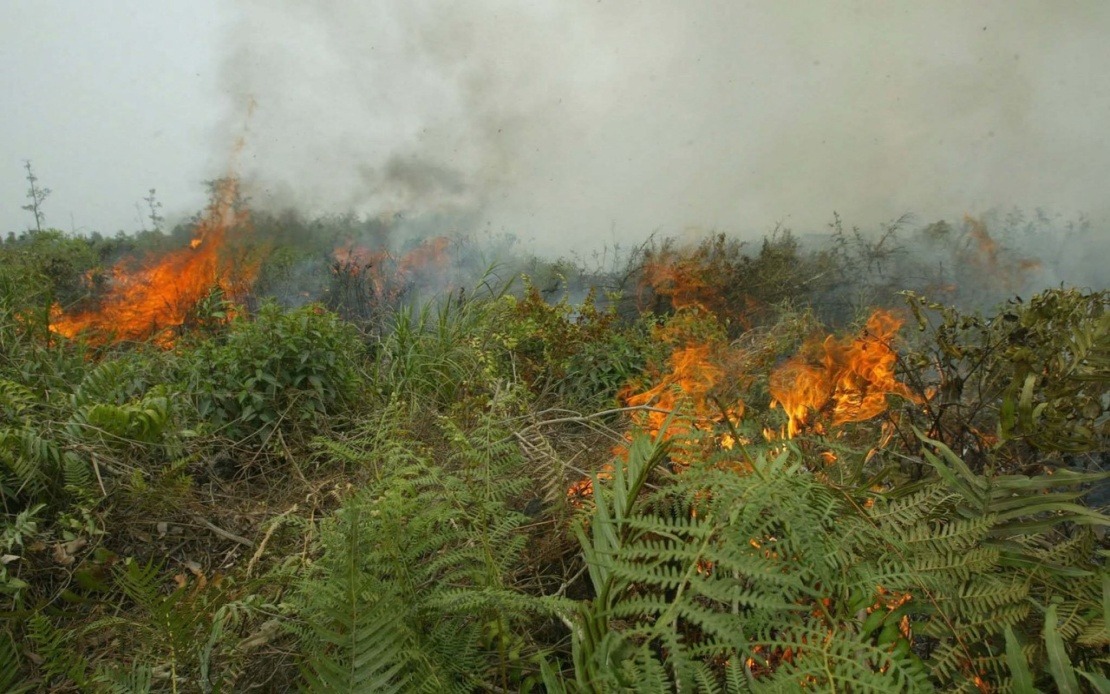
Indonesia is confronting a severe escalation in forest and land fires that have engulfed parts of Kalimantan and Sumatra, threatening public health and environmental stability across the region. The situation has deteriorated markedly in West Kalimantan, where hotspot detection nearly doubled within a single day to 7,377 on Monday, according to data presented by the National Disaster Mitigation Agency (BNPB). This sharp jump represents an increase of 3,553 hotspots alongside a corresponding rise in confirmed fire spots to 104, with atmospheric visibility plummeting to below one kilometre in affected areas, creating hazardous conditions for residents and hampering visibility for firefighting operations.
The fire situation presents a complex regional picture with variable intensity across the island provinces. While West Kalimantan has become the primary hotspot zone, Central Kalimantan continues to maintain a substantial fire presence with 5,244 detected hotspots, despite a marginal decline of 147 from the previous reading. More encouragingly, South Kalimantan has shown some improvement with hotspots dropping by 405 to reach 504, though the number of active fire spots paradoxically increased to 55. Across the Sumatra region, the dynamics remain mixed, with South Sumatra reporting a concerning surge of 209 additional hotspots to reach 1,013, whilst Riau and Jambi provinces demonstrated more positive trends with declining hotspot counts and reduced fire activity.
The human toll of these fires extends far beyond environmental degradation, with public health officials warning of mounting respiratory illnesses across densely populated areas. Nearly 5.5 million people residing in fire-affected zones across both Sumatra and Kalimantan face direct exposure to hazardous smoke and air quality degradation. Deputy Health Minister Prof Dante Saksono Harbuwono disclosed that acute respiratory infection cases, locally termed ISPA, have accumulated to approximately 13,500 cases across July and August alone, with 4,082 individuals still actively suffering from smoke-related respiratory ailments as of late August. The severity of this year's health crisis represents a meaningful escalation compared to the previous year, prompting intensified surveillance protocols and coordination between national and provincial health authorities.
The Indonesian government has initiated enforcement action against corporate entities suspected of negligence in fire management and prevention within their designated concession areas. The Environment Ministry has identified 42 companies for potential administrative and legal sanctions following a systematic process of overlaying satellite-detected hotspot data with official concession mapping records. Of these flagged operations, 19 companies are currently undergoing field verification to determine whether fires were deliberately ignited or resulted from inadequate preventive measures, with the remaining companies scheduled for inspection in a subsequent phase. This enforcement strategy reflects Indonesia's application of strict liability principles, whereby companies operating within concession areas bear full responsibility for fires occurring on their leased territories, irrespective of the fire's origin.
Environmental Law Enforcement Deputy Rizal Irawan clarified that the legal framework imposes accountability through both administrative and civil sanction mechanisms, ensuring that companies cannot escape penalties based on ambiguity regarding fire causation. This approach represents a significant shift toward corporate responsibility in forest management and has implications for regional investors and multinational corporations operating across Indonesian concession zones. The enforcement actions underscore the government's commitment to holding private sector actors accountable for environmental degradation linked to their operations, signalling potential consequences for companies found wanting in fire prevention and early suppression measures.
Indonesia recognises the transnational dimensions of the fire crisis, particularly regarding atmospheric pollution that transcends national borders and affects neighbouring economies. Through established ASEAN mechanisms, Indonesian officials have engaged in regional coordination with Malaysia and Singapore following a ministerial-level environment meeting convened in Bali last month. These diplomatic channels address the phenomenon of transboundary haze, which poses air quality challenges and public health concerns across Southeast Asia during fire seasons. The commitment to regional cooperation reflects understanding that unilateral domestic efforts, whilst necessary, require complementary action from neighbouring states to manage shared atmospheric and environmental challenges.
On the preventive front, Indonesia has mobilised community-based fire management infrastructure designed to provide early detection and rapid response capabilities. The government has established 95 Fire Care Community groups, locally designated as MPA (Masyarakat Peduli Api), comprising 1,425 trained personnel distributed across six fire-prone provinces spanning Sumatra and Kalimantan. These community organisations represent a decentralised approach to fire prevention, leveraging local knowledge and proximity to vulnerable forest areas. The government has further committed to expanding this network by establishing an additional 35 groups during the current year, progressively extending early warning and initial suppression capacity across the most vulnerable regions.
Corporate compliance with fire prevention mandates has shown mixed results, suggesting implementation challenges within the private sector. The Environment Ministry had previously circulated notices to 2,226 companies requiring them to establish personnel rosters and procurement facilities for fire prevention and emergency response purposes. Follow-up assessments reveal that approximately 80 per cent of firms have reported demonstrable readiness status, whilst 20 per cent remain non-responsive to compliance directives. This uneven adoption rate raises concerns about the effectiveness of current enforcement mechanisms and suggests that administrative notices alone may prove insufficient to ensure universal compliance across the corporate landscape operating in fire-prone regions.
The escalating fire crisis carries significant implications for Malaysia and other regional economies reliant on stable environmental conditions and clean air quality. The near-doubling of hotspots in West Kalimantan, situated in geographical proximity to Malaysian Borneo, presents particular concern for Malaysian policymakers and health authorities. Transboundary haze episodes typically correlate with elevated fire activity in Indonesian provinces, and the current surge trajectory suggests heightened risk of air quality deterioration across neighbouring Malaysian states, particularly Sabah and Sarawak. Malaysian stakeholders should monitor developments closely and potentially activate existing bilateral coordination mechanisms with Indonesian counterparts to ensure coordinated emergency response protocols.
The broader regional context reveals that Indonesia's forest and land fire challenge remains embedded within persistent structural vulnerabilities including land conversion pressures, weak enforcement capacity in remote areas, and potentially competing economic incentives within concession management. Whilst government initiatives addressing community mobilisation and corporate accountability represent positive steps, their effectiveness ultimately depends on sustained political commitment, adequate resource allocation, and the development of integrated land management practices that simultaneously address economic development imperatives and environmental protection. The trajectory of current fire season suggests that incremental improvements in prevention and response capacity, whilst meaningful, may require more fundamental reforms in concession management practises and land-use planning to achieve sustained reduction in fire incidence during future fire seasons.

