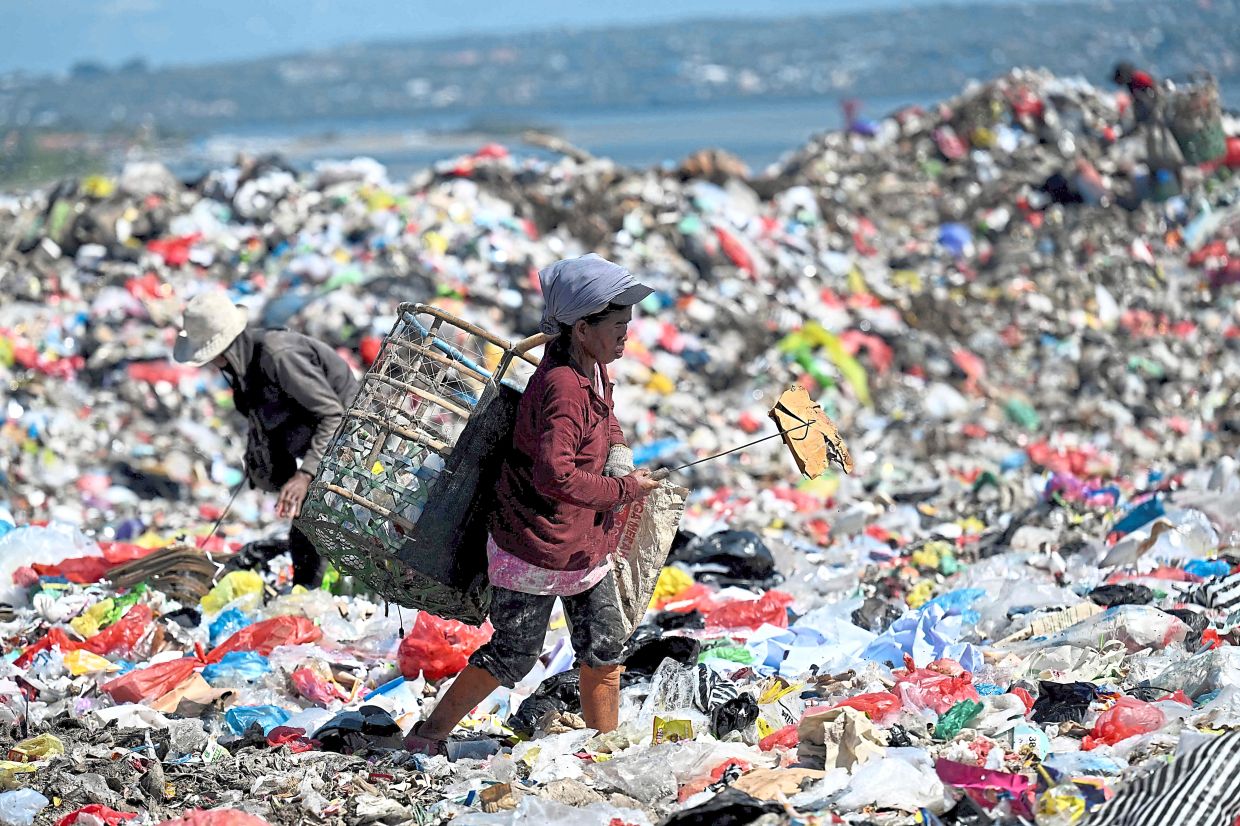
Indonesia has taken a significant step toward addressing its escalating waste crisis by inaugurating the country's first waste-to-energy plant in Bali. The facility, located in Pedungan Village within South Denpasar, was formally opened on Wednesday in a ceremony that signals the beginning of a broader national initiative to transform municipal refuse into electrical energy. The groundbreaking marks a turning point in how Southeast Asia's largest economy approaches one of its most pressing environmental challenges, positioning waste management as a priority under President Prabowo Subianto's administration.
The project is being developed through a partnership between Danantara Investment Management, the nation's sovereign wealth fund, and Daya Energi Bersih Nusantara, a dedicated project company. Rosan Roeslani, chief executive of Danantara Indonesia, articulated the strategic importance of the initiative during the inauguration, framing waste management as an urgent collective responsibility that demands swift action. His comments reflected the government's determination to prevent mounting waste from becoming a legacy burden for future generations, a concern that resonates across Indonesia's rapidly urbanising population centres.
The Bali facility incorporates moving grate incinerator technology, a proven waste conversion system deployed successfully across Europe, North America, and Asia. This technological approach has been selected specifically because it aligns with stringent emissions standards established by the European Industrial Emissions Directive, demonstrating Indonesia's commitment to meeting international environmental benchmarks. Rather than viewing waste-to-energy as merely a disposal solution, the project represents an effort to harness proven technology that has achieved measurable environmental outcomes in developed nations, adapted to the Indonesian context.
Environmental performance represents a cornerstone of the project's design philosophy. According to Danantara's projections, the facility will reduce emissions by up to 80 per cent per tonne of waste compared with conventional open dumping at landfills. This dramatic reduction reflects the stark difference between controlled thermal processing with emissions management systems and the uncontrolled decomposition that occurs in landfill environments, where waste generates methane and leachate contamination. For a country where landfill capacity in major urban areas faces chronic pressure, this efficiency gain carries profound implications for air and soil quality.
The economic dimensions of the project extend beyond electricity generation to encompass employment creation. Danantara estimates that the facility will generate up to 1,200 green jobs during both the construction phase and subsequent operational periods. This figure underscores how infrastructure investment in environmental solutions can contribute to labour markets, particularly in Bali, where economic diversification beyond tourism carries strategic importance. The creation of skilled technical positions in plant operation and maintenance addresses broader workforce development needs in the renewable energy sector.
A critical commercial framework has been established to ensure the project's long-term viability. During the groundbreaking ceremony, state utility PLN and the project company executed a Power Purchase Agreement, securing a guaranteed market for electricity produced by the facility. This contractual arrangement provides essential commercial certainty for investment, as it guarantees revenue streams independent of fluctuating market prices. For Malaysia and other Southeast Asian nations observing Indonesia's approach, such power purchase agreements represent a vital mechanism for attracting private capital to environmental infrastructure without imposing undue risks on developers.
Indonesia's waste generation presents a scale challenge that underscores the urgency of such projects. The nation produces more than 140,000 tonnes of waste daily, a volume that reflects both population growth and rising consumption patterns characteristic of middle-income development. To contextualise this figure, it represents waste generation equivalent to several major Southeast Asian countries combined, distributed across an archipelago with limited landfill capacity in key regions. This scale demands systematic solutions rather than incremental improvements.
The waste-to-energy approach serves a dual function within Indonesia's broader energy and environmental strategy. By converting refuse into electricity, the facility simultaneously addresses two pressing challenges: the need to expand renewable and alternative energy sources to meet growing demand, and the imperative to reduce reliance on landfills, which consume valuable land and generate environmental hazards. For a developing economy where land availability for waste disposal has become increasingly constrained, energy recovery from waste represents an efficient use of material flows that might otherwise require permanent sequestration.
The Bali facility's significance extends beyond its immediate operational scope to signal the government's sectoral priorities. Under President Prabowo Subianto's direction, waste management has been elevated to a policy issue warranting direct intervention through state-linked investment vehicles. This positioning suggests that subsequent facilities may follow across other major population centres, potentially transforming how Indonesia manages the refuse streams generated by cities like Jakarta, Surabaya, and Medan. The replication of such facilities would collectively represent a substantial shift in waste sector infrastructure.
For regional observers, including Malaysian policymakers and investors, the Bali plant offers instructive lessons regarding technology transfer, regulatory frameworks, and financing mechanisms for environmental infrastructure. Malaysia's own waste management challenges, particularly in densely populated Klang Valley and Penang, share structural similarities with conditions in Indonesian urban centres. The successful operation of the Bali facility could inform regional approaches to waste-to-energy deployment, particularly regarding standards harmonisation and cross-border learning on equipment performance and emissions compliance.
The project also reflects evolving investor appetite for environmental infrastructure in Southeast Asia. Danantara's participation demonstrates how sovereign wealth funds increasingly prioritise sustainability-aligned investments, a trend that influences capital allocation across the region. This institutional endorsement of waste-to-energy projects may encourage similar initiatives by Malaysian entities and other regional investors, potentially accelerating the transition away from landfill-dependent waste management across Southeast Asia.

