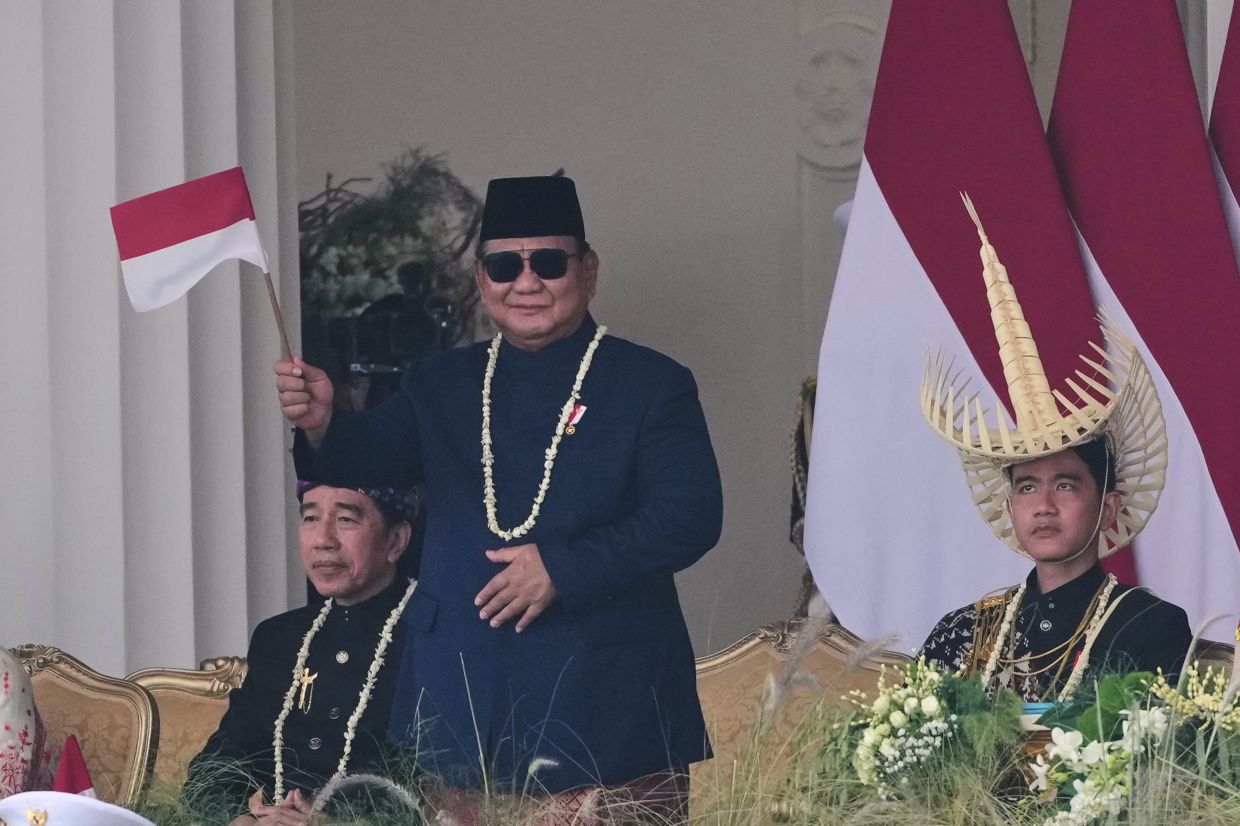
President Prabowo Subianto presided over Indonesia's 81st Independence Day commemoration in Jakarta on Monday, steering the nation through a ceremonial occasion shadowed by the humanitarian toll of a devastating natural disaster that claimed at least 53 lives on Flores Island in East Nusa Tenggara. The solemnity of the day reflected the complexity of celebrating national achievement whilst confronting the immediate needs of citizens grappling with earthquake damage and loss, a juxtaposition that underscored the fragility underlying Indonesia's vast and geologically active territory.
The President appeared in full ceremonial dress at Merdeka Palace in Central Jakarta, wearing a navy beskap paired with a traditional black peci and jasmine garland as he performed his duties as official inspector of the independence commemoration. The flag-hoisting ceremony drew upon Indonesia's deeply rooted patriotic traditions, yet the atmosphere carried an unusual gravity that extended beyond the typical solemnity of state occasions. Prabowo's presence and bearing signalled both respect for the nation's founding and acknowledgement of the competing demands facing his administration.
The morning's proceedings unfolded with characteristic pageantry, beginning with cultural performances and a ceremonial parade that traced a route from the National Monument to the presidential palace. A gilded carriage bore replicas of Indonesia's iconic red-and-white flag alongside the original text of the 1945 Proclamation, escorted by 114 cavalry officers and 45 military police motorcyclists drawn from the presidential security apparatus. These elements, whilst maintaining the visual grandeur associated with Independence Day observances, also served to frame the event within the continuity of state authority and institutional stability.
A period of silent reflection became the day's most poignant moment, as Prabowo invited attendees to honour the sacrifices of national heroes whilst directing prayers toward those enduring the earthquake's aftermath. This gesture transformed the ceremony from mere ritual into an expression of collective responsibility, acknowledging that independence meant little without the capacity to protect citizens from natural calamity. The invocation suggested an administration conscious of the need to balance ceremonial obligations with demonstrated compassion for the afflicted.
The earthquake that struck Flores early Saturday morning registered 7.7 on the magnitude scale, with its violent shaking followed by nearly 1,000 aftershocks of varying intensities across the following days. The National Disaster Mitigation Agency reported that approximately 5,400 residents had abandoned their homes in search of safer ground, whilst more than 130 individuals sustained injuries, predominantly fractures and crush injuries from collapsing structures. The scale of displacement raised immediate concerns about shelter, clean water, food security, and disease prevention—challenges that would occupy government resources and attention for weeks.
Hundreds of houses and buildings across the island suffered damage ranging from cosmetic harm to complete structural failure, transforming entire neighbourhoods into scenes of rubble and devastation. The destruction of residential and commercial infrastructure compounded the human tragedy, effectively erasing much of the built environment that residents depended upon for daily existence. Early reports suggested that agricultural areas also sustained damage, threatening food supplies for a population already dealing with emergency conditions.
Even as Jakarta's ceremonies proceeded, a fresh 5.8-magnitude earthquake struck Monday morning approximately 39 kilometres north of East Nusa Tenggara, originating at a depth of 10 kilometres beneath the seabed according to Indonesia's Meteorology, Climatology and Geophysics Agency. This continuing seismic activity underscored the region's placement atop the Ring of Fire, where tectonic forces ensure that earthquake risk remains a permanent feature of life for millions of Indonesians. The Monday morning aftershock served as a sobering reminder that the disaster remained active and unpredictable.
The competing demands of statecraft became apparent through the notable absences from the Jakarta ceremony. Several senior ministers had foregone attendance to travel directly to the affected region, prioritising disaster response coordination over symbolic participation in the capital's celebrations. State Secretary Prasetyo Hadi explained that Coordinating Minister for Human Development Pratikno, Home Minister Tito Karnavian, Public Works Minister Dody Hanggodo, and Deputy Health Minister Benjamin Paulus Octavianus had all deployed to East Nusa Tenggara to monitor relief operations and oversee reconstruction planning.
Prasetyo's public remarks acknowledged the tension between national celebration and immediate human need, framing the two not as competing obligations but as complementary expressions of independence's meaning. He stated that genuine independence required ensuring that disaster-affected citizens received care and attention, suggesting that the true measure of national capability lay not in ceremonial pageantry but in institutional responsiveness to crisis. This rhetorical positioning attempted to unify the dual messaging of the day—honouring the nation's past whilst demonstrating its commitment to citizen welfare.
When pressed about whether President Prabowo himself planned to travel to Flores to inspect conditions and meet affected residents directly, Prasetyo declined to confirm any definite plans. His response—that the situation required continued monitoring before decisions could be finalised—suggested that the administration was still assessing the scale and nature of requirements on the ground. Presidential visits to disaster zones carry both symbolic and logistical weight, potentially diverting resources from emergency response whilst generating valuable morale benefits. The hesitation to commit to a timeline reflected pragmatic uncertainty about optimal deployment of top-level attention.
For Malaysian observers, Indonesia's simultaneous navigation of these ceremonial and humanitarian imperatives offers relevant insight into how large, archipelagic nations with significant seismic risk manage the intersection of state ritual and emergency governance. The incident highlights the vulnerability of island communities to natural disasters, a concern that resonates across Southeast Asia. Indonesia's institutional response—deploying ministers whilst maintaining symbolic continuity—demonstrates the challenge of projecting both strength and compassion during extended crises.
The Flores earthquake and its continued aftershocks underscored that for Indonesians, particularly those in geologically active regions, independence celebrations occur perpetually against the backdrop of environmental hazards beyond human control. The ability to marshal resources, coordinate response, and sustain morale across multiple levels of government becomes not merely a matter of administrative competence but a test of whether the state can meaningfully deliver on the social contract implicit in independence itself. Monday's ceremony in Jakarta thus carried significance that transcended traditional patriotic observance.

