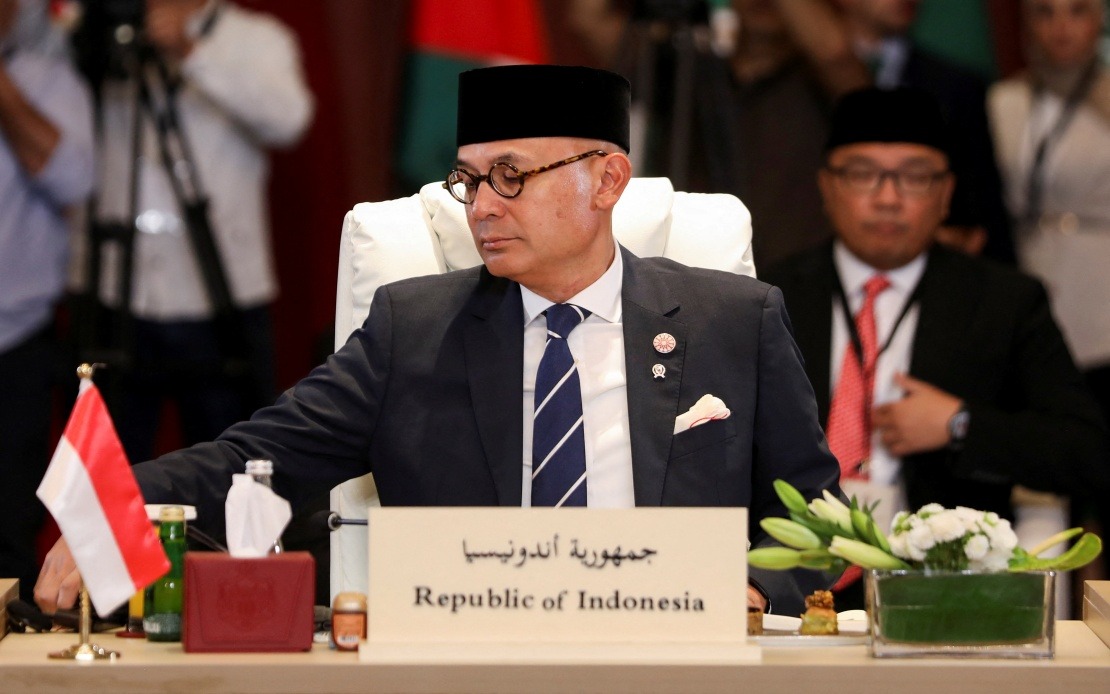
Indonesia has made an urgent appeal to the global community to establish a unified international coalition supporting the Palestinian cause, emphasising that this remains a concern extending well beyond the Muslim world. Speaking at a high-level ministerial gathering in Amman, Jordan, on Wednesday, Deputy Foreign Minister Arrmanatha Nasir, who represented Foreign Minister Sugiono, stressed the necessity of moving beyond conventional diplomatic approaches that have proven ineffective in curbing Israeli actions.
The core of Indonesia's message centres on a fundamental strategic problem: disunity among nations advocating for Palestine has historically allowed Israel to exploit these divisions and pursue policies without meaningful coordinated international consequences. Nasir argued that fragmented responses to violations of international law have perpetuated a cycle where diplomatic pressure remains scattered and ultimately ineffectual. This assessment reflects Jakarta's view that only through consolidated international action can meaningful progress occur on resolving the Palestinian question.
To operationalise this vision, Indonesia advanced five interconnected proposals aimed at reshaping the international response framework. These measures prioritise establishing a common strategic approach grounded in genuine unity among concerned nations, ensuring strict adherence to international legal principles and respecting International Court of Justice rulings, and expanding formal diplomatic recognition of Palestine across the global stage. This multi-pronged approach suggests Jakarta believes that technical legal mechanisms combined with political solidarity represent the pathway toward meaningful change.
The additional proposals demonstrate Indonesia's broader strategic thinking on the Middle Eastern crisis. These include intensifying protective efforts surrounding the Al Aqsa Mosque complex, mobilising international resources and commitment toward Gaza's reconstruction following decades of conflict and recent military operations, reinforcing Palestinian internal political cohesion across rival factions, and sustaining robust backing for UNRWA, the United Nations agency providing essential services to Palestinian refugees throughout the region. Each component addresses different dimensions of the Palestinian predicament, from immediate protection of religious sites to long-term institutional development.
Nasir's analysis of the transformed regional landscape underscores why Indonesia believes the moment demands heightened international attention. The proliferation of unauthorised Israeli settlements across the West Bank, ongoing military campaigns affecting Gaza, Syria and Lebanon, combined with escalating tensions between Washington and Tehran, has fundamentally altered the strategic environment in West Asia. These cumulative developments have created what Indonesian policymakers view as an increasingly volatile situation requiring urgent coordinated responses rather than piecemeal reactions.
Indonesia simultaneously reaffirmed its principled positions on Jerusalem's status, explicitly endorsing Jordan's custodial role over Islamic holy sites within the Old City, particularly Al Haram Al Sharif. This emphasis on the Hashemite Custodianship reflects Jakarta's recognition of Jordan's special historical and religious standing in Jerusalem affairs and demonstrates solidarity with Amman's position as guardian of these sacred locations. Simultaneously, Jakarta reiterated its commitment to the establishment of an independent Palestinian state operating within the parameters established by international law and recognised international conventions.
The Ministerial Meeting on Jerusalem, which convened specifically to strengthen collective international responses to Israeli policies in Palestinian territories, brought together an notably broad coalition of nations. Beyond Indonesia, the gathering included foreign policy leadership from Malaysia, Algeria, Saudi Arabia, Iraq, Egypt, Türkiye, Tunisia, Somalia, Pakistan, Morocco, Palestine and Qatar, as well as senior officials representing the League of Arab States. This substantial attendance demonstrated the breadth of concern regarding developments in the occupied territories and Jerusalem's status.
The assembled ministers adopted a joint statement articulating several critical positions on the Palestinian question. The declaration emphasised the importance of strengthening Palestinian administrative institutions specifically within Jerusalem, rejecting any unilateral attempts to relocate diplomatic missions to the city as violations of international law and established international consensus. This stance represents a fundamental assertion that Jerusalem's final status remains subject to negotiated settlement rather than unilateral actions by any party.
Furthermore, the joint statement called for coordinated international media campaigns designed to educate global audiences about Israeli actions in Palestinian territories and their broader implications for regional stability and international peace and security. This decision reflects recognition among participating nations that information and narrative strategies constitute integral components of diplomatic pressure, requiring deliberate coordination rather than ad hoc messaging.
Indonesia's prominent advocacy role at this ministerial gathering reflects its broader strategic positioning as a major Islamic-majority democracy with significant regional influence. By framing the Palestinian cause as a universal human rights and international law matter rather than primarily a religious issue, Jakarta appeals to a broader coalition of international actors. This approach potentially expands beyond traditional Muslim-majority nations to include countries primarily motivated by commitment to international legal norms and opposition to unilateral military expansion.
For Malaysia and other Southeast Asian nations, Indonesia's initiative carries particular significance given the region's large Muslim populations and the widespread sentiment supporting Palestinian self-determination. The appeal for broad-based, legally-grounded international responses provides a framework allowing Southeast Asian countries to engage substantively with Middle Eastern issues while remaining within established international legal structures. This bridges domestic constituencies' concerns with diplomatic professionalism and adherence to international law.
The Indonesian proposal essentially reframes Palestinian advocacy away from isolated regional concerns toward a matter of global institutional significance. By emphasising International Court of Justice rulings, UNRWA mandates, and UN frameworks, Jakarta positions support for Palestine within mainstream international legal discourse. This strategy potentially creates space for wider international participation including countries without dominant Muslim populations but committed to international legal order and opposition to unilateral territorial expansion by any state.

