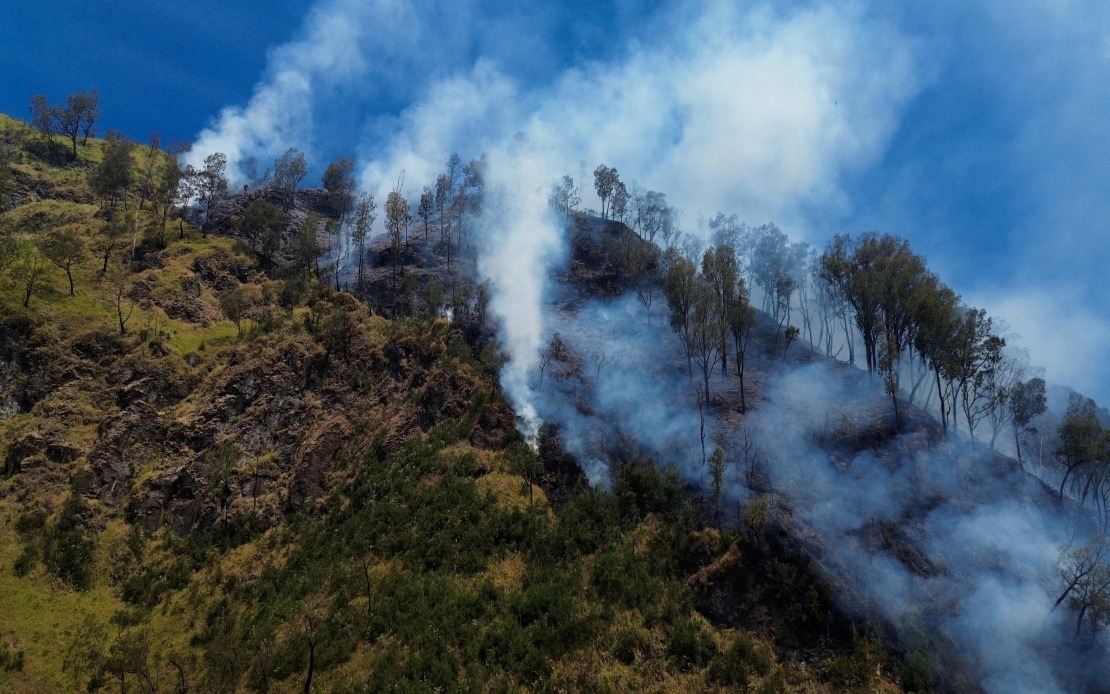
Indonesia's famed Mount Bromo has been completely closed to public access as authorities battle an escalating wildfire that continues to consume vast tracts of forest across the Bromo Caldera region in East Java. The decision to suspend all tourism operations came into effect at 10pm on Saturday, marking a significant disruption to one of the country's most visited natural attractions. The unprecedented closure reflects the severity of the situation and the determination of local officials to prioritise both firefighting operations and the safety of visitors and local communities in the vicinity.
The Bromo Tengger Semeru National Park authority implemented the comprehensive shutdown, which affects all five primary access routes that typically funnel tourists into this iconic volcanic destination. The sealed entrances include Cemorolawang in Probolinggo Regency, Wonokitri in Pasuruan Regency, as well as Jemplang and Coban Trisula in Malang Regency, and Senduro in Lumajang Regency. This multi-pronged closure strategy ensures that no visitors can reach the mountain via any conventional route, allowing ground and aerial response teams to operate without concern for civilian safety whilst containing the advancing flames.
According to the National Disaster Management Agency, the fire emerged on Monday and has already scorched approximately 176.20 hectares across multiple regencies. Abdul Muhari, head of the BNPB's Disaster Data, Information, and Communication Centre, confirmed that active hotspots were still generating smoke into Saturday evening, with monitoring teams maintaining vigilance despite moderate wind conditions that could potentially accelerate the fire's spread. The persistence of these hotspots indicates that despite intensive suppression efforts, the blaze remains far from fully contained and poses an ongoing threat to the surrounding ecosystem and communities.
To combat the escalating situation, Indonesian authorities have mobilised substantial aerial resources, deploying two helicopters equipped with 1,000-litre water-carrying capacity each to target the flames from above. This aerial assault complements ground-based firefighting operations and represents a significant commitment of resources to extinguish the blaze. The deployment of such specialized equipment underscores the complexity of battling wildfires in mountainous terrain where conventional ground-based methods alone prove insufficient.
For tourists who had already secured online tickets for the closure period, park authorities have offered flexibility, permitting visitors to either reschedule their visits to a future date or apply for full refunds. This provision acknowledges the disruption caused to tourism operators and travellers whilst maintaining the priority of containment and safety. The economic implications of such closures ripple through East Java's tourism sector, affecting hotels, guides, transportation services, and related businesses that depend on visitor arrivals.
The Mount Bromo fire is not an isolated incident within Indonesia's volcanic regions during this period. A separate forest fire that erupted at the Sembalun Resort area of Mount Rinjani National Park in East Lombok Regency also demanded emergency response efforts. That blaze, which ignited at approximately 8pm on Friday, spread across roughly 30 hectares before firefighting teams brought it under control by around 1.30am on Saturday. The simultaneous emergence of fires across two major national parks suggests broader environmental stress within the region, possibly linked to seasonal conditions or weather patterns that increase flammability.
The underlying causes of both the Bromo and Rinjani fires remain subject to official investigation, with authorities yet to definitively determine whether the ignitions resulted from natural phenomena such as lightning strikes, human activity, or other factors. This uncertainty adds an investigative dimension to the crisis response, as determining causation may inform prevention strategies for future seasons. In Indonesia's context, where forest fires periodically generate transboundary haze affecting neighbouring countries including Malaysia and Singapore, the determination of root causes carries regional significance beyond national borders.
Mount Bromo's closure carries particular weight given its status as one of Indonesia's most recognizable natural landmarks and a cornerstone of East Java's tourism economy. The volcano, renowned for its dramatic caldera formation and ethereal fog-shrouded landscapes, typically attracts thousands of domestic and international visitors monthly. The indefinite suspension of access denies the region this vital revenue stream during what would normally constitute the high tourism season, placing financial pressure on the intricate ecosystem of microenterprises that service the mountain's visitors.
The fire response demonstrates Indonesia's capacity to mobilise resources across multiple agencies and levels of government. However, the incidents also highlight the vulnerability of protected areas to environmental hazards that can materialise rapidly and spread extensively before containment becomes feasible. Climate patterns, vegetation moisture levels, and seasonal dynamics all factor into wildfire susceptibility, and these variables will likely continue to pose challenges to conservation authorities managing Indonesia's diverse and valuable national parks throughout the coming years.

