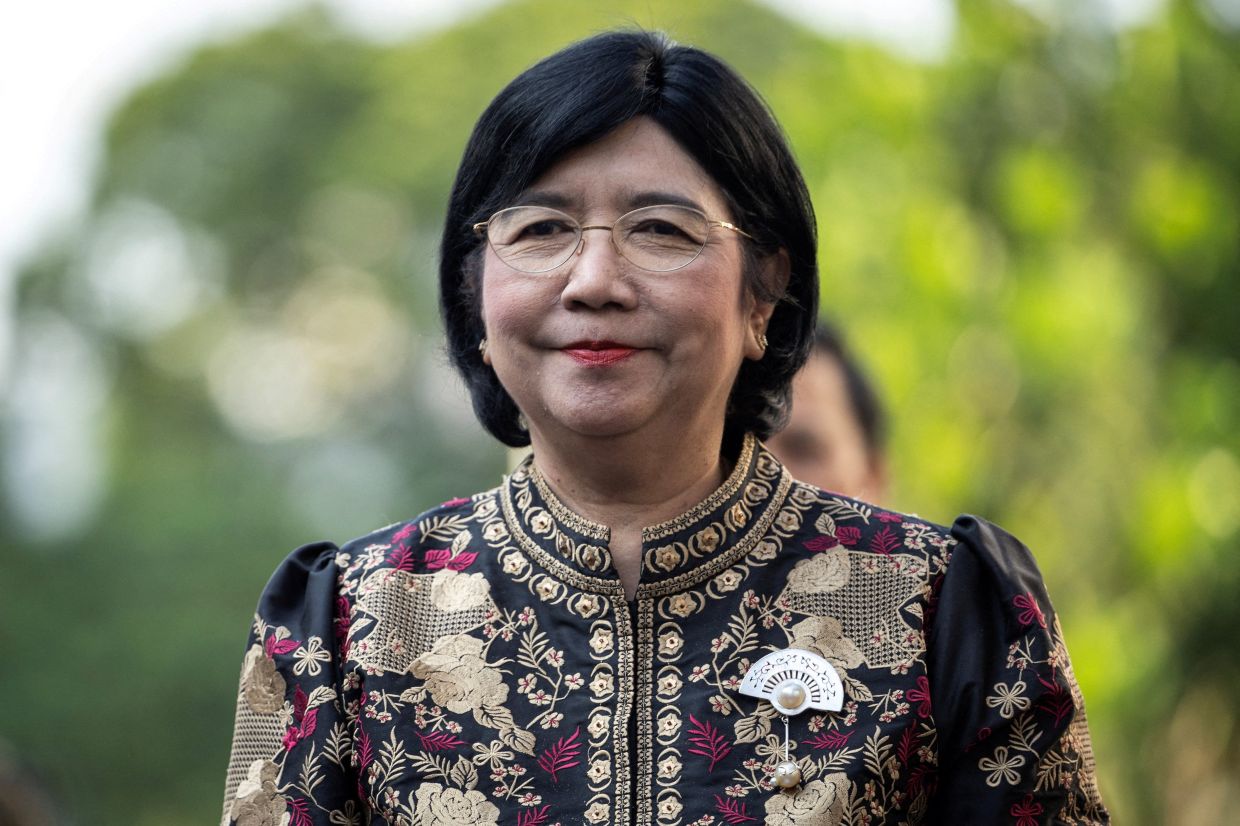
President Prabowo Subianto has put forward Destry Damayanti as the sole nomination for the position of Bank Indonesia governor, according to a statement issued by the presidential office on Monday. The move comes after the unexpected departure of Perry Warjiyo last month, who cited personal reasons for stepping down from the role. The financial markets have watched the succession process with considerable interest, given the critical importance of central bank leadership to investor confidence in Southeast Asia's largest economy.
Destry, who has held the post of senior deputy governor since 2019, has been acting in the interim governor capacity since Warjiyo's exit. Her elevation to the top position was widely anticipated, with market observers having identified her as the leading contender for the role in the weeks preceding the formal announcement. The nomination decision signals continuity in the central bank's institutional leadership at a time when maintaining policy credibility has become increasingly vital.
Markets responded positively to news of her candidacy. The rupiah strengthened following the announcement, reaching its highest valuation against the US dollar on the day since mid-June. Currency traders interpreted the selection as a vote of confidence in maintaining the central bank's technical competence and policy consistency, factors that directly influence how overseas investors view the stability of Indonesia's financial system.
The confirmation process will now move to parliament, where Prabowo's broad coalition commands a commanding majority. Under Indonesia's constitutional framework, lawmakers have thirty days to either endorse or reject the presidential nominee. Historically, this represents a formality rather than a genuine hurdle—parliament has not voted down a sitting president's choice for central bank chief since 2008, establishing a strong precedent for approval of executive nominations to the post.
Warjiyo's sudden departure had triggered fresh concerns among international investors about Indonesia's economic direction and the independence of its monetary policymaking institutions. These worries compounded existing unease about the broader G20 economy, where sentiment has cooled owing to multiple headwinds. Observers have flagged excessive government spending, questions about the autonomy of the central bank relative to political pressures, limited transparency in equity market operations, and the broader geopolitical risks emanating from tensions in the Middle East as sources of investor caution.
The central bank has found itself navigating a delicate balancing act since Prabowo assumed office. The new administration has signalled ambitious growth targets, seeking to accelerate economic expansion to eight percent annually—a significant leap from the current expansion rate hovering around five percent. Bank Indonesia has faced implicit expectations to loosen monetary conditions and provide financial support for the government's policy agenda, creating potential tension between growth promotion and the institution's core mandates.
Under Warjiyo's leadership through this period, the central bank attempted to manage these competing pressures through a multi-pronged approach. Officials lifted the benchmark interest rate by one hundred basis points during the year, working to support the rupiah through tighter monetary conditions. Simultaneously, they introduced incentives for businesses and investors to hedge rupiah exposure, signalling a pragmatic acceptance of capital flow dynamics. The bank also expanded its issuance of high-yield short-term securities denominated in rupiah, deploying these instruments strategically to attract foreign capital and counteract depreciation pressures on the currency.
Destry will inherit these complex policy challenges upon assuming office. Her background as the institution's number-two official means she has been closely involved in formulating and implementing these strategies throughout the turbulent period following the change of administration. Her technical expertise and institutional knowledge could provide reassurance to both domestic and international stakeholders concerned about policy continuity and the preservation of central bank independence.
The broader context for this succession extends beyond monetary policy mechanics. Indonesia's external position has become more vulnerable, with currency depreciation pressures reflecting global capital reallocation away from emerging markets facing higher geopolitical risk. The central bank's role in defending the rupiah while simultaneously supporting government growth ambitions represents a high-wire act that demands careful calibration and strong institutional resolve. Destry's appointment suggests that Prabowo recognises the importance of technical competence in managing these competing demands.
For Malaysian observers and regional investors, the appointment carries implications beyond Indonesia's borders. The health of the Indonesian economy and the credibility of its monetary institutions directly influence regional financial stability, investment flows, and currency market dynamics across Southeast Asia. A well-functioning and independent central bank in Jakarta supports confidence in the region's broader economic governance and institutional frameworks. Conversely, any perception of politicisation or weakening central bank independence can create spillover effects in neighbouring markets.
Destry's confirmation would represent the first opportunity for the new administration to demonstrate its commitment to preserving institutional autonomy in monetary policymaking. The parliamentary approval process, while procedurally straightforward given the government's numbers, will be closely watched by international observers as a signal of how Prabowo intends to manage the relationship between political ambitions for rapid growth and the technical requirements of sound monetary policy. The markets' initial positive reaction to her nomination suggests that international investors view her as capable of sustaining this critical balance.

