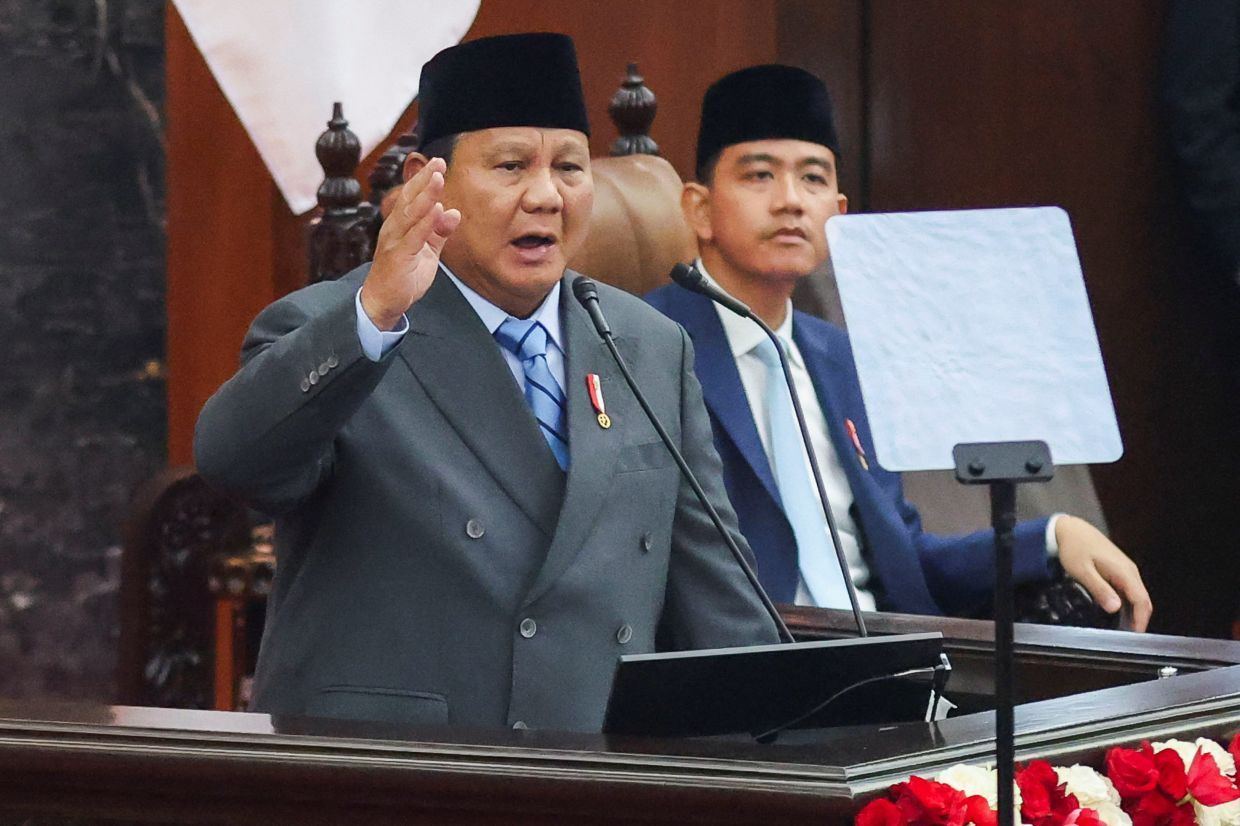
Indonesia's newly discovered burden of excessive bureaucracy has prompted President Prabowo to launch an aggressive restructuring campaign targeting the country's sprawling network of state enterprises. During a parliamentary address on Friday, Prabowo revealed that Indonesia operates 1,074 state-owned enterprises—a staggering figure that reportedly caught even the presidency off guard. The scale of this discovery underscores how fragmented and opaque the public sector had become, with hundreds of entities operating with minimal central oversight or accountability. The president's commitment to eliminate more than 750 of these firms by year-end represents perhaps the most comprehensive corporate downsizing effort Indonesia has ever undertaken, fundamentally reshaping how the state manages its commercial assets.
The genesis of this restructuring lies in the establishment of Indonesia's Danantara sovereign wealth fund last year, which was tasked with consolidating and managing state assets. As officials began auditing this vast portfolio, they uncovered a troubling pattern: numerous enterprises were nominally reporting profits while simultaneously claiming losses, suggesting widespread misreporting and financial opacity. Prabowo cited this discrepancy explicitly, describing purported earnings as "made up" and condemning what he framed as a systemic failure of governance. The contradiction between claimed profitability and actual operational performance points to deeper issues within Indonesia's public sector, where accountability mechanisms have historically lagged behind the sheer number of entities requiring oversight. This gap between appearance and reality has long plagued Indonesia's efforts to combat corruption, despite establishing dedicated anti-graft commissions and prosecuting high-profile offenders in recent years.
The scale of the proposed closures is remarkable. Indonesia has already shuttered 290 enterprises as of the presidential address, leaving 784 firms targeted for elimination to achieve the year-end goal of retaining only 300 functional operations. By consolidating this unwieldy portfolio, Jakarta anticipates recapturing substantial financial resources currently consumed by redundant administrative structures. According to Prabowo's statement, the consolidation drive has already generated approximately 50 trillion rupiah in overhead savings, roughly equivalent to $2.8 billion, through eliminating director salaries, commissioner compensation, facility rental costs, vehicle leases, and business travel expenses. The administration is targeting additional savings exceeding 70 trillion rupiah for the current year alone, demonstrating the substantial fiscal drag that these unproductive operations have exerted on the national budget.
These financial gains represent more than simple cost-cutting; they potentially redirect substantial resources toward Indonesia's pressing development priorities. Southeast Asia's largest economy has struggled with poverty, inadequate infrastructure investment, and faltering social services. By reclaiming billions in redundant overhead spending, the government theoretically gains capacity to invest more aggressively in education, healthcare, and infrastructure without proportionally increasing public debt. The timing proves particularly significant given that Indonesia faces inflationary pressures stemming from elevated global oil prices, exacerbated by instability in the Middle East. Rising living costs have sparked public discontent, with protesters specifically targeting corruption and resource misallocation as contributing factors to declining household purchasing power.
Interestingly, the restructuring has already begun producing measurable improvements in profitability among retained state enterprises. Prabowo reported that combined profits from state-owned firms surged more than 75 percent between 2024 and 2025, reaching 326 trillion rupiah. This improvement suggests that eliminating poorly performing and administratively bloated operations allows surviving enterprises to function more efficiently, potentially indicating that consolidation yields genuine operational gains rather than merely reducing visible costs. However, the rapid profitability increase also invites scrutiny given Indonesia's historical struggles with the reliability of official economic statistics. Analysts have repeatedly questioned the accuracy of Indonesia's reported GDP growth figures, which were recorded at 5.6 percent and 5.3 percent respectively in the first and second quarters of this year.
Prabowo's proposal to establish a special ad hoc court investigating state enterprise management practices extending back three decades signals intent to examine whether systematic corruption enabled the accumulation of these unproductive firms. Such retrospective accountability efforts risk creating significant institutional friction and political complications, potentially deterring future officials from implementing necessary reforms if they fear later prosecution. Recognizing this tension, Prabowo simultaneously proposed offering "special amnesty for those who repent," attempting to balance accountability with practical governance incentives. This carrot-and-stick approach reflects the challenge inherent in tackling entrenched institutional corruption without paralysing government operations through extensive recrimination. Indonesia's corruption ranking of 34 out of 100 on Transparency International's 2025 Corruption Perceptions Index underscores why such initiatives matter for international confidence and investment.
The restructuring must also contend with political sensitivity surrounding Prabowo's signature social programme: free school meals for children. Despite criticism about implementation costs and targeting efficiency, the president reaffirmed commitment to expanding this initiative while introducing "improvements and efficiency" measures. Prabowo emphasized that Indonesia cannot ignore that approximately one in four children suffer from stunting, a health condition indicating serious nutritional deficiency. This commitment reveals the administration's willingness to maintain substantial social spending despite fiscal consolidation pressures, indicating that state enterprise closure proceeds from selective pruning rather than wholesale budget austerity.
Regional observers should note that Indonesia's restructuring carries implications extending beyond Jakarta's borders. As the region's economic engine, Indonesia's success in improving capital efficiency and reducing institutional corruption influences broader Southeast Asian development trajectories. Efficient public sector management enhances Indonesia's investment climate, potentially attracting capital that might otherwise flow to competing economies. Conversely, failure to follow through on consolidation pledges would reinforce doubts about institutional capacity, particularly among foreign investors evaluating political risk and governance reliability across the region.
Prabowo's insistence that "growth and investment are not the ultimate goal" but rather that "every rupiah of investment must create jobs and improve quality of life of our people, especially those at the bottom" reflects rhetorical acknowledgment that GDP expansion alone fails to address distribution challenges. This framing suggests the administration recognizes that Indonesia's growth statistics, while respectable by regional standards, have not sufficiently translated into tangible living standard improvements for lower-income Indonesians. The state enterprise restructuring therefore becomes framed not merely as technocratic efficiency-seeking but as a necessary precondition for redirecting public resources toward inclusive development objectives that might restore public confidence in government capacity.

