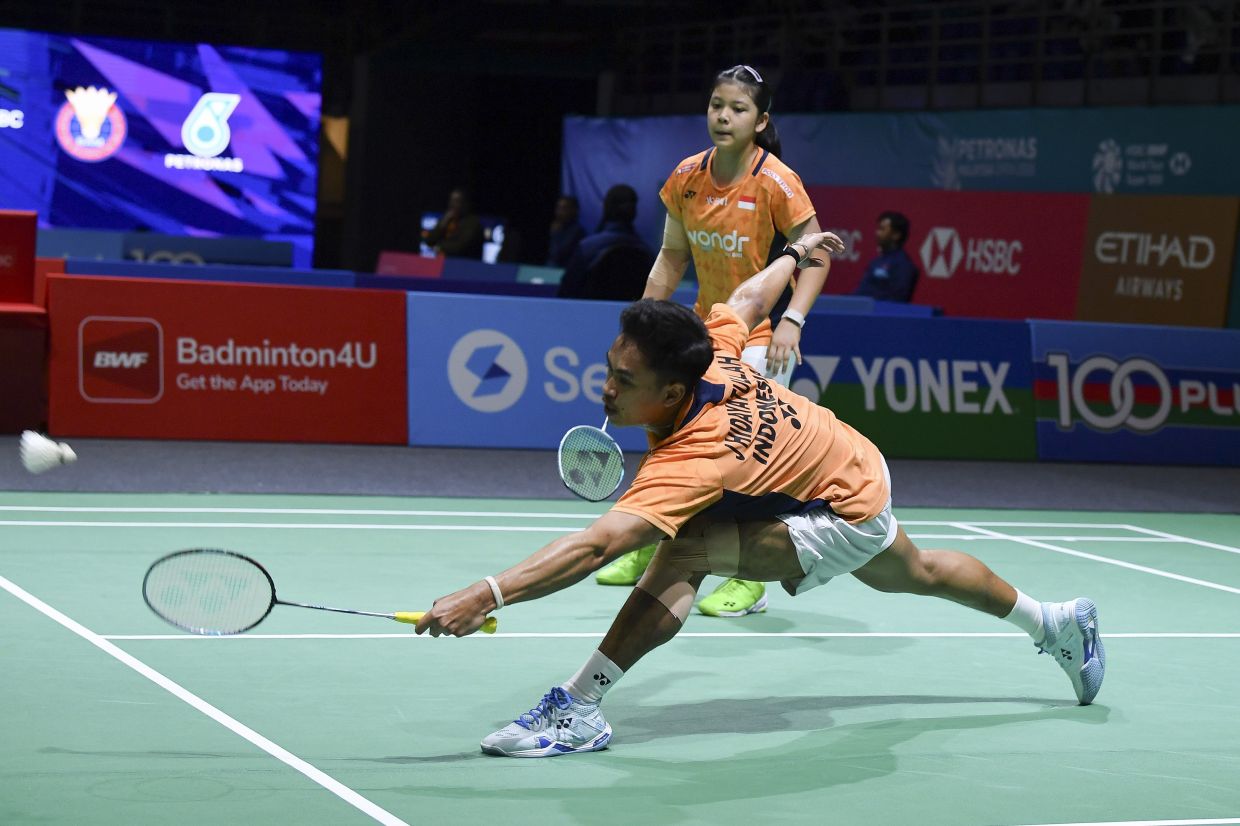
The international badminton spotlight has turned troubling for Indonesia, with two mixed doubles pairs stepping back from the World Championships in what officials describe as squad adjustments but observers suspect is directly connected to an ongoing match-fixing investigation. World number 13-ranked Jafar Hidayatullah and Felisha Pasaribu announced their withdrawal on July 29, following an earlier pullout by fellow mixed doubles duo Adnan Maulana and Indah Cahya Sari Jamil on July 13. While the Indonesian Badminton Association has refrained from explicitly linking the withdrawals to any wrongdoing, the timing and circumstances have triggered widespread speculation about the true reasons behind the sudden squad changes.
The Badminton World Federation is currently conducting independent judicial proceedings into alleged integrity breaches by several Indonesian players, a development that has cast a shadow over one of Asia's badminton powerhouses. Indonesia has long been a formidable force in the sport, but this investigation threatens to damage the reputation of its programme and raises uncomfortable questions about the competitive environment within the national team structure. The opaque handling of the withdrawals—coupled with officials' refusal to provide substantive explanations—has only amplified concerns among players, coaches, and the broader badminton community about what prompted the last-minute departures.
The Indonesian Badminton Association's secretary-general Ricky Soebagdja released a carefully worded statement indicating that both pairs had been withdrawn as part of necessary adjustments to the squad composition for the World Championships. The association deliberately avoided mentioning match-fixing allegations in its official communication, instead framing the decisions as routine administrative measures designed to ensure compliance with international tournament regulations and procedures. This approach suggests the organisation is attempting to contain the narrative while the BWF's independent hearing process unfolds, recognising that premature public commentary could prejudice ongoing legal proceedings or complicate the investigation itself.
The BWF's involvement signals the gravity of the situation. As the sport's global governing body, the federation has established independent judicial mechanisms specifically designed to investigate breaches of competitive integrity and anti-corruption standards. The fact that multiple Indonesian players are under scrutiny indicates this is not an isolated incident but potentially a more systemic concern within the national programme. For Malaysian badminton stakeholders, this development underscores the importance of robust integrity frameworks across the region, particularly given Malaysia's own competitive standing in mixed doubles and the interconnected nature of Southeast Asian badminton circuits.
Jafar Hidayatullah and Felisha Pasaribu occupy a significant ranking position globally, making their withdrawal particularly noteworthy. A partnership ranked 13th in the world represents substantial investment in training, competition scheduling, and international exposure. The sudden removal of such a competitive unit from a major championship suggests the concerns surrounding them warrant such a drastic step, despite the formal language surrounding the decision. The pair's withdrawal deprives them of crucial competition points and ranking opportunities at a tournament that typically shapes the latter half of the badminton calendar.
The Adnan Maulana-Indah Cahya Sari Jamil pairing underwent similar circumstances, with their withdrawal occurring earlier in July. This staggered approach to removing the pairs might reflect different stages of investigation or varying levels of evidence against each couple, though the association has offered no clarification. The sequential nature of the withdrawals also raises questions about whether additional players or pairs might face similar circumstances as the BWF investigation progresses, potentially creating further disruption to preparation schedules and national team planning.
Despite these departures, Indonesia will maintain representation in mixed doubles at the World Championships through alternative pairings. The association has fielded Amri Syahnawi and Nita Violina Marwah as their primary mixed doubles representatives, while Rehan Kusharjanto and Gloria Widjaja have been promoted from the reserve list to provide additional competition capacity. This contingency approach demonstrates Indonesia's depth in mixed doubles talent, though the quality gap between the withdrawn pairs and their replacements is likely significant given the withdrawal of a top-15 ranked unit.
The PBSI's statement emphasised respect for the BWF's independent processes and urged all stakeholders to refrain from speculation pending the federation's final determination. This measured language reflects international best practice in handling integrity investigations, avoiding prejudicial commentary that might influence the hearing panel's deliberations. However, the public nature of the withdrawals inevitably generates speculation regardless of the association's requests for restraint, particularly in an era of social media where badminton communities across Southeast Asia actively discuss developments affecting the sport.
Match-fixing in badminton has emerged as a persistent concern at the international level over the past decade, with several high-profile cases involving players across different nations. The sport's relatively lower global profile compared to football or basketball, combined with complex betting markets in certain regions, has historically created vulnerabilities to integrity threats. Indonesia's prominence in the sport means that integrity failures within its programme carry outsized significance for badminton's credibility across Asia and globally. The BWF's willingness to investigate and potentially sanction players from a major badminton nation demonstrates the federation's commitment to maintaining competitive standards.
For Malaysian readers and regional stakeholders, this situation carries broader implications. The interconnected nature of Asian badminton means that integrity issues in one national programme affect the credibility of entire regional tournaments and circuits. Malaysian players frequently compete against Indonesian counterparts, train in shared facilities, and participate in the same international competitions. Any systematic integrity failures in a neighbouring programme represent a concern for the health of badminton throughout Southeast Asia. The investigation's outcome could influence how other regional associations approach their own integrity frameworks and compliance mechanisms.
The involvement of the BWF's independent hearing panel suggests this investigation will follow established procedures designed to ensure fairness while maintaining confidentiality where appropriate. The process typically involves detailed evidence review, player testimony, and expert analysis before rendering determinations. This methodical approach, while necessary for justice, means the badminton community faces an extended period of uncertainty. For the withdrawn Indonesian players, the investigation presents a serious challenge to their careers and reputations, with potential consequences ranging from suspension to permanent sanctions depending on the hearing panel's findings.
Looking forward, the outcome of the BWF investigation will likely influence how national badminton associations across Asia structure their integrity and anti-corruption protocols. Stronger verification systems, enhanced monitoring of player conduct, and clearer guidance on betting-related restrictions may emerge as standard practises. For Indonesia specifically, restoring confidence in the integrity of its badminton programme will require demonstrable commitment to reform and transparent engagement with international oversight mechanisms. The current situation, while troubling, presents an opportunity for the sport to demonstrate that competitive integrity remains paramount above commercial or nationalist considerations.

