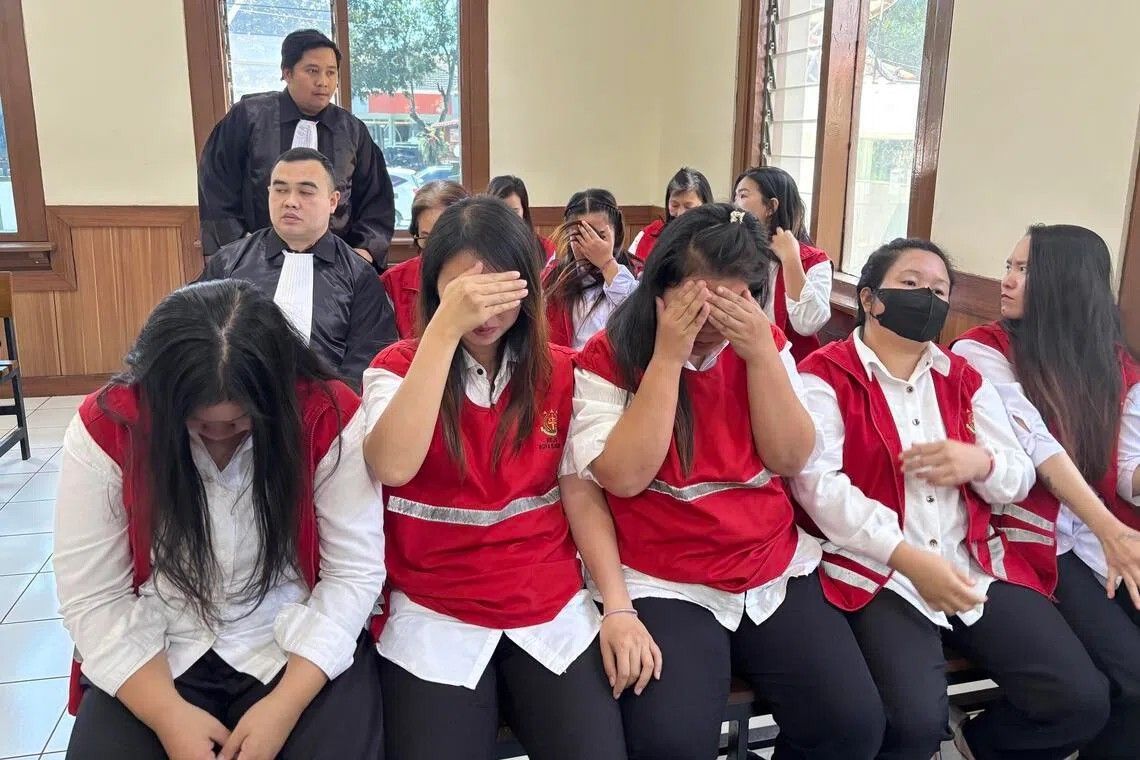
A three-judge panel at Bandung District Court in West Java has completed its proceedings against an extensive human trafficking network, finding the entire membership guilty of orchestrating one of Indonesia's most significant infant smuggling operations in recent years. The syndicate's ringleader, Lie Siu Luan, a 70-year-old woman known by the aliases Popo and Lily, received a seven-year prison sentence on July 21 for her central role in coordinating the scheme. The verdict represents a coordinated legal victory for Indonesian authorities pursuing the complex case, though the sentenced term fell short of prosecutors' initial recommendation of a decade in confinement.
Lie's criminal responsibilities encompassed the full operational architecture of the trafficking network. She orchestrated the identification and recruitment of infants from vulnerable families, supervised the creation of fraudulent adoption documentation that would facilitate international transfers, and personally arranged logistics for shipping the babies across borders. Judge Gatot Ardian Agustriono articulated the court's finding in explicit legal language, declaring that Lie had been "legally proven guilty of committing the criminal act of recruiting, harbouring, sending, transferring, or receiving a person for the purpose of exploiting said person within the territory of the Unitary State of the Republic of Indonesia." This formal pronouncement reflected the severity of charges that extended far beyond simple document falsification or adoption fraud.
The investigation and prosecution revealed the syndicate's operational reach and commercialization of human trafficking. Between 2023 and 2025, members trafficked at least 34 infants, with documented evidence showing that at least a dozen of these children were transported to Singapore, where they were placed with buyers willing to pay between 200 to 250 million rupiah—approximately S$18,110—per child. The relatively brief operational window of roughly two years suggests the scale and efficiency with which the network functioned before law enforcement intervention. The pricing structure indicates a deliberate commodification of vulnerable infants, with consistent market rates suggesting established buyer networks across the region.
The entire 19-member membership faced prosecution together, an unusual circumstance that underscores the integrated nature of their criminal enterprise. Eighteen of the defendants were women, reflecting patterns often observed in human trafficking operations where female operatives frequently occupy key roles in recruitment and caregiving responsibilities. The diversity of sentences reflected differentiated culpability and operational roles, though all members ultimately received significant prison terms. Astri Fitrinika, identified as the syndicate's primary recruiter, received six years and seven months imprisonment, matching the sentence imposed on fellow recruiters Djaka Hamdani and Elin Marlina, indicating that prosecutors and judges regarded recruitment as a particularly serious function within the hierarchy.
Document falsification emerged as another critical component of the operation's infrastructure. Lai Su Hua, responsible for fabricating state documents and adoption-related paperwork, received an identical six years and seven months sentence to the senior recruiters. The sophistication of fraudulent documentation suggests coordination with individuals possessing knowledge of bureaucratic procedures and authentication systems, enabling the falsified papers to survive initial scrutiny during cross-border transfers. The relatively substantial sentence for document forgery demonstrates judicial acknowledgment that administrative fraud directly enabled the trafficking of human beings, constituting more than a technical infraction.
The remaining 14 defendants, who functioned primarily as caregivers for the infants during the trafficking process, received lighter but still substantial sentences of three years and four months. These individuals occupied the lowest hierarchical tier of the operation, though their custodial responsibilities meant they directly supervised vulnerable children during a critical period of exploitation. The differentiated sentencing reflects established principles in trafficking prosecutions, where courts typically recognize varying degrees of complicity while avoiding the perspective that those directly handling victims bear equivalent responsibility to senior orchestrators.
Notably, both Lie and Astri offered admissions regarding most charges during trial proceedings, yet neither acknowledged criminal intent regarding child welfare. Instead, both maintained that the infants were voluntarily surrendered by biological parents rather than abducted or coerced from families. They further contended that all children received appropriate care and suffered no abuse during their time under the network's supervision. These assertions, while unproven and contested by prosecutors, suggest the defendants viewed their actions through a lens of informal adoption facilitation rather than recognizing the exploitative dimensions of their scheme. The court's rejection of these characterizations demonstrates judicial understanding that consent from impoverished biological parents facing economic desperation does not legitimize the commercialization of infants or the circumvention of legal adoption protocols.
The case carries significant implications for Southeast Asian regional trafficking enforcement. Indonesia, despite its substantial jurisdiction over maritime borders and substantial migration corridors, has faced persistent challenges in disrupting human trafficking networks that exploit the region's complex legal frameworks and economic disparities. The successful prosecution of all 19 members represents meaningful progress, yet the operation's duration suggests earlier detection failures. That Singapore served as a primary destination market raises questions about demand-side accountability and buyer identification, issues that international cooperation between Indonesian and Singaporean authorities must address to prevent recurrence.
The sentencing also reflects broader patterns in contemporary human trafficking, particularly the targeting of infants and young children for international placement. Unlike adult trafficking victims who may possess some agency or awareness of exploitation, infants represent completely vulnerable subjects whose placement depends entirely upon coordinated criminal infrastructure. The operation's span across adoption services, recruitment networks, and international logistics demonstrates how trafficking exploits legitimate institutional frameworks—families seeking children, international adoption channels, and documentation systems—creating opportunities for organized criminal manipulation. The prosecution's success should catalyze enhanced scrutiny of infant placement procedures and inter-agency coordination across Southeast Asian governments, particularly regarding cross-border movements of very young children where legitimate and illegitimate pathways become dangerously blurred.

