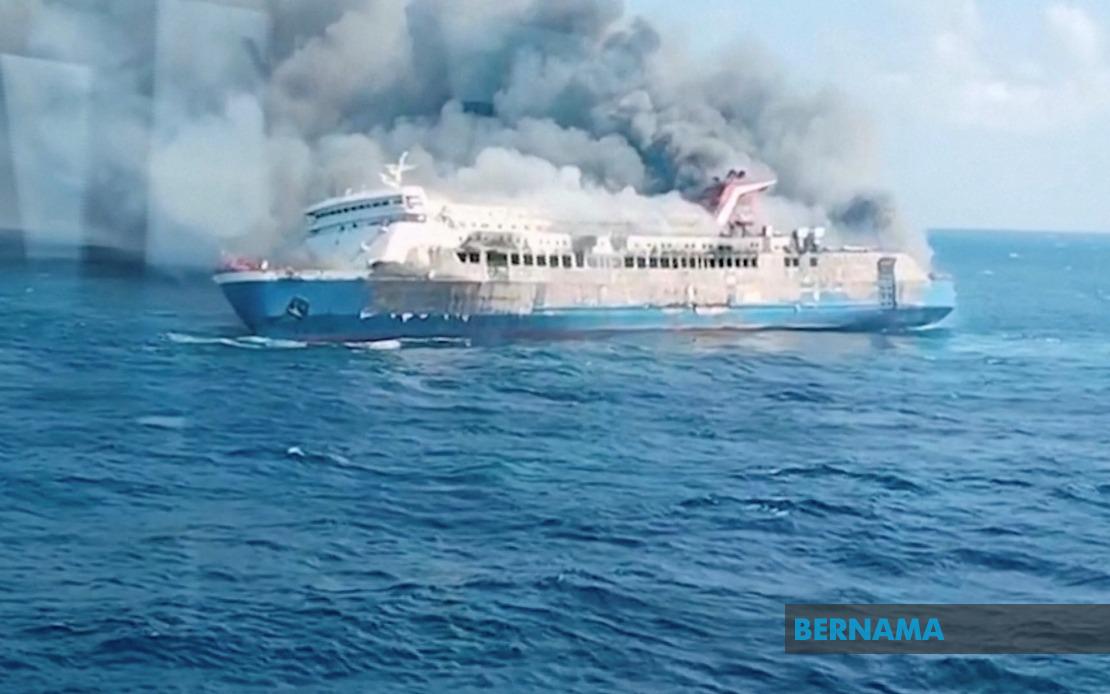
Rescue operations in the waters north of Sumenep, Madura, have been significantly expanded as Indonesian authorities pursue an increasingly urgent search for passengers and crew members still unaccounted for following the catastrophic fire aboard the KMP Mutiara Sentosa II ferry. The deployment of the Indonesian National Armed Forces warship KRI Bung Hatta-370, alongside additional maritime and aerial resources, underscores the scale of the emergency response as the operation entered its second day of intensive efforts to locate missing individuals.
The ferry, which was transporting 232 passengers and 39 crew members on its voyage through Madura's northern waters, was engulfed by fire at approximately 8:24 am local time. Eyewitness accounts suggest the vessel suffered substantial structural damage, with flames consuming much of the ship before rescue teams could reach the scene. The rapid spread of the fire in a maritime environment presents extraordinary challenges for rescue coordinators, as survivor location becomes increasingly difficult and recovery operations grow more complex with each passing hour.
According to statements from Nanang Sigit, Chief of the Surabaya Search and Rescue Office, the coordinated response involves multiple government agencies working in concert to maximize search effectiveness. In addition to the TNI warship, operational assets include the State Ship Grantin P.211, the patrol vessel Manyar 5003, and a helicopter provided by the East Java Police. This multi-agency approach reflects standard Indonesian maritime emergency protocols designed to provide comprehensive coverage across affected waters.
As of the second operational day, rescue personnel had successfully evacuated 229 survivors, transporting them in successive waves to Tanjung Perak Port in Surabaya for immediate medical assessment and treatment. The evacuation of this substantial number of people within the first hours demonstrates the effectiveness of initial response efforts, though the continued absence of dozens of other vessel occupants indicates significant challenges remain. Medical teams at the port have been placed on standby to address potential injuries ranging from burn wounds to smoke inhalation and trauma.
The recovery of five fatalities by mid-afternoon of the first day represents a sobering indication of the disaster's severity. These victims have been transferred to Bhayangkara H.S. Samsoeri Mertojoso Hospital in Surabaya, where medical examiners will conduct identification procedures and determine preliminary cause of death. Family notification procedures, typically among the most sensitive aspects of maritime disasters, have begun as authorities work to contact relatives of those involved.
For Southeast Asian maritime observers, this incident underscores persistent vulnerabilities in passenger ferry operations across the region. Indonesia's domestic shipping industry carries millions of passengers annually on routes connecting its far-flung archipelago, yet safety standards, vessel maintenance protocols, and emergency preparedness systems remain inconsistent. The KMP Mutiara Sentosa II incident occurs against a backdrop of several high-profile maritime disasters in Southeast Asian waters over recent decades, raising questions about regulatory oversight and enforcement mechanisms.
The Madura Strait fire also highlights the critical importance of rapid communication and coordination between rescue agencies in archipelagic environments. Northern Madura waters, while relatively close to major population centers, present logistical complications for rescue teams. The rapid mobilization of TNI assets suggests that Indonesia's military establishment maintains maritime surveillance capabilities that can be quickly repurposed for civilian emergency response. This integration of military and civilian resources reflects pragmatic disaster management thinking in a nation with extensive maritime domains and limited dedicated coast guard capacity.
The investigation phase will inevitably examine multiple factors contributing to the fire's origin and rapid propagation. Preliminary considerations typically include electrical faults, fuel system malfunctions, cargo-related ignition sources, and structural design vulnerabilities that may have hindered evacuation efforts. The age and maintenance condition of the vessel will likely feature prominently in official inquiries, as maritime authorities assess whether this represents systemic failure or isolated negligence.
For Malaysian readers, this incident carries particular resonance given the shared maritime geography and comparable shipping routes throughout Southeast Asia. Malaysian waters have experienced similar ferry and passenger vessel incidents, prompting periodic reviews of domestic maritime safety regulations. The Madura disaster may prompt regional policymakers to evaluate whether existing safety protocols, vessel inspection regimes, and crew training standards adequately protect the millions of passengers who depend on inter-island ferry services throughout the region's waters.
As the search operation continues, families of the missing remain in anxious uncertainty. The psychological toll on survivors already evacuated is typically substantial, compounded by injuries sustained during the evacuation process and trauma from witnessing the disaster unfold. Psychological support services, often overlooked in immediate emergency responses, represent an important component of comprehensive disaster management in maritime incidents involving civilian populations.
The broader implications of this incident extend to questions of accountability and regulatory reform within Indonesia's maritime sector. As pressure mounts for comprehensive reviews of passenger ferry safety standards, shipping companies operating in Southeast Asian waters face heightened scrutiny regarding vessel maintenance, crew qualifications, and emergency procedure compliance. The incident will likely generate policy discussions about whether current regulatory frameworks adequately reflect technological capabilities for enhanced passenger safety monitoring and automated emergency response systems.

