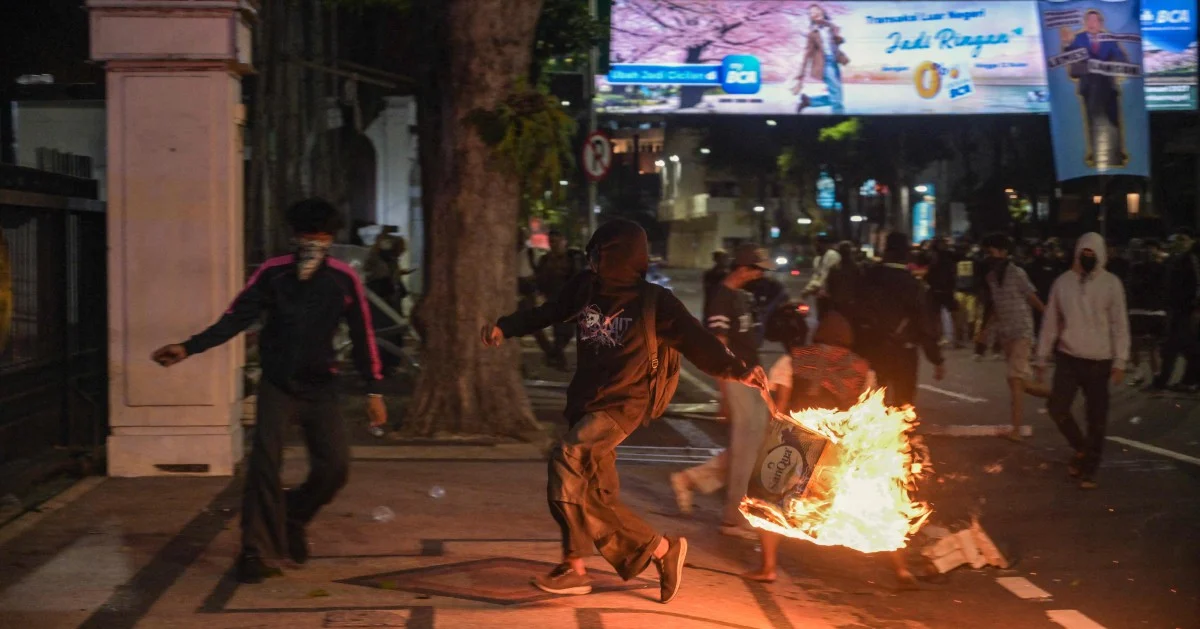
Law enforcement authorities in Indonesia have conducted mass arrests targeting demonstrators who participated in a significant rally held in Surabaya, the nation's second-most populous urban centre, according to reports from human rights organisations tracking the incident. The detentions occurred in the aftermath of the public demonstration, which focused specifically on criticisms of policy directions pursued by President Prabowo Subianto since his assumption of office. Human rights monitors documented the scale of the operation on Saturday, providing initial accounts of the police response to the protest activity.
The demonstration in Surabaya reflects growing public discontent with particular governmental initiatives under the Prabowo administration. As one of Indonesia's major metropolitan areas and a historical hub of political activism, Surabaya has long served as a bellwether for broader social movements across the archipelago. The choice of location for this protest suggests organisers deliberately selected a venue with significant symbolic weight and capacity to amplify their message beyond the immediate gathering.
The arrest operation raises important questions about freedom of assembly and the government's approach to managing dissent in Southeast Asia's largest democracy. Indonesia has constitutional provisions protecting the right to peaceful protest, yet incidents of police intervention during demonstrations remain a recurring concern for international observers and domestic civil society organisations. The scale of detentions in Surabaya will likely reignite debate about the balance between maintaining public order and respecting fundamental democratic freedoms.
Context surrounding the Prabowo presidency helps illuminate why these protests emerged. The retired general assumed power following elections held earlier in 2024, inheriting an administration tasked with addressing persistent economic challenges, inflation pressures, and public expectations for reform. His policy portfolio has encompassed infrastructure investment, defence spending increases, and shifts in foreign policy orientation, all of which have attracted both support and organised opposition from various constituencies.
Human rights groups monitoring Indonesia's political environment have expressed concern about the pattern of police responses to anti-government activities in recent months. The detention of multiple demonstrators simultaneously suggests coordination at higher levels of the security apparatus rather than isolated officer decisions. Such large-scale operations typically require authorisation from senior police leadership and may indicate a hardening stance toward opposition expression within the administration's first months.
For Malaysian observers, the Indonesian developments carry strategic significance given the close bilateral relationship and shared democratic traditions across the region. Patterns of state response to protest in major Southeast Asian democracies often influence approaches adopted by neighbouring countries, making Indonesian police conduct relevant to regional human rights trends. Malaysia's own experience with managing public demonstrations and balancing security concerns with civil liberties provides comparative context for evaluating the appropriateness of Indonesia's police interventions.
The detained individuals face uncertain prospects regarding charges, trial procedures, and duration of custody based on preliminary reports. Documentation by rights organisations becomes critical in such circumstances, as independent monitoring helps ensure detainee treatment meets international standards and provides accountability mechanisms should mistreatment occur. The specific charges prosecutors ultimately pursue against arrested demonstrators will signal whether authorities classify the activity as genuine security concerns or attempt to suppress legitimate political opposition.
Surabaya's status as a second-tier city rather than Jakarta carries analytical weight regarding the demonstrations. Capital cities often absorb majority of media attention and international scrutiny, whereas protests in regional centres may receive less coverage despite potentially reflecting stronger grassroots sentiment in those areas. The willingness of Surabaya residents to mobilise against central government policies suggests discontent extends beyond urban intellectual circles to broader working-class constituencies.
Indonesia's transition to direct presidential elections two decades ago fundamentally altered the country's political dynamics, yet governance challenges persist in translating electoral mandates into functional policy implementation. President Prabowo's campaign rhetoric emphasised nationalist themes and defence sector prioritisation, positions that have already generated reservations among segments concerned about resource allocation priorities. The protest movement appears to represent early manifestations of coalition fractures within Indonesia's diverse political ecosystem.
The incident also highlights the operational challenges facing Indonesian law enforcement when managing large public gatherings in urban environments. Police strategies oscillate between permitting demonstrations to proceed and implementing preventive detention approaches, with decisions often reflecting broader political calculations rather than consistent jurisprudence. International observer organisations and Indonesian civil society groups will continue monitoring official responses to subsequent demonstration activity to assess whether Surabaya represents aberrant behaviour or establishes a troubling precedent.
Regional implications of Indonesia's handling of anti-government expression warrant attention from policymakers and civil society networks throughout Southeast Asia. As the region's most populous nation and democratic anchor, Indonesian conduct influences broader expectations about acceptable state responses to legitimate political participation. The coming weeks will reveal whether authorities release detained protesters without charges, pursue prosecution, or implement alternative dispute resolution mechanisms—each path suggesting different conclusions about democratic health and institutional commitment to constitutional protections.

