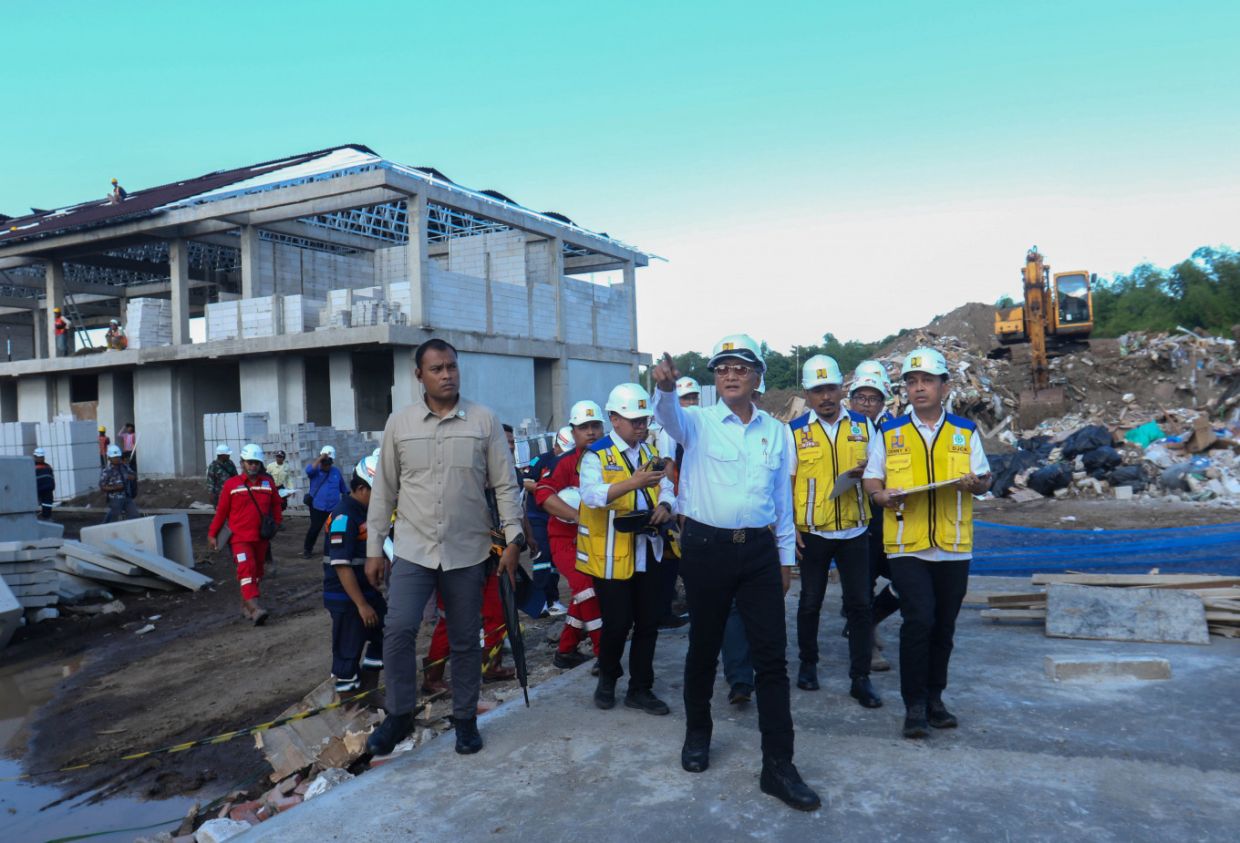
Indonesia's Public Works Minister Dody Hanggodo has drawn significant public and institutional scrutiny after official ministry documentation included his wife and daughter among delegates scheduled for an upcoming delegation to the United States, raising fresh concerns about governmental transparency and the appropriateness of state resource allocation in the administration of newly inaugurated President Prabowo Subianto.
The controversy surfaced when a letter bearing the signature of Ministry Secretary-General Apri Artoto, dated June 29, circulated widely across social media platforms. The document contained the names of eight individuals authorised to travel to New York between July 13 and 19, with the minister's spouse, Irma Hermawati, and his daughter, Aurellia Tsabitha Meidirama, explicitly named among the participants. The listing specified that Irma would travel holding a diplomatic passport while Aurellia would hold a standard travel document.
The delegation's stated purpose is to represent Indonesia at the High-level Meeting on the Midterm Review of the New Urban Agenda, a gathering convened by the United Nations General Assembly and organised in partnership with the UN Human Settlements Programme (UN-Habitat). The substantive sessions are scheduled for July 16 and 17 in the American city, positioning the delegation's participation as a response to a formal international commitment rather than a routine ministry function.
The decision to include family members in the official travel paperwork has ignited considerable online debate and criticism, with numerous commentators questioning whether such participation represents a justified use of ministerial delegation authority. The controversy has proven particularly sensitive given that President Prabowo Subianto's administration has publicly championed fiscal discipline and cost-consciousness across government operations, making the optics of family inclusion potentially damaging to the government's broader austerity narrative.
Responding to the mounting questions, the ministry sought to neutralise concerns by emphasising that no state budgetary allocations would finance the family members' participation in the journey. Apri publicly stated that should family members accompany the official delegation, they would bear all associated expenses privately rather than drawing on public funds. He further contended that the inclusion of names in the travel document served the practical administrative purpose of facilitating visa processing through Indonesia's Foreign Ministry, and that the issuance of a diplomatic passport to the minister's wife complied with existing regulatory frameworks governing such credentials.
These explanations, however, have failed to fully satisfy stakeholder concerns or suppress public apprehension about the arrangement. Maneger Nasution, a member of Indonesia's Ombudsman institution, has publicly called for substantially elevated transparency surrounding the decision-making process. Beyond merely disclosing why the minister's family members were incorporated into the official roster, Nasution emphasised that the ministry must demonstrate concrete mechanisms ensuring that no state financial resources, government-funded facilities, or public infrastructure would directly or indirectly support the family members' participation, whether through transportation, accommodation, or logistical support.
Nasution further articulated the Ombudsman's concern that the ministry must provide affirmative assurance that the family members' participation meets standards of legitimacy and lawfulness, operates free from potential conflicts of interest, and does not constitute an improper exercise of official authority for personal enrichment or undue advantage. The framing of these concerns suggests the Ombudsman views the matter not merely as a question of budget allocation but as touching upon broader principles of governance integrity.
The minister's political background adds contextual texture to the controversy. Before his entry into formal politics through membership in the Democratic Party, Dody maintained significant business relationships with South Kalimantan entrepreneur Andi "Haji Isam" Syamsuddin Arsyad, whose commercial portfolio includes holdings in enterprises directly involved in President Prabowo's flagship agricultural development initiative in Merauke, South Papua. This nexus between Dody's prior commercial associations and current portfolio responsibilities introduces an additional layer of scrutiny regarding potential conflicts of interest and the appearance of preferential access or favour.
The 60-year-old minister has previously attributed criticism and investigative pressure directed toward him to what he characterised as a "deep state" apparatus operating to undermine his position. This defensive posture emerged following the unauthorised circulation of an internal ministry audit document that reportedly contained allegations from unnamed influential actors seeking to connect Dody to corruption matters. The pattern of Dody's previous invocations of shadowy institutional opposition adds context to how this latest family delegation controversy may be interpreted within broader narratives about his tenure and the ministry's governance culture.
For regional observers and Malaysian policymakers, the Indonesian episode illuminates persistent tensions within Southeast Asian governance structures between formal procedural compliance and substantive transparency. While the ministry argues that its actions satisfy technical regulatory requirements, the Ombudsman's intervention demonstrates that institutional stakeholders increasingly expect public officials to exceed minimum compliance standards by affirmatively demonstrating that official actions serve genuine public purposes rather than facilitating personal arrangements cloaked in governmental authority.
The controversy also underscores how social media circulation of government documents creates novel accountability mechanisms that traditional institutional oversight structures alone might not generate. The rapid public dissemination and consequent reputational pressure may ultimately prove more consequential for the minister's standing than formal investigation or administrative proceedings. In an era of instantaneous information distribution, Southeast Asian governments increasingly discover that procedural regularity provides inadequate protection when public perception of propriety has been compromised.
The ultimate implications of this episode extend beyond individual ministerial accountability toward broader questions about how the Prabowo administration will calibrate governance practices between austerity rhetoric and actual operational implementation. If family members of senior officials routinely travel under delegations while nominally bearing personal expenses, the practical effect may differ substantially from stated policy, creating persistent questions about governmental commitment to transparency and fiscal discipline that resonate throughout regional political discourse.

