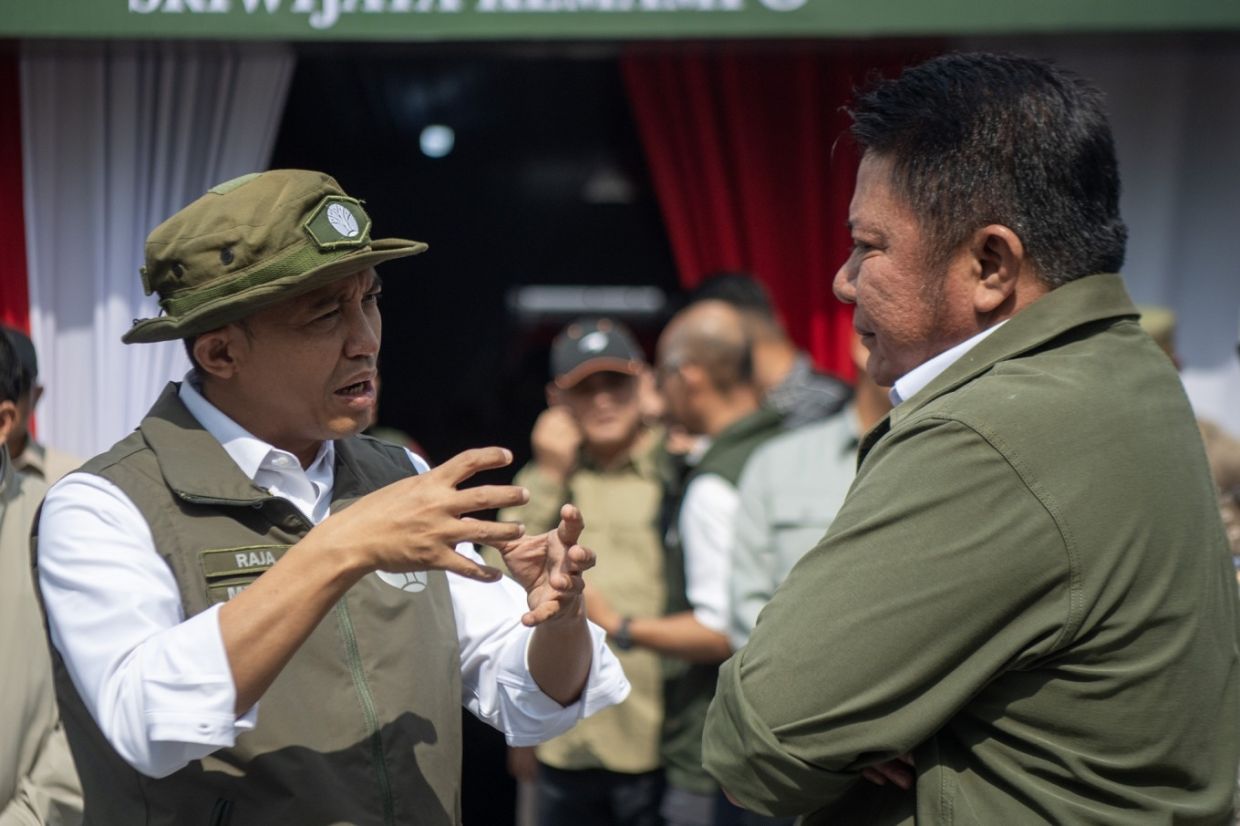
Indonesia's Corruption Eradication Commission (KPK) has reopened its inquiry into Forestry Minister Raja Juli Antoni, focusing on whether the government official genuinely returned all the illicit money he allegedly received from Kuantan Singingi regent Suhardiman Amby. The investigation marks a significant development in what began as a routine corruption case and has now expanded to ensnare a senior cabinet minister, raising fresh questions about governance standards within Indonesia's resource management sector.
According to KPK spokesperson Budi Prasetyo, investigators suspect a material discrepancy between the amount of money Raja Juli reported receiving and the quantity he claims to have returned. The alleged bribery originated from a June 2 encounter between the minister and Suhardiman during official talks between the Forestry Ministry and the Kuantan Singingi regional administration. During this meeting, the regent purportedly presented an envelope stuffed with Singapore dollars—initially valued at S$14,000, equivalent to approximately US$10,919—to the forestry chief.
The financial discrepancies form the crux of the KPK's renewed scrutiny. Raja Juli formally notified the anti-graft agency on July 3 that he had rejected the money and repatriated the envelope on June 12 to the Kuantan Singingi police headquarters, claiming he possessed no authority to accept such a gift. However, investigators harbour doubts about whether the minister truly surrendered the complete sum and are methodically cross-referencing documentation to verify his claims. Beyond the minister himself, other forestry ministry employees reportedly accepted kickbacks totalling S$12,500 from various Kuantan Singingi officials, further complicating the investigation's scope.
The underlying motivation behind these alleged bribes appears connected to a forest reclassification proposal submitted by Kuantan Singingi authorities. The regency sought to convert more than 1,800 hectares of limited production forest (HPT) into alternative land categories, a decision that would fall within the Forestry Ministry's regulatory jurisdiction. Indonesian law mandates that government officials receiving improper gifts linked to their official duties must report such incidents to the KPK within 30 days, not to local police authorities as Raja Juli allegedly did. Circumventing this procedure carries serious criminal consequences: officials convicted of accepting illicit payments face imprisonment stretching up to two decades and financial penalties reaching Rp 1 billion (US$55,867).
The investigation has cast a spotlight on Raja Juli's broader interactions with Suhardiman, revealing a pattern of multiple engagements preceding the disputed June meeting. Budi disclosed that the minister and regent held at least three separate encounters spanning April, May, and June, though he refrained from clarifying whether these sessions related to the forest conversion matter. This pattern of repeated contact fuels investigators' determination to establish whether a quid pro quo arrangement existed and whether the forestry official received preferential treatment in handling the regency's proposals.
Suhardiman himself carries a complicated political profile that intersects with Indonesia's shifting power landscape. The regent, affiliated with President Prabowo Subianto's Gerindra Party, was apprehended and designated a suspect by the KPK in late June on separate corruption allegations involving kickbacks from the regency's secretary Zulkarnain in exchange for the latter's appointment as regional administrator. This initial arrest subsequently triggered the KPK's expansion of its investigation into Suhardiman's alleged payments to the Forestry Ministry regarding forest conversion authorisation, revealing how singular corruption cases frequently branch into broader institutional dysfunction.
Raja Juli's entanglement in this scandal amplifies existing political complications. As secretary-general of the Indonesian Solidarity Party (PSI) and a cabinet minister in the present administration, his potential involvement in bribery threatens to undermine the government's anti-corruption credentials at a delicate moment. Parliamentary scrutiny has intensified accordingly, with House of Representatives Commission IV, which oversees forestry planning and policy, summoning the minister for explanations. Tellingly, Raja Juli absented himself from a scheduled July 14 session with Commission IV, with deputy chair Alex Indra Lukman from the opposition Indonesian Democratic Party of Struggle (PDI-P) reporting that the minister was undertaking an umrah pilgrimage at that time—a claim that drew criticism from lawmakers demanding transparency.
The Forestry Ministry's official posture maintains formal cooperation with the KPK's ongoing examination while emphasising institutional integrity. In statements directed to journalists, ministry representatives reaffirmed their commitment to supporting the anti-graft agency's investigative endeavours and pledged to furnish any requested documentation or information. Significantly, the ministry contended that no forest status changes in Kuantan Singingi have received approval to date, with the three pending proposals from the regency remaining either formally rejected or held in verification procedures. This assertion attempts to counter suggestions that bribery influenced ministerial decision-making on the controversial forest conversion application.
For Malaysian observers, this investigation illuminates governance vulnerabilities in regional resource management systems. The case demonstrates how corruption in forestry administration can undermine legitimate land-use planning and environmental stewardship. Indonesia's forest sector, critical to regional ecosystem stability and climate resilience, remains susceptible to illicit influence peddling at ministerial levels. The KPK's determination to investigate discrepancies rather than accepting officials' initial explanations signals institutional resolve, yet the case simultaneously exposes how high-ranking administrators can potentially obstruct straightforward accountability processes through procedural manoeuvres and official absences. Malaysia's own anti-corruption framework might glean instructive lessons from how this Indonesian inquiry navigates the intersection of political protection, ministerial authority, and evidence-gathering amid allegations of bribery linked to resource extraction policy.

