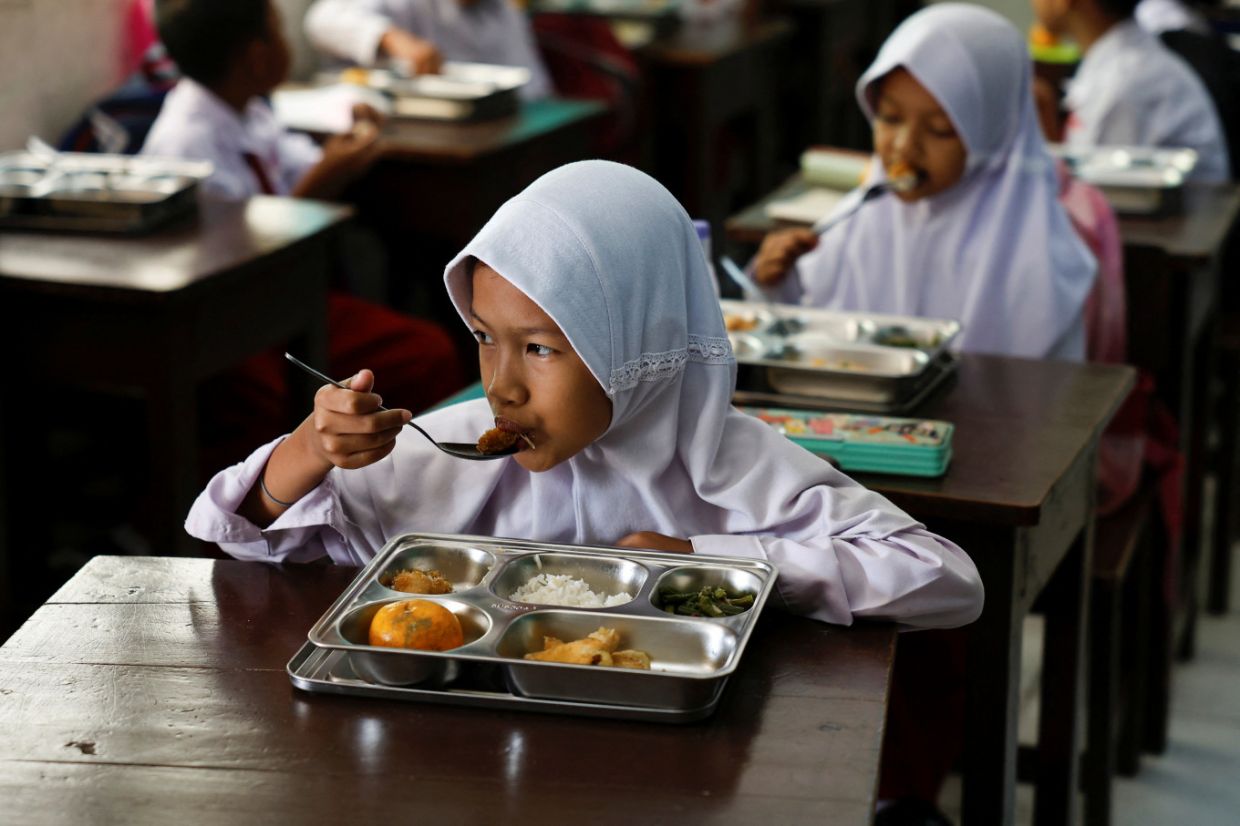
Proposed amendments to Indonesia's National Education System law have triggered alarm among teachers unions and civil society groups, who fear the revisions could provide legal justification to channel massive state education funds toward a free meals initiative after courts blocked such spending. The concern represents a significant challenge to judicial authority in Indonesia, where a Constitutional Court ruling in July explicitly prohibited education budget allocations for President Prabowo Subianto's free nutritious meal program, which currently consumes nearly one-third of the country's mandatory education spending.
The Indonesian Teachers Association has identified specific language in the draft bill dated July 8 as potentially problematic. The contentious provision would mandate that the government and society, when managing education, "provide health services, including those concerning mental health, at educational institutions in a manner that is integrated with the national health policies as well as the national education goals." This formulation, teachers groups argue, creates dangerous ambiguity that could be weaponised to reinterpret free meals as a core education function rather than a separate health initiative.
P2G national coordinator Satriwan Salim articulated the teachers' interpretation with precision, telling The Jakarta Post that the article's vague language could easily facilitate a regulatory sleight of hand. If enacted without clarification, the provision would supply the statutory foundation to rebrand the free meals program as a manifestation of national health policy operating within educational institutions, thereby justifying its financing from education allocations. The concern is not merely theoretical—Indonesian legislative history demonstrates repeated attempts to circumvent high court rulings through creative reinterpretation of regulatory language.
The underlying dispute centres on Indonesia's constitutional requirement that at least twenty percent of annual state budget resources flow toward education. This year, the education ministry allocated Rp 223 trillion (approximately USD 12.5 billion) of the Rp 769 trillion total education budget toward free meals, representing nearly thirty percent of mandatory education spending. The Constitutional Court in late July determined this arrangement violated constitutional intent, which reserves education budgets for core pedagogical functions, not ancillary health programs, regardless of their social merit.
Constitutional law specialist Feri Amsari has provided authoritative analysis that strengthens the teachers' position considerably. He argues that the constitutional principles undergirding the July ruling apply universally to all legislation, not merely the annual state budget law itself. This interpretation means that no future statutory amendment—whether through education law revision, creative budget reclassification, or regulatory repackaging—can legitimately redirect education funds toward free meals without violating constitutional hierarchy. The principle, once established by the Constitutional Court, remains binding across the entire legal framework.
Civil society organisations have mobilised rapidly to defend the court's authority. The MBG Watch coalition, which coordinated the original petitions that prompted the constitutional review, characterised teachers' concerns as justified and demands the House of Representatives respect judicial boundaries. Agus Sarwono of Transparency International Indonesia, himself a coalition member, warned that any attempt to circumvent the ruling through budget nomenclature changes, financial engineering, or regulatory adjustment would constitute a direct denial of constitutional authority. This positioning reflects broader anxieties about rule of law in Indonesia, where previous Constitutional Court decisions—including a December 2025 ruling on police officers holding dual government posts—have faced implementation delays and suspected non-compliance.
The education law revision encompasses broader objectives beyond the free meals controversy. House Commission X, overseeing education and leading the amendment deliberation, aims to establish explicit regulatory frameworks governing teacher compensation, allowances, and student protection from violence. These provisions address longstanding sector grievances and represent genuine improvements to educational quality that command cross-party support. However, the free meals dispute now threatens to contaminate wider legislative discussion about education funding priorities.
Golkar Party lawmaker Hetifah Sjaifudian chairs the commission directing the bill's deliberation. She has signalled openness to revisions, explicitly stating that the legislation "was not yet ready for publication" and acknowledging that concerns had reached the commission. Sjaifudian committed to drafting every provision with precision to avoid multiple interpretations or constitutional conflict. She reiterated the commission's commitment to deploying education budgets exclusively for core education functions—learning quality improvement, teacher compensation, and educational services—rather than programs operating outside education's primary mandate.
The dispute highlights fundamental tensions in Indonesian governance between executive ambition and judicial constraint. President Prabowo's free meals program, while popular among voters and aligned with social policy objectives, collided with constitutional limits on budget allocation authority. The subsequent court decision established an enforceable boundary, yet teachers and civil society recognise that legislative language, if insufficiently precise, supplies potential pathways to judicial circumvention. This dynamic extends beyond Indonesia's specific institutional context—many developing democracies grapple with similar challenges of preserving judicial independence and constitutional constraints against executive and legislative persistence.
For Malaysian observers, the case illustrates both the salutary effects of strong constitutional courts and the practical vulnerabilities of judicial decisions when legislative actors retain substantial discretion over statutory interpretation. Indonesia's Constitutional Court demonstrates genuine independence and willingness to constrain executive spending authority in pursuit of constitutional principle. Yet the subsequent legislative manoeuvring reveals why constitutional protections require not only strong courts but also deliberate legislative compliance and vigilant civil society monitoring. The case also demonstrates how education budgets, invariably large and politically significant, attract competing claims and regulatory innovation designed to expand functional interpretations beyond original constitutional intent.
The deliberation process remains ongoing, with the commission indicating willingness to incorporate stakeholder input throughout discussions. Teachers groups, civil society coalitions, and constitutional law experts have now established explicit positions opposing any statutory language susceptible to free meals reinterpretation. Whether these interventions sufficiently constrain legislative drafting remains uncertain, but the mobilisation represents meaningful civil society engagement in budget accountability questions that traditionally receive limited public scrutiny. The eventual legislative outcome will signal whether Indonesia's democratic institutions can sustain judicial boundaries on executive spending authority or whether electoral pressures and executive preference will generate creative statutory workarounds.

