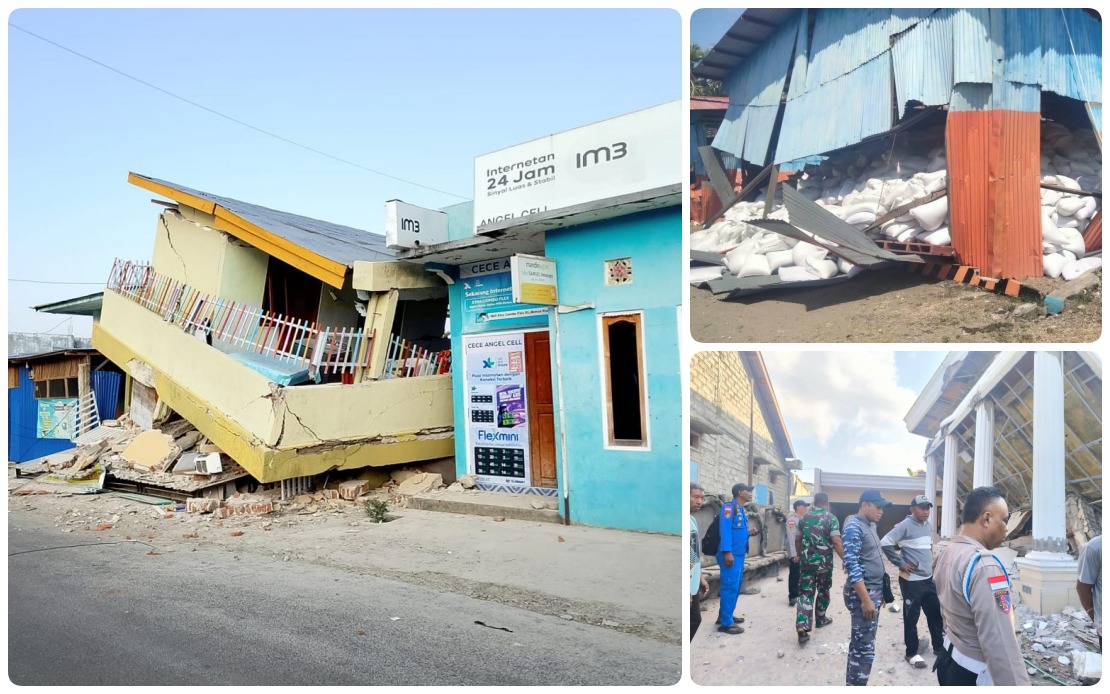
Indonesia's Flores Island is confronting the aftermath of a devastating magnitude 7.7 earthquake that struck early Sunday morning, claiming at least 53 lives while generating a cascade of nearly 1,000 aftershocks that have kept the region in a state of heightened alert. The disaster has displaced thousands of residents who continue sheltering at evacuation centres, many paralysed by both the destruction of their homes and collective memories of the catastrophic 1992 earthquake and tsunami that ravaged the same area decades earlier.
The powerful tremor struck at 4:58 am local time with its epicentre located approximately 30 kilometres offshore from Mbay in Nagekeo district, at a depth of 15 kilometres beneath the seabed. The National Disaster Management Agency's Deputy for Prevention, Abdul Muhari, reported that the Meteorology, Climatology and Geophysics Agency had documented 995 aftershocks by 3 pm on Sunday, though the vast majority were imperceptible to residents. The initial tremor triggered a tsunami warning that authorities lifted at 7:31 am after sea-level monitoring confirmed no significant coastal surge had materialised.
The death toll and injury figures paint a sobering picture of the quake's impact across the region. With 53 confirmed deaths and 135 individuals injured, emergency officials stressed that no missing persons had been formally reported across the seven affected regencies and cities as of Sunday evening. Abdul Muhari cautioned that casualty data remained subject to verification as disaster management teams completed their assessment of affected areas. The absence of missing person reports, he emphasised, reflected the thoroughness of search operations rather than necessarily indicating that all victims had been accounted for, as information gathering continued across remote regions.
The psychological dimension of this disaster carries particular weight given Flores's traumatic history. Many residents harbour vivid memories or have inherited stories of the devastating 1992 earthquake and tsunami that killed thousands in the same region. This historical trauma, combined with the lingering fear of additional powerful aftershocks and widespread destruction of residential structures, has prompted a significant portion of the displaced population to remain at designated evacuation centres rather than attempt to return to damaged homes. As of midnight Saturday, approximately 9,290 people were sheltering at these facilities, their reluctance reflecting both practical necessity and deep-seated anxiety.
Emergency response operations have rapidly mobilised across multiple fronts as authorities transition into the second day of disaster management. The National Disaster Management Agency has established dedicated response posts in Labuan Bajo and Maumere, the region's major population centres, while simultaneously activating logistics hubs in Jakarta, Labuan Bajo and Maumere to streamline the flow of relief supplies, heavy equipment and personnel to affected communities. Aircraft and helicopters have been positioned on standby to provide aerial support should ground-based relief efforts encounter obstacles or require rapid evacuation capacity.
Restoration of critical infrastructure has emerged as a priority concern, particularly given the remote nature of much of Flores Island's interior and the vulnerability of supply chains to natural disasters. Authorities have successfully cleared a landslide-damaged section of road in Reok, Mangkarai, allowing fuel tanker trucks to resume passage along this vital transportation corridor. Electricity supply has been progressively restored to several blackout-affected areas, improving conditions at evacuation centres where displaced residents depend on reliable power for lighting, communication and food preservation.
The humanitarian operation encompasses three interconnected pillars: immediate victim assistance, provision of essential supplies to evacuation sites, and systematic assessment of structural damage to determine which homes can be safely reoccupied and which require reconstruction. Abdul Muhari stated that emergency personnel were prioritising victim support while simultaneously addressing the logistical challenges of sustaining thousands of evacuees for what could extend into weeks or months of displacement. The coordination between multiple agencies underscores the scale of the undertaking, with rescue organisations, military units, and civilian administration working in concert to prevent a secondary humanitarian crisis stemming from inadequate shelter, sanitation or food security at crowded evacuation centres.
For regional observers in Southeast Asia, Indonesia's response to this disaster carries particular significance. The incident underscores the persistent seismic vulnerability affecting the entire Indo-Pacific ring of fire, a zone encompassing much of the region including the Philippines, Papua New Guinea and portions of Malaysia. The rapid deployment of response infrastructure and pre-positioning of resources suggest Indonesia has internalised lessons from previous major earthquakes, though the sheer magnitude of displacement and the psychological toll on communities illustrate the immense challenges that even well-prepared disaster management systems face when confronted with major natural disasters.
The psychological and social recovery dimension of this disaster may prove as demanding as the immediate physical reconstruction effort. Beyond the 53 lives lost and the destroyed homes requiring rebuilding, the renewed trauma of experiencing a major earthquake in a region bearing the scars of the 1992 disaster carries profound implications for community cohesion and long-term psychological wellbeing. The decision of thousands to remain at evacuation centres despite the discomforts of displaced living reflects a rational assessment of danger that will likely persist until seismic activity genuinely subsides and residents gain confidence that their homes and communities are safe to reoccupy. Recovery from both the physical and psychological dimensions of this event will demand sustained commitment from Indonesian authorities, international support networks, and the resilience of Flores Island's communities themselves.

