Indonesia's flagship free nutritious meal initiative has become a lightning rod for public discontent, triggering competing waves of demonstrations across the archipelago that reveal fundamental divisions over government spending priorities and programme management. What began as an ambitious anti-malnutrition effort has transformed into a barometer of broader anxieties about fiscal discipline, institutional integrity, and the social contract between government and citizens.
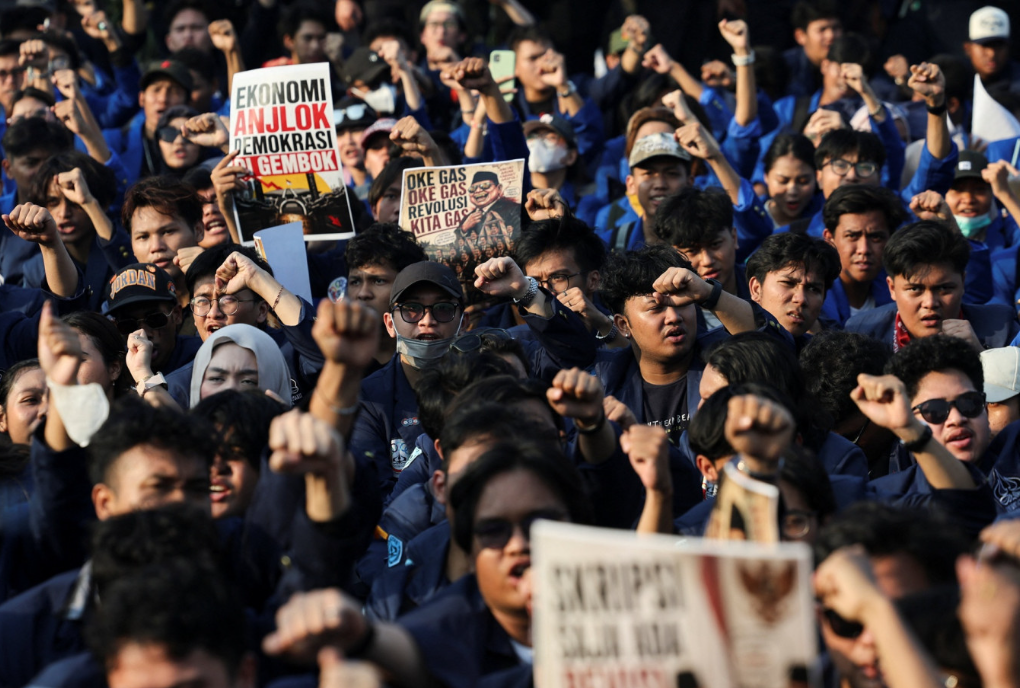
Students across multiple Indonesian cities have mobilised in recent weeks to challenge the programme's continuation. In Bali, hundreds of university students gathered outside the regional legislative building in Denpasar, demanding that authorities conduct a thorough audit of the initiative's implementation. Their concerns centre on the substantial budgetary outlay—initially set at Rp 335 trillion for 2024—at a moment when the government is implementing austerity measures elsewhere. The demonstrators specifically called on the Supreme Audit Agency (BPK) to investigate the scheme comprehensively, questioning whether such expenditure represents sound fiscal stewardship during an economic slowdown.
The corruption dimension has galvanised student activism particularly sharply. In Jakarta, thousands of student activists affiliated with the Indonesian Islamic Student Movement (PMII) converged on the House of Representatives complex on June 22, demanding a complete overhaul of leadership at the National Nutrition Agency (BGN) following the arrest of three senior officials on graft charges. This scandal has crystallised student concerns that institutional mismanagement and corrupt practices are undermining the programme's purported benefits. The arrested officials' removal and the revelations of financial impropriety have provided tangible evidence for protesters arguing that the massive budget allocation cannot be trusted to reach intended beneficiaries.
Food safety incidents have compounded these governance worries. Students have called for comprehensive investigations into poisoning cases linked to meal distribution, suggesting that the programme has suffered from inadequate quality control and oversight mechanisms. For many young Indonesians, these incidents represent symptomatic failures of the entire initiative—evidence that scale without proper institutional capacity produces public harm rather than public good. The convergence of corruption allegations and food safety lapses has created a narrative of systemic failure that extends beyond any single operational defect.
Yet the landscape is far more complicated than simply pitting budget-conscious reformers against the status quo. Kitchen workers across multiple regions have staged their own demonstrations, but in defence of programme continuation. In Batam, Riau Islands, approximately 1,500 daily-wage workers who prepare and distribute meals rallied to preserve their employment, highlighting the distributional consequences of proposed efficiency measures. The government's decision to reduce meal distribution from six to five days weekly and to suspend operations during school holidays would directly slash worker incomes, affecting household survival. Coordinator Langga Husein emphasised that these workers depend on daily payments to support their families, making the programme far more than a nutritional intervention—it functions as a crucial livelihood support mechanism.
Beneficiaries themselves have also organised in support. In Bandar Lampung, residents gathered to endorse programme continuity, emphasising that nutritional support for pregnant women, breastfeeding mothers, and toddlers should not cease during school holidays when children remain vulnerable. The humanitarian dimension cuts against purely fiscal arguments for retrenchment. Field coordinator Maradoni articulated an additional economic angle: the programme's massive procurement creates demand for agricultural commodities including rice, corn, cassava, and fresh produce, thereby supporting rural producers and stabilising commodity prices. In this view, eliminating or substantially reducing the initiative would harm farming communities dependent on these guaranteed purchases.
President Prabowo Subianto launched the free meals scheme in January last year as a centrepiece anti-malnutrition strategy, targeting approximately 83 million beneficiaries across schools and vulnerable populations. The initiative represented a significant policy commitment to addressing childhood stunting and nutritional deficiency, issues that remain consequential for Indonesia's human development trajectory. Yet the programme's scale and cost have made it simultaneously a symbol of governmental ambition and governmental excess, depending on one's vantage point.
The government has responded to criticism not with wholesale abandonment but with measured recalibration. Budget allocations have been reduced from Rp 335 trillion to Rp 228.4 trillion according to BGN Deputy Head Agustina Arumsari, and officials including Government Communications Agency head Muhammad Qodari have maintained that the scheme will persist. Rather than termination, government strategy emphasises efficiency improvements: suspending distribution during late-June through mid-July school holidays, withdrawing meal provision from 76 schools in relatively affluent neighbourhoods where families presumably possess adequate resources, and introducing tighter procurement controls. This approach attempts to thread the needle between student demands for fiscal restraint and worker-beneficiary demands for livelihood preservation.
The demonstrations occurring in Jakarta, Batam, Bali, Bandar Lampung, West Nusa Tenggara, and East Java signal that this programme has become a prism through which Indonesians are evaluating their government's broader competence and trustworthiness. For student protesters, the issue extends beyond meals themselves to encompass questions about whether government institutions can execute large-scale initiatives without corruption, whether spending decisions reflect democratic accountability, and whether austerity is being applied fairly across society. For workers and beneficiaries, the issue concerns survival and whether vulnerable populations will absorb the costs of fiscal adjustment.
For Malaysia and Southeast Asian observers, Indonesia's experience offers cautionary lessons about the implementation challenges attending ambitious universal social programmes. Scaling nutritional interventions to reach 83 million people across an archipelago of 17,000 islands demands extraordinary institutional capacity and coordination. Corruption risks multiply with budget size, and food safety systems must function reliably across dispersed regions with varying local governance capacity. The political economy of such programmes also proves complex: they create constituencies of workers and suppliers with vested interests in continuation, complicating rational policy adjustment when programmes require reform.
The intensity of competing demonstrations reflects that Indonesia has not yet achieved consensus on the appropriate balance between anti-malnutrition commitment and fiscal discipline. Student activists view the programme as emblematic of wasteful spending requiring correction. Workers view it as essential income support. Rural producers view it as critical market demand. This multivalent significance suggests the initiative will remain contested terrain rather than settling into quiet execution. How the Prabowo administration navigates these competing pressures—whether through incremental refinement, institutional reform, or some combination—will significantly influence broader perceptions of governmental responsiveness and administrative competence.