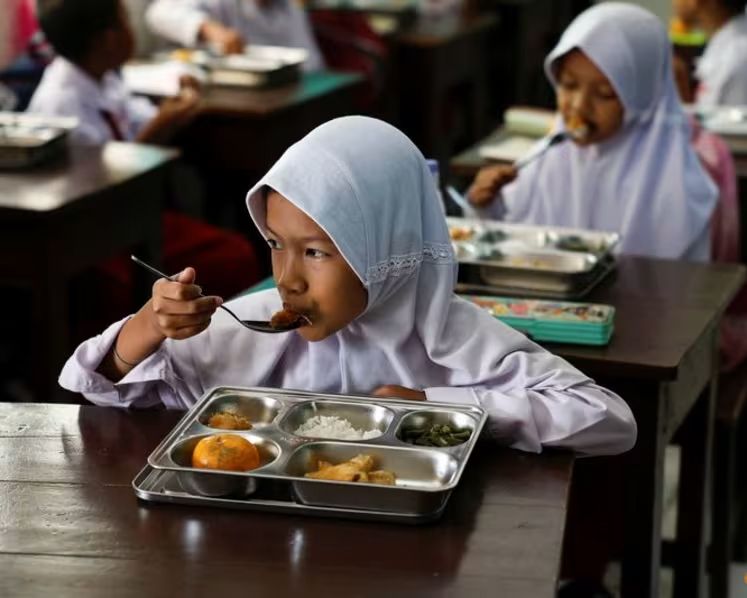
President Prabowo Subianto's signature free meals initiative has suffered another significant setback with the resignation of Nanik Sudaryati Deyang, head of the National Nutrition Agency, announced on Wednesday. Her departure marks the second dramatic leadership transition at the organisation within just over a month, deepening concerns about the stability and future direction of one of Indonesia's most ambitious and costly social programmes. The departure comes as the agency grapples with spiralling challenges ranging from operational difficulties to criminal allegations, casting fresh doubts on the government's ability to manage the multibillion-dollar initiative that has become central to Prabowo's domestic agenda.
Nanik, who assumed her position in June following her predecessor's dismissal, cited personal health grounds for stepping down. In a Facebook statement addressing supporters, she cited a heart condition that required urgent overseas treatment, explaining that extreme stress related to her role had led to arterial blockages according to her medical team. She further noted that Prabowo had consented to her resignation once he learned of her health predicament. Despite her departure, Nanik indicated that the president may appoint her to lead a newly-formed supervisory oversight body for the agency, suggesting her influence may not entirely disappear from the programme's governance structure.
The timing of Nanik's exit underscores deepening structural problems within the National Nutrition Agency. Her immediate predecessor was removed from office and subsequently arrested on corruption charges stemming from an investigation into the free meals scheme, following a dramatic raid on the agency's headquarters. This sequence of events has damaged public confidence in the programme's management and raised uncomfortable questions about whether adequate safeguards and oversight mechanisms exist within the government body responsible for distributing food to tens of millions of Indonesians.
Financial pressures have intensified the organisation's difficulties. The agency disclosed that its 2026 budget allocation had been slashed for the second occasion, declining from 268 trillion rupiah to 229 trillion rupiah, equivalent to approximately USD 12.79 billion. This represents a cumulative reduction of more than 100 trillion rupiah from the original budgetary blueprint of 335 trillion rupiah. The National Nutrition Agency cautioned that additional reductions remain probable pending further budgetary reviews, creating an uncertain fiscal environment that complicates long-term planning and service delivery.
These budgetary constraints have forced a dramatic scaling-back of the programme's original scope and ambitions. Initially, the free meals scheme aimed to reach 83 million individuals encompassing schoolchildren, pregnant women, and other vulnerable populations. Before the most recent financial review, the agency had reported delivering meals to 62.5 million people, suggesting that expanded coverage may now become increasingly unattainable given reduced funding. The gap between initial intentions and current capacity illustrates the practical consequences of budget cuts on a programme designed to address nutritional deficiencies across Indonesia's lower-income communities.
The free meals initiative emerged as Prabowo's flagship campaign pledge and represents one of his administration's most significant policy commitments. Launched in January 2025, the programme rapidly encountered multiple operational difficulties that undermined its credibility. Logistical bottlenecks, inconsistent food quality, and critically, several documented instances of mass food poisoning incidents have generated widespread public criticism and sparked media investigations into implementation failures. These problems have transformed what was intended as a showcase of government competence into a source of embarrassment and concern.
Nanik's insistence that the programme constitutes a nutrition intervention measure rather than a political initiative reflects underlying tensions about its nature and purpose. Critics have characterised the free meals scheme as a populist expenditure designed primarily for electoral benefit, particularly given its scale and cost at a time when Indonesia faces fiscal constraints. Her framing attempts to reposition the programme within a developmental and public health context, emphasising its role in addressing childhood malnutrition rather than viewing it through a partisan lens. Nevertheless, the programme's deep entanglement with Prabowo's political brand makes such reframing challenging.
The question of succession remains unresolved, introducing further uncertainty. Nanik indicated that her successor would be a junior colleague within the agency, though the specific identity and appointment timeline remain unclear. The National Nutrition Agency has not yet issued an official statement regarding the transition process or interim arrangements. This communication vacuum raises concerns about whether there exists a clear continuity plan or whether the organisation faces an extended period of leadership ambiguity during a critical operational phase.
For Malaysian observers and Southeast Asian policymakers, Indonesia's experience offers instructive lessons about the practical challenges of implementing large-scale social programmes, particularly regarding institutional capacity, budget sustainability, and corruption safeguards. The volatility at the National Nutrition Agency suggests that ambitious social spending commitments require robust administrative infrastructure, transparent oversight mechanisms, and realistic fiscal planning to succeed. Indonesia's difficulties indicate that political will alone cannot compensate for inadequate organisational systems or insufficient resources.
The establishment of a supervisory board mentioned by Nanik may signal recognition that the National Nutrition Agency requires external accountability mechanisms and enhanced governance structures. However, the success of such institutional reforms depends entirely on their design, the independence of board members, and their capacity to influence operational decisions. Whether these changes prove sufficient to restore public confidence and operational effectiveness remains highly uncertain.
Looking forward, the free meals programme faces a precarious situation. Continued budget uncertainty, unresolved criminal investigations, ongoing logistical challenges, and compromised institutional leadership create a toxic combination of obstacles. Prabowo's government must quickly stabilise the initiative by appointing strong replacement leadership, establishing transparent operations, ensuring rigorous food safety protocols, and communicating clearly with Indonesians about realistic programme scope given available resources. Without decisive action, what was intended as a transformative social achievement may instead become emblematic of governance shortcomings during a critical period of the Prabowo administration.

