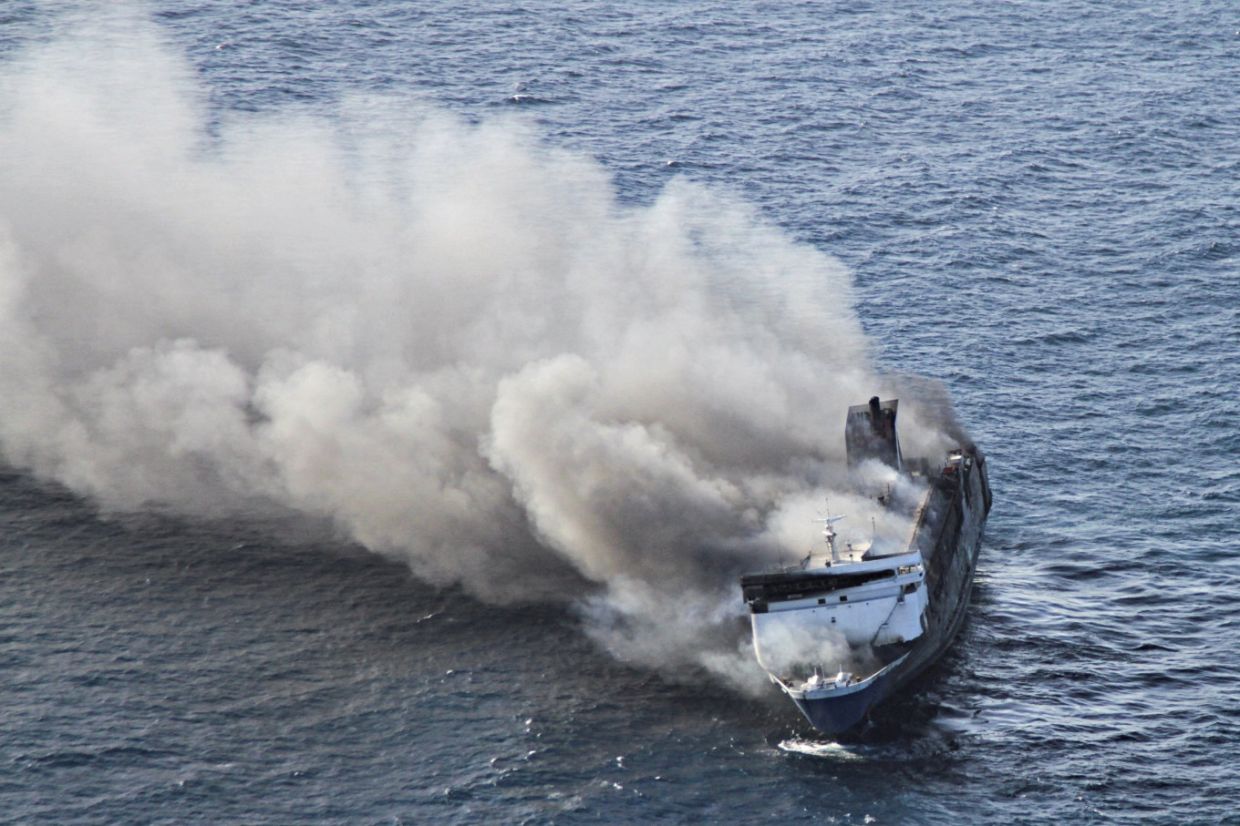
Indonesia's maritime safety system faces mounting scrutiny following a catastrophic fire aboard the KMP Mutiara Sentosa II off Madura in East Java on August 2, which claimed at least five lives and left two passengers missing. The vessel, operating between Surabaya and Makassar with 236 passengers and 39 crew members aboard, experienced a blaze at approximately 6am, forcing occupants to make desperate attempts at self-evacuation. The incident has triggered serious questions about the adequacy of Indonesia's maritime regulatory framework and the enforcement of safety standards across the nation's shipping industry.
Passenger accounts paint a troubling picture of emergency response failures during the evacuation. Udin Karo Karo, chairman of the Makassar–Surabaya Truck Drivers Association, reported that crew members provided minimal guidance as the fire spread, compelling approximately 40 percent of the drivers aboard to save themselves. Many passengers resorted to jumping from the 160-meter-long vessel into the sea, depending entirely on life jackets for survival. Most disturbingly, neither lifeboats nor inflatable rescue rafts appeared to be deployed during the crisis, despite being mandated safety equipment aboard passenger vessels. This gap between regulatory requirements and practical implementation underscores a troubling disconnect between what Indonesia's maritime laws stipulate and what actually occurs on vessels carrying hundreds of passengers daily.
The involvement of PT Atosim Lampung Pelayaran (ALP) in multiple maritime incidents within a compressed timeframe has become a focal point for investigation and accountability demands. The KMP Mutiara Sentosa II fire represents the second catastrophic incident involving the operator's vessels in recent years. A sister ship, the KMP Mutiara Sentosa I, experienced a nearly identical fire near Madura on May 19, 2017, also resulting in five fatalities. This pattern suggests either fundamental deficiencies in the company's maintenance protocols, safety culture, or systemic failures in regulatory oversight that have allowed unsafe practices to persist unchecked across multiple vessels under the same operator.
Edi Priyanto, Deputy Chairman of the East Java Occupational Safety and Health Council, has articulated a critical concern that transcends the immediate technical causes of the fire. He argues that the recurring nature of such incidents indicates that Indonesia's maritime safety challenges extend far beyond isolated mechanical failures. Instead, they reflect deeper organizational pathologies including inadequate safety cultures, insufficient mechanisms for learning from previous accidents, and poorly implemented risk management systems. If previous accidents at the operator's vessels had genuinely prompted systemic improvements, the recurrence of similar catastrophes would suggest that such lessons either were never absorbed or were abandoned in favour of cost-cutting measures.
The speed with which the fire engulfed the KMP Mutiara Sentosa II raises additional alarm bells about vessel maintenance and emergency system functionality. Priyanto emphasizes that effective investigation must examine not merely how the fire originated but why it spread so rapidly and whether the vessel's emergency response infrastructure operated as designed. This distinction matters profoundly: a vessel might possess adequate safety equipment and procedures on paper, yet this equipment remains worthless if maintenance has been deferred, crew members are untrained in its use, or safety protocols are treated as bureaucratic formalities rather than life-saving procedures. For passengers and crew aboard Indonesian vessels, this differentiation between theoretical compliance and practical preparedness determines whether they live or perish.
Transportation Minister Dudy Purwagandhi indicated that the government would await findings from the National Transportation Safety Committee (KNKT) before conducting a comprehensive evaluation of PT ALP. However, this cautious approach has drawn criticism from those who view the repeated incidents as sufficient grounds for immediate intervention. The minister acknowledged that PT ALP had accumulated a track record of maritime accidents, raising troubling questions about why operational deficiencies had not triggered stricter regulatory action previously. The government's commitment to using the latest incident as a reference point for future assessments, while necessary, rings somewhat hollow to those who contend that decisive action should have been taken following the 2017 disaster.
The KMP Mutiara Sentosa II tragedy occurred within a month of another ferry disaster near Selayar, South Sulawesi, in which a vessel carrying over 70 passengers sank, claiming at least four confirmed deaths and leaving 14 missing. The clustering of major maritime incidents within such a brief period has propelled maritime safety from a technical concern to a matter of urgent national importance. Abdul Hadi, a House of Representatives Commission V member overseeing transportation and infrastructure, characterized these recurring disasters as something far more serious than isolated mishaps. When multiple fatal incidents occur in rapid succession across Indonesia's sprawling maritime network, they collectively demonstrate systemic vulnerability rather than random bad fortune.
Abdul has called for a fundamental reconceptualization of how Indonesia conducts maritime safety oversight. He contends that seaworthiness inspections and certification procedures have devolved into routine administrative exercises divorced from the paramount purpose of protecting human life. Safety certifications issued without rigorous verification of actual vessel condition, inspections conducted as checklist exercises rather than genuine safety assessments, and safety procedures implemented merely to satisfy regulatory bureaucracy all contribute to a system that provides the appearance of safety while delivering precious little substance. For the hundreds of thousands of Indonesians who depend on maritime transport for commerce, employment, and survival, this administrative charade carries potentially fatal consequences.
The broader implications of Indonesia's maritime safety deficiencies extend beyond the immediate tragedy of individual vessel disasters. Southeast Asia's maritime sector underpins regional trade, economic integration, and people mobility. Indonesia, as the region's largest archipelago and a crucial maritime hub, bears particular responsibility for maintaining shipping standards that protect not only its own citizens but also the integrity of regional supply chains and the safety of cross-border travellers. When operators can apparently persist in unsafe practices despite regulatory frameworks and previous disasters, it signals to the international maritime community that Indonesia's regulatory commitment may be superficial, potentially affecting the nation's standing and the confidence of regional partners in its oversight capacity.
The investigation ahead must grapple with uncomfortable questions about enforcement mechanisms and institutional capacity within Indonesia's maritime regulatory bodies. Why was PT ALP permitted to continue operating vessels in 2023 after the 2017 disaster? What mechanisms exist to prevent operators with poor safety records from maintaining their licenses? How are safety inspections currently conducted, and what qualifications do inspectors possess? These questions point toward structural reform requirements that extend beyond individual operator accountability toward systematic improvements in regulatory design and enforcement. The government's stated commitment to comprehensive evaluation represents a necessary first step, but meaningful reform will require sustained political will to confront entrenched interests and implement costly improvements to regulatory infrastructure.
For Malaysian readers and Southeast Asian observers, the Indonesian maritime crisis carries direct relevance. Malaysia's own maritime sector, while generally better regulated, shares regional waters and operates within similar supply chains as Indonesian vessels. Substandard safety practices aboard Indonesian ships can affect regional maritime commerce, create competitive pressures on Malaysian operators, and pose risks to Malaysian citizens travelling aboard or dependent on cross-border maritime services. The incident thus underscores the importance of regional maritime safety standards and the challenges of maintaining uniform safety protocols across jurisdictions with varying regulatory capacities and enforcement capabilities. How Indonesia responds to this crisis will influence regional maritime safety dynamics and potentially establish precedents for how Southeast Asian nations address systematic safety deficiencies among their shipping operators.

