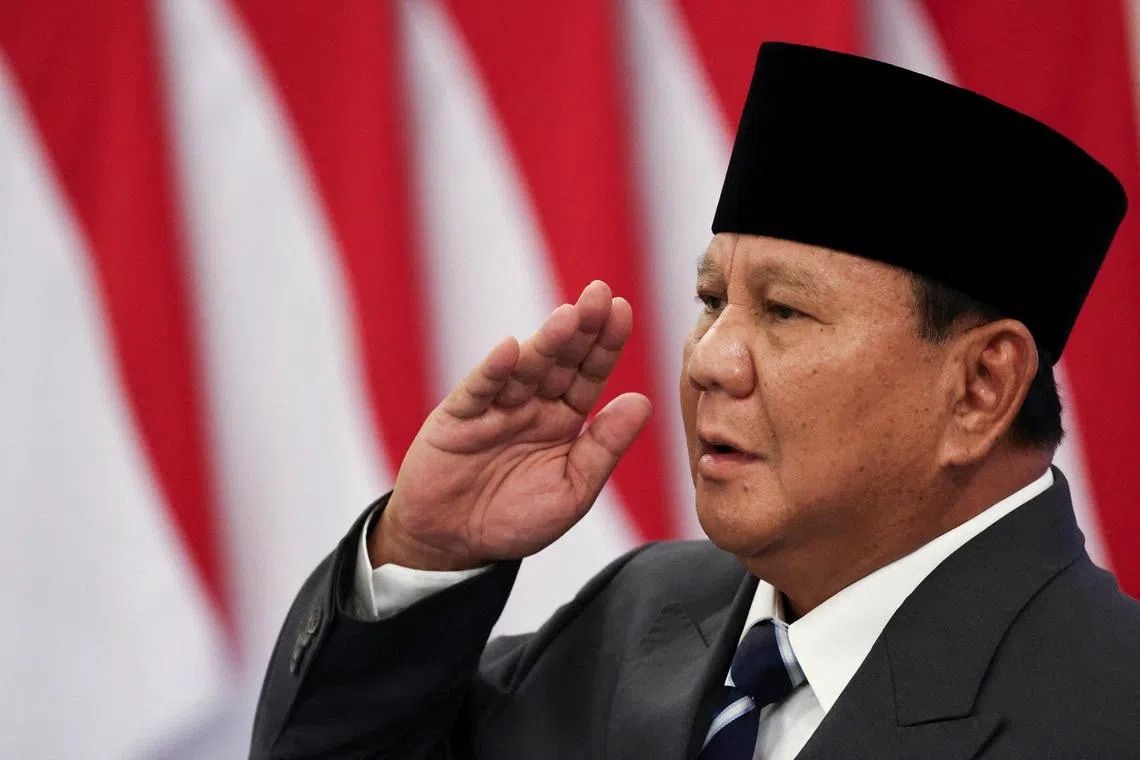
Indonesia's human rights commission has intensified pressure on the government to scrap mandatory military training for prospective managers involved in President Prabowo Subianto's flagship Red and White Cooperatives scheme, citing the deaths of five participants within just ten days of a 45-day training programme that began on June 14. The fatalities, occurring between June 17 and June 26, have triggered a significant debate about the appropriateness of militarised instruction for civilians preparing to lead village-based economic institutions, raising broader questions about the militarisation of civilian governance under Prabowo's administration.
The Red and White Cooperatives initiative, launched in July of the previous year, represents one of the government's most ambitious economic programmes, targeting the establishment of approximately 80,000 village cooperatives throughout Indonesia as a vehicle for job creation and a cornerstone of Prabowo's economic strategy aiming for 8% growth by 2029. These cooperatives are designed to function as neighbourhood retail operations offering subsidised essential goods, cooking gas, and agricultural inputs to rural communities. The scale is substantial, with nearly 35,000 future cooperative managers required to complete the military training component across several regional military training units, demonstrating the programme's centrality to the administration's economic planning.
The defence ministry attributed the five deaths to diverse medical causes including cardiac arrest, heat stroke, tuberculosis, and pneumonia, with military officials asserting that all participants had undergone pre-training medical screening and received clearance. Major General Ketut Gede Wetan, heading human resource development at the ministry, defended the training methodology, characterising it as focused on non-combat instruction without demanding strenuous physical exertion. However, this characterisation stands in tension with the timing and scale of the mortality rate, which has alarmed public health advocates and human rights monitors.
Pramono Ubaid Tantowi, an official at the Indonesian Human Rights Commission, articulated a fundamental critique of the military training requirement, questioning its relevance to cooperative management. He stressed that capacity-building for cooperative leadership should concentrate on developing managerial competence, organisational leadership, and financial literacy—skill sets divorced from military instruction. The commission's position reflects a growing concern that the military training component, rather than enhancing cooperative effectiveness, introduces unnecessary health risks while consuming training time that could be directed toward business-specific competencies.
The defence ministry has committed to conducting a comprehensive reassessment of the training regime, pledging to incorporate enhanced health monitoring protocols, early identification mechanisms for participants with pre-existing health vulnerabilities, and adjustments to the intensity of physical demands. Notably, the ministry indicated that the health ministry would be integrated into future training iterations, suggesting recognition that current protocols may be inadequate. Yet critics contend that these adjustments, while potentially beneficial, do not address the fundamental question of whether military training belongs in a civilian economic development programme.
The human rights commission has demanded a full government investigation into the deaths and called upon police authorities to pursue forensic autopsies immediately to establish definitive causes of death as part of any potential criminal inquiry. This escalation signals institutional concern that the deaths may not be adequately investigated through standard procedures and reflects anxiety about accountability. The request for forensic examination underscores uncertainty about whether medical personnel provided during training possessed sufficient expertise to determine cause of death accurately.
Prabowo's integration of military structures into civilian policy initiatives has become increasingly pronounced since his assumption of office in 2024, with the Red and White Cooperatives programme exemplifying this trend. The expansion of military influence into domains traditionally managed by civilian institutions raises governance questions about institutional boundaries and the appropriate role of defence establishments in economic development. This pattern, evident in the cooperatives scheme and other flagship programmes, suggests a deliberate strategy to deploy military capacity as an instrument of state-building at the village level.
For Malaysian observers and regional analysts, the Indonesian situation offers instructive lessons about the risks of militarising civilian economic initiatives without rigorous safeguards. Malaysia's own experience with cooperative movements, predominantly civilian-led, demonstrates that rural economic development can proceed effectively through dedicated business and agricultural training without military instruction components. The Indonesian deaths thus represent not merely a humanitarian tragedy but a validation of civilian-focused cooperative development models that have proven effective across Southeast Asia.
The controversy also illuminates tensions within Prabowo's broader governance approach between military-centric institutional preferences and the practical requirements of civilian economic administration. While the administration may view military discipline and organisation as beneficial to programme implementation, critics argue this perspective conflates organisational frameworks with operational methodologies in ways that prove counterproductive. The deaths have exposed the costs of importing military training cultures into civilian institutional contexts where different competency requirements and risk profiles prevail.
Moving forward, the Indonesian government faces pressure to demonstrate responsiveness to the human rights commission's recommendations while maintaining the cooperative programme's momentum. A decision to retain military training components would signal disregard for documented fatalities and expert warnings, whereas termination would require rapid redesign of training curricula. This juncture will substantially influence public confidence in both the cooperative initiative's safety standards and the government's commitment to evidence-based policy adjustment in response to identified harms.

