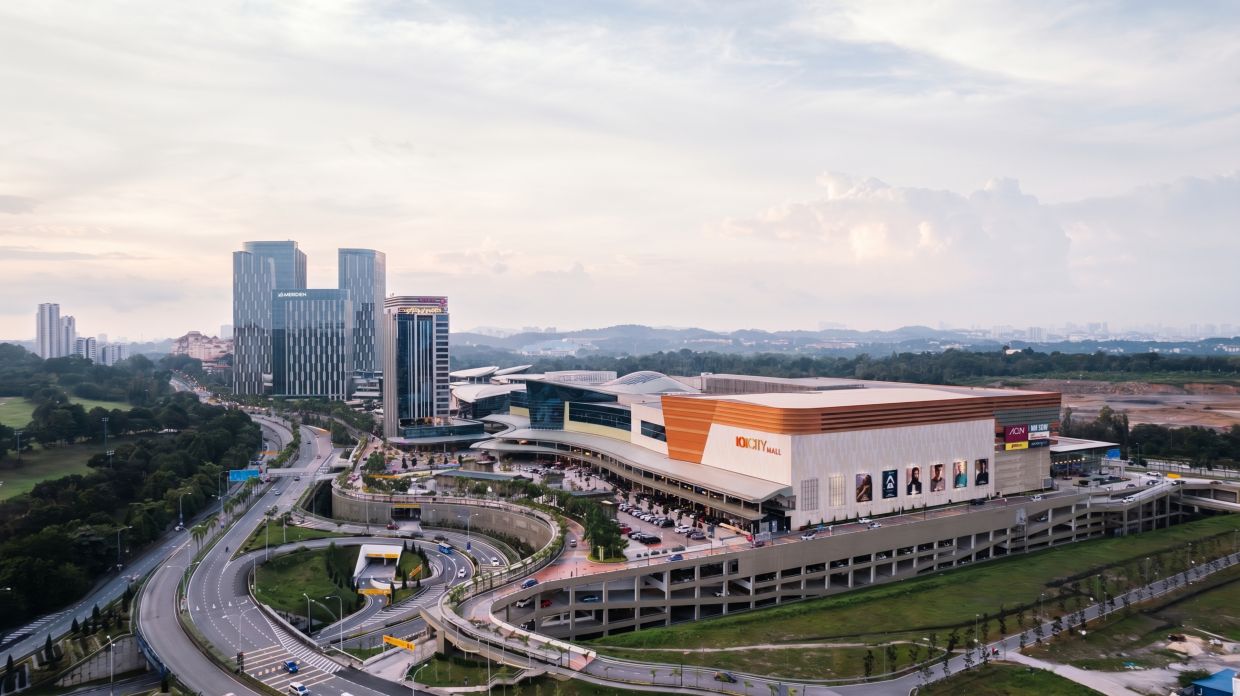
IOI Properties Group's ambitious plans to tap the capital markets through a real estate investment trust have cleared a major regulatory hurdle following approval from the Securities Commission. The company's filing with Bursa Malaysia confirms the anticipated REIT will enter the market with an initial fund size of 5.5 billion units, underpinned by a portfolio of strategically positioned properties valued at RM7.58 billion. This represents a significant move by one of Malaysia's most established property developers to unlock trapped value in its existing built assets while creating a new investment vehicle for Malaysian and regional investors seeking exposure to high-quality real estate.
The underlying asset base presents a compelling mix of uses and geographic spread across Malaysia's most economically vibrant regions. The portfolio encompasses IOI City Mall Phases 1 and 2, substantial retail anchors located in the Putrajaya-Cyberjaya corridor, alongside IOI City Towers, a modern office complex in the same master-planned precinct. The inclusion of PFCC Towers adds further commercial property depth, whilst the hospitality component demonstrates the REIT's diversified income streams. The hotel assets represent a particularly strategic dimension, including the Putrajaya Marriott, Le Méridien Putrajaya, and Moxy Putrajaya—all part of Malaysia's federal administrative centre—as well as the Four Points by Sheraton Puchong, W Kuala Lumpur in the capital's prime business district, and the Courtyard by Marriott in Penang's hospitality market. This geographic and sectoral diversity should provide investors with cushioning against sector-specific downturns whilst maintaining exposure to Malaysia's resilient tourism and commercial property markets.
The financing structure reflects a measured approach to raising the requisite capital. IOI Properties intends to fund the asset acquisitions through the issuance of 5.5 billion consideration units priced at 90 sen per unit, which will total RM4.95 billion, with the remainder sourced through RM2.65 billion in Sukuk financing. This Islamic financing component aligns with Malaysia's growing emphasis on sustainable and Sharia-compliant investment products, potentially broadening the REIT's appeal across domestic and regional institutional investors bound by Islamic investment mandates. The reliance on Sukuk demonstrates the company's understanding of Malaysia's maturing Islamic capital markets and the appetite among both domestic and foreign investors for sukuk-backed real estate plays.
The listing structure itself has been carefully calibrated to balance various stakeholder interests while meeting regulatory requirements. A retail offering of 715.6 million units has been carved out, further subdivided into a restricted offer for sale exclusively to existing IOIPG shareholders, allocations to eligible persons as defined by securities regulations, and a public tranche of 55 million units specifically reserved for Bumiputera investors. This tiered approach ensures existing shareholders benefit from potential value accretion whilst maintaining accessibility for retail investors and fulfilling the regulatory mandate for indigenous Malaysian participation in major capital raising exercises. The institutional offering of up to 1.48 billion units caters to sophisticated investors including institutional asset managers, insurers, and other large-scale players, both those approved to participate in Bumiputera allocations and general institutional investors. This bifurcated institutional approach reflects Malaysia's evolving regulatory framework which seeks to balance inclusivity with investor sophistication.
The Securities Commission's conditional approval introduces several safeguards designed to protect investors and ensure prudent management of the REIT post-listing. Most significantly, the regulator has mandated that Bumiputera equity participation must constitute at least 12.5 percent of the fund, underscoring the government's commitment to ensuring indigenous Malaysians benefit substantively from major capital market transactions. This threshold ensures that Bumiputera investors do not merely participate token gestures but hold meaningful stakes in the new vehicle. Additionally, the SEC has required operational audits following the REIT's listing, establishing a framework for ongoing scrutiny of asset management practices, financial reporting, and compliance with agreed covenants. These post-listing audits will provide independent verification that the fund operates in accordance with its prospectus and regulatory undertakings.
From a market perspective, the IOI Properties REIT arrival represents a notable evolution in Malaysia's real estate financing landscape. REITs have become increasingly sophisticated instruments for unlocking capital trapped in mature, income-generating property portfolios, and this transaction underscores how established Malaysian developers are adapting their capital structures to meet contemporary investor expectations. The move allows IOI Properties to redeploy capital towards new development opportunities whilst maintaining exposure to the stable, predictable cash flows generated by its operating properties. For investors, particularly those in Malaysia and across Southeast Asia seeking real estate exposure without direct development risk, the REIT provides liquid access to premier Malaysian properties across three resilient sectors: retail, commercial office, and hospitality.
The Putrajaya-Cyberjaya corridor, heavily represented in this REIT's retail and office holdings, has evolved into one of Malaysia's most consistently performing real estate markets, underpinned by sustained government presence and the district's positioning as a financial and administrative hub. IOI City Mall's dual phases command strong retail anchoring and tenant stability, whilst IOI City Towers benefits from steady demand among multinational corporations and government-linked entities establishing operations in Cyberjaya. The federal capital's hotels, meanwhile, service both business travellers attending government meetings and tourists visiting the administrative and tourist attractions concentrated in Putrajaya. This diversification across three complementary market segments provides multiple revenue supports for REIT unitholders.
The hospitality component deserves particular attention given the sector's turbulent recent history and ongoing recovery trajectory. The inclusion of properties across premier branded chains—Marriott, Le Méridien, Moxy, W Hotels, and Courtyard—provides reassurance regarding management quality and brand resilience. These properties serve different market segments: full-service luxury at the Putrajaya Marriott and W Kuala Lumpur, upper-midscale at Le Méridien, extended-stay at Courtyard by Marriott Penang, and lifestyle budget at Moxy Putrajaya. This portfolio breadth within the hospitality sector hedges against single-format hotel vulnerabilities and positions the REIT beneficially as regional travel continues normalizing post-pandemic.
For Malaysian investors seeking exposure to diversified property assets, the REIT offers particular advantages over equity ownership in IOI Properties itself. Direct equity investors in the property developer assume full exposure to its development execution risk, construction cost inflation, project approvals, and market absorption uncertainties. REIT unitholders, by contrast, obtain exposure exclusively to the performance of fully operational, revenue-generating assets, with prescribed distribution policies ensuring income flows. The 90-sen pricing per unit at initial offering positions the REIT accessibly for retail investors whilst maintaining institutional appeal. Furthermore, the REIT structure provides regulatory transparency regarding asset valuations and income sources that pure property company equity investors might not receive with similar frequency or independence.
Looking ahead, the approval positions IOI Properties to proceed with formal IPO documentation and roadshow activities ahead of a listing likely within the coming months. The regulatory clearance removes the final substantial hurdle; remaining steps involve regulatory filings, prospectus finalization, and marketing to identified investor groups. Market reception will likely depend on broader sentiment regarding Malaysian property valuations, interest rate trajectories, and investor confidence in Malaysia's post-pandemic economic trajectory. Given the REIT's exposure to essential retail and office infrastructure serving stable institutional and consumer bases, appetite should prove reasonable among Malaysian institutional allocators and regional real estate investment mandates. The successful launch of this REIT would validate Malaysia's continued attractiveness as a platform for sophisticated capital markets transactions whilst demonstrating how mature developers can unlock shareholder value through structured financial innovation.

