Ionic Digital, a cryptocurrency mining and artificial intelligence infrastructure company, has moved toward becoming a publicly traded entity by filing for a direct listing on the Nasdaq exchange. The announcement comes just days after the New Jersey-based firm secured $400 million in fresh capital, positioning it at a $2 billion pre-money valuation in a funding round led by established investment firms Attestor, Oaktree Capital Management, and Sachem Head Capital Management.
The company's path to the public markets is intertwined with one of the crypto industry's most prominent collapses. Ionic Digital was incorporated in January 2024 specifically to acquire the mining operations of Celsius Mining, a subsidiary of Celsius—a major cryptocurrency lending platform that imploded during the downturn that followed the sector's explosive pandemic-era growth. Celsius filed for Chapter 11 bankruptcy protection in July 2022, roughly a month after it shocked the market by freezing customer accounts and blocking all withdrawals. This move sent shockwaves through the sector, which had attracted retail and institutional investors betting on the permanence of the crypto boom.
The restructuring of Celsius received formal approval from the U.S. bankruptcy court in November 2023, allowing creditors to recover value through their transformation into equity holders in a successor entity. Under the reorganization framework, Ionic issued approximately 37 million Class A shares to these former creditors, converting them from stakeholders with claims on a bankrupt company into shareholders of an operating business with tangible assets and revenue streams. This conversion mechanism has given creditors a potential path to recovering at least a portion of their losses, though the ultimate value of their holdings will depend on Ionic's performance as a public company.
The direct listing mechanism that Ionic has chosen differs fundamentally from the traditional initial public offering process. Rather than creating new shares underwritten by investment banks to raise capital for the company itself, a direct listing allows existing shareholders to sell their holdings on an exchange without the company issuing additional equity. This structure eliminates the dilution effect that traditional IPOs create and allows company insiders and early investors to realize value immediately. For Ionic's registered stockholders, the company plans to facilitate the sale of up to 10.8 million shares through the Nasdaq listing, providing liquidity to investors who have held stakes since the company's formation.
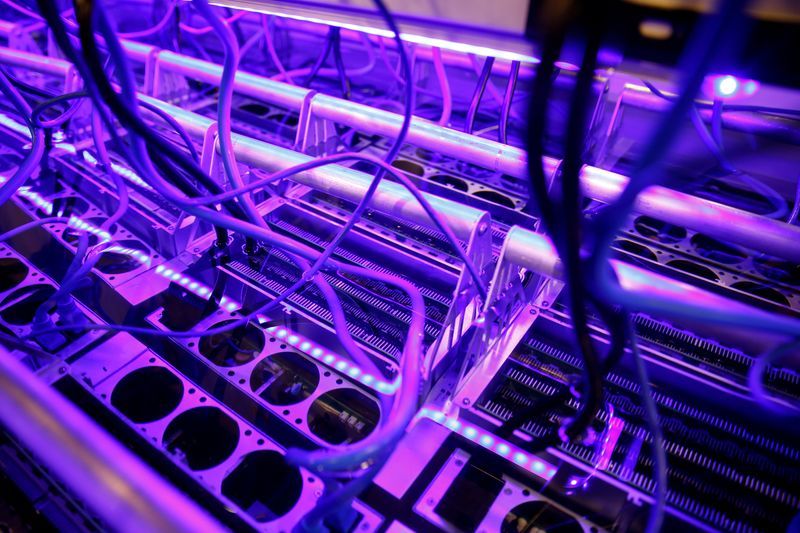
Ionic's business model centers on two increasingly important sectors within the digital economy. The company operates bitcoin mining infrastructure, generating cryptocurrency through computational work while managing the substantial energy and hardware requirements the process demands. Simultaneously, it has positioned itself in the growing field of artificial intelligence infrastructure, seeking to capture value from the compute-intensive applications that have proliferated following the recent AI boom. This dual focus reflects a sophisticated understanding that both sectors require substantial capital expenditure, reliable power sources, and technical expertise to operate at scale—capabilities that a well-funded operation can develop more readily than many competitors.
The funding round announced last week demonstrates strong investor confidence in Ionic's business prospects despite—or perhaps because of—the volatility that has characterized the cryptocurrency sector. The involvement of Attestor, Oaktree Capital Management, and Sachem Head Capital Management signals that sophisticated institutional capital sees value in the company's assets and operational strategy. These firms bring not only financial resources but also extensive experience in turnaround situations and infrastructure investments, lending credibility to the venture. The $2 billion valuation represents a substantial sum, reflecting market expectations that the company can generate significant revenue from both mining operations and AI infrastructure services.
For Malaysian and Southeast Asian investors and observers, Ionic's trajectory offers several instructive lessons. First, the cryptocurrency sector's volatility continues to create both risks and opportunities—Celsius creditors who received equity stakes are now potentially positioned to recoup losses if the company executes successfully. Second, the Asian region's growing prominence in cryptocurrency mining and AI development means that international firms like Ionic will compete for resources, talent, and market share in the region. Third, the regulatory and bankruptcy frameworks that govern corporate restructurings in the United States continue to generate consequential outcomes for global investors exposed to cryptocurrency platforms.
The listing will proceed under the ticker symbol IOND on the Nasdaq, with J.P. Morgan, Jefferies, and BTIG serving as financial advisors to guide the process. These heavyweight banking and advisory firms bring substantial experience navigating public markets and regulatory requirements, suggesting that Ionic has secured institutional support for a professional listing process. The involvement of such firms also indicates that the company likely maintains detailed operational disclosures and governance structures that sophisticated investors require before committing capital.
Ionic Digital's emergence from Celsius' bankruptcy represents a broader pattern in cryptocurrency sector history: the redistribution of assets following speculative excess and subsequent contraction. Where Celsius once functioned as an intermediary for retail cryptocurrency lending, Ionic operates in the more capital-intensive domain of infrastructure provision—mining and compute resources. This shift in business model may ultimately prove more sustainable, as it focuses on tangible production of value rather than the maturity transformation that proved ruinous for Celsius. The company's success in public markets will partly depend on whether it can sustain profitability amid ongoing fluctuations in cryptocurrency prices and the intensifying competition for AI compute capacity.

