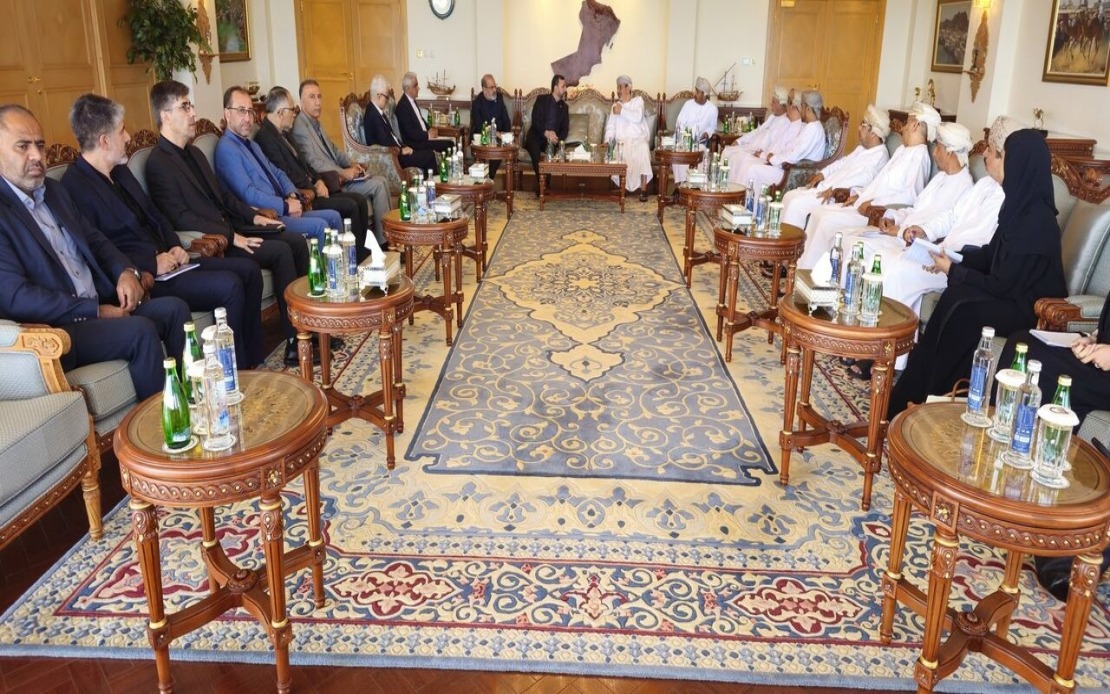
Iran and Oman have launched their first formal meeting of a Joint Hormuz Committee, signalling a coordinated diplomatic effort to shape governance arrangements for one of the world's most strategically vital waterways. The inaugural session brought together Iranian Deputy Foreign Minister Kazem Gharibabadi and Oman's Ambassador-at-Large Abdulaziz Al Hinai during Gharibabadi's visit to Muscat on Monday, marking a significant step in bilateral cooperation on maritime security and shipping protocols.
The Strait of Hormuz remains the fulcrum of global energy commerce, with roughly one-fifth of the world's traded oil passing through its narrow channels annually. For Malaysia and other Southeast Asian nations dependent on Middle Eastern energy supplies, the stability and accessibility of this waterway directly affects energy security and shipping costs. The formation of this committee reflects growing recognition among littoral states that unilateral approaches to the strait's governance have become increasingly untenable in an era of mounting maritime tensions and competing security interests.
During their discussions, the Iranian and Omani representatives examined pressing operational challenges affecting the Strait of Hormuz and deliberated on long-term management frameworks. These conversations are grounded in international maritime law, particularly Paragraph 5 of the Islamabad Memorandum of Understanding, which establishes principles governing the conduct of littoral states in shared waterways. By anchoring their dialogue in established legal instruments, Tehran and Muscat are attempting to demonstrate commitment to a rules-based approach rather than coercive unilateralism.
The committee's establishment follows a high-level visit by Iranian Foreign Minister Abbas Araghchi and Mohammad Bagher Ghalibaf earlier in June, culminating in a joint statement on June 23. That declaration underscored a fundamental principle driving current negotiations: the absolute necessity of respecting the sovereignty and maritime rights of both nations bordering the strait. For regional observers and maritime powers monitoring developments in the Persian Gulf, this language is particularly significant as it potentially signals Tehran's willingness to engage within consensual frameworks rather than through provocative actions that have periodically disrupted shipping in recent years.
The newly established committee will operate under the auspices of both countries' foreign ministries, providing an institutionalised channel for ongoing dialogue. This structural arrangement suggests that Iran and Oman view maritime governance as a matter of sustained diplomatic engagement rather than episodic crisis management. For Malaysian policymakers and regional trading communities, the existence of such formal mechanisms offers some reassurance that disputes over shipping lanes and transit protocols might be resolved through negotiation rather than escalation.
A critical focus of the committee's mandate involves crafting consensus on future shipping governance, encompassing service provision frameworks and cost-sharing arrangements that align with international maritime standards. These technocratic dimensions are crucial because shipping through the Strait of Hormuz involves complex logistics, toll systems, and coordination mechanisms that require voluntary compliance from multiple stakeholders. Malaysia, as a major maritime trading nation and home to regional shipping hubs, has considerable interest in seeing transparent, predictable, and internationally acceptable governance standards implemented in the strait.
The emphasis on littoral state sovereignty reflects competing visions for the waterway's future. While international maritime law permits freedom of navigation for vessels of all nations, it also acknowledges the special rights and responsibilities of states bordering critical straits. Iran has historically asserted expansive interpretations of these rights, occasionally conducting naval exercises or issuing warnings that have provoked international concern. Oman's involvement in these negotiations is particularly valuable because the sultanate has cultivated a reputation as a pragmatic mediator in Gulf regional affairs, offering a moderating influence on potentially divisive issues.
For Southeast Asian nations, the broader implications of successful Iranian-Omani cooperation on Hormuz governance extend beyond the immediate strait. A functioning bilateral committee that produces workable arrangements could serve as a model for managing other shared waterways and maritime chokepoints throughout Asia. The Malacca Strait, through which Malaysian territory extends, faces its own governance challenges related to piracy, environmental protection, and freedom of navigation—issues where consensual frameworks involving littoral states have proven more durable than unilateral impositions.
The committee's commitment to reaching consensus demonstrates that both Tehran and Muscat recognise the economic costs of shipping uncertainty. Global supply chains increasingly depend on predictable transit times and secure passage through critical chokepoints. Disruptions to Hormuz traffic can reverberate through Asian markets within days, affecting fuel prices, manufacturing schedules, and consumer costs. This economic reality provides powerful incentive for the committee members to deliver practical results rather than engage in posturing.
Looking forward, the success of this joint committee will be measured by tangible outcomes—whether protocols are established, disputes are resolved expeditiously, and shipping experiences improved predictability and safety. Early signals from the Iranian and Omani delegations suggest a genuine commitment to substantive engagement, though sceptics note that geopolitical tensions elsewhere in the Gulf could complicate negotiations. The committee's first meeting represents an opening move in a complex diplomatic game where technical maritime concerns intersect with broader strategic competition.

