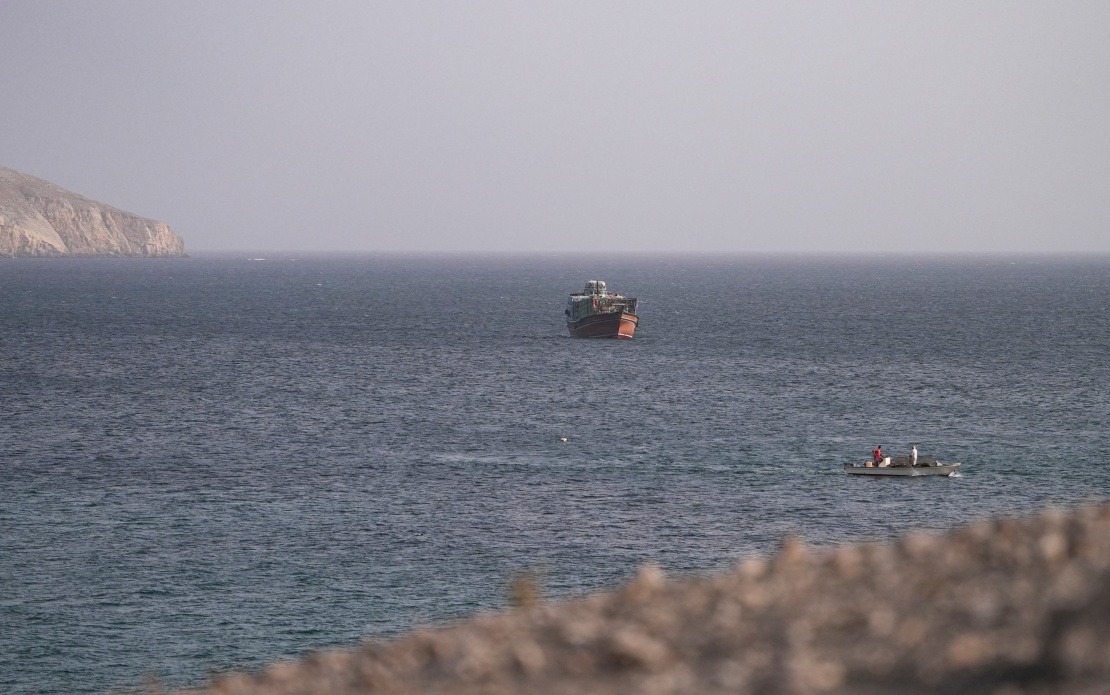
Iran and Oman are on the verge of concluding negotiations over a revised framework for maritime commerce through one of the world's most strategically vital shipping lanes. Kazem Gharibabadi, Iran's Deputy Foreign Minister for Legal and International Affairs, revealed on Wednesday that the bilateral understanding between Tehran and Muscat has entered its closing phases, marking a significant shift in how one of global shipping's most critical chokepoints will operate. The development arrives amid broader diplomatic signals that Iran remains engaged with international negotiations, potentially including discussions with the United States.
The proposed arrangement fundamentally restructures how merchant vessels will traverse the Strait of Hormuz, through which roughly 20 percent of the world's traded oil passes daily. Rather than restoring the status quo that has governed the waterway for decades, Gharibabadi stressed that Iran and Oman have designed what he characterised as an entirely new operational model. Under this framework, a substantial portion of commercial shipping traffic will be routed through Iranian territorial waters, a change that represents both a practical adjustment to maritime flows and a symbolic assertion of Iran's role in managing access through its coastal domain.
The distinction Gharibabadi drew is administratively significant. This is not, he emphasised, equivalent to a comprehensive reopening of the Strait of Hormuz along previously established patterns. Instead, it reflects what amounts to a reset of the terms governing transit, one that acknowledges Iran's geographic position and marine jurisdiction while accommodating the commercial imperatives of global shipping. For Malaysian readers, the implications are substantial: any disruption or successful establishment of new transit protocols through the Strait of Hormuz directly affects energy costs and supply chains across Southeast Asia, a region heavily dependent on Middle Eastern crude imports.
A critical unanswered question remains whether Iran will impose transit levies on vessels using the newly designated routes. Gharibabadi indicated that any decision on collecting fees would ultimately rest with Iran's supreme leadership and would be contingent upon how the United States conducts itself diplomatically. This formulation suggests that fee collection could become leverage in broader negotiations, with Tehran's decisions calibrated against American actions and responses. For regional observers, this conditional framing indicates that Iran views the Strait arrangements as interconnected with wider geopolitical considerations beyond simple maritime commerce.
Parallel discussions with Washington appear to be accelerating. Gharibabadi reported that Iran has received communications from American representatives signalling a willingness to "return to its commitments," though he declined to elaborate on the specific obligations being referenced or the channels through which these messages arrived. The cryptic language reflects the delicate nature of diplomatic signalling in contexts where official direct engagement remains complicated by sanctions regimes and adversarial relations. However, the fact that such communications are flowing suggests both parties recognise mutual interest in de-escalation.
The timing of these developments is consequential for regional stability. The Strait of Hormuz has been a recurring flashpoint, with Iranian naval forces and Revolutionary Guards frequently conducting exercises and making threatening statements about potential closure. Any normalisation of transit arrangements reduces the risk of incidents that could trigger broader conflict. For Southeast Asian economies like Malaysia, Thailand, and Singapore, which depend on stable energy supplies and uninterrupted shipping, the successful conclusion of Iran-Oman negotiations could translate to more predictable maritime conditions and reduced insurance premiums for vessels transiting the region.
Oman's role as mediator and negotiating partner reflects Muscat's traditional position as a bridge between Iran and the broader international community. The sultanate has historically maintained pragmatic relations with Tehran while preserving broader diplomatic ties, making it an ideal venue for shuttle diplomacy. This bilateral approach also suggests that any agreement will likely carry Omani guarantees regarding enforcement and compliance, lending credibility to the new arrangements among international shipping interests concerned about sudden policy reversals.
The geopolitical context surrounding these negotiations cannot be divorced from broader Middle Eastern tensions. The potential involvement of the United States in conversations about commitments raises questions about whether a comprehensive regional understanding might emerge. Should negotiations progress toward a wider agreement encompassing sanctions relief, nuclear programme constraints, and regional security issues, the Strait arrangements could become a practical implementation mechanism demonstrating mutual commitment to de-escalation.
For Malaysian policy-makers and business leaders, the development warrants close attention. Malaysia's petrochemical industry, shipping sector, and broader trade networks depend on stable access to Middle Eastern energy and on predictable maritime corridors. Any Iranian-led initiative to formalise new transit rules, particularly one involving active US engagement, signals a potential inflection point in regional stability. The question of whether transit fees are eventually imposed will influence competitiveness in regional markets and may affect pricing across Southeast Asian energy and logistics sectors.
The successful finalisation of Iran-Oman shipping protocols could also set precedent for how disputed maritime zones and strategic chokepoints are managed globally. If this model proves functional and commercially acceptable, it might offer lessons for other regions navigating similar tensions between coastal state sovereignty and international navigation rights. The framework emerging from these negotiations will essentially test whether new geopolitical arrangements can be operationalised through practical, mutually beneficial commercial structures.

