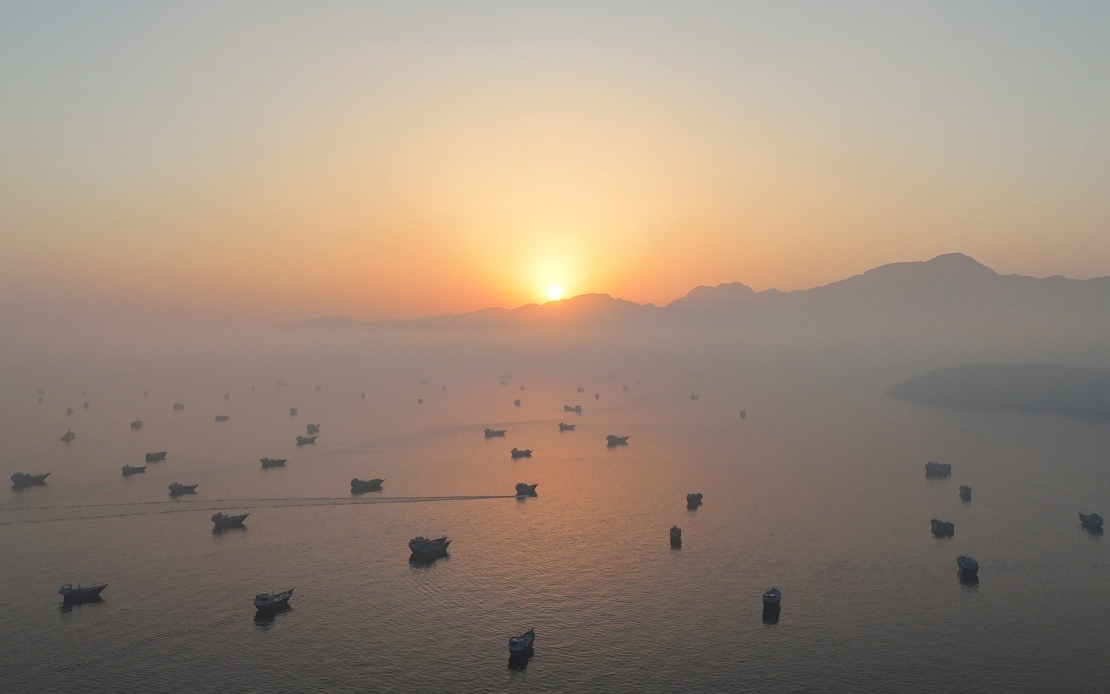
Iran's Foreign Minister Abbas Araghchi announced on June 28 that his country intends to reassert sole authority over the Strait of Hormuz within the coming month, marking a significant escalation following the breakdown of diplomatic negotiations with the United States. Speaking during a press conference in Baghdad, Araghchi underscored Tehran's position that the strategically critical waterway falls squarely under Iranian jurisdiction and administration, signalling a hardening stance as the fragile ceasefire that had briefly held between the two adversaries continues to unravel amid escalating military exchanges.
The Strait of Hormuz represents one of the world's most economically consequential maritime passages, serving as the chokepoint through which roughly one-fifth of global petroleum trade flows. For regional economies and international commerce, the waterway's security and accessibility carry outsized significance, making Iran's renewed assertion of control a matter of genuine concern for shipping companies, energy importers, and governments across Asia and beyond. The strait's strategic importance has only intensified in recent years, particularly as energy markets remain volatile and supply chain disruptions continue to reverberate through the global economy.
Araghchi's declaration reflects Tehran's determination to consolidate its grip over this vital passage, with the foreign minister explicitly warning against external interference. He cautioned that any attempts by third parties to establish parallel administrative structures or challenge Iranian authority would only heighten regional tensions and further obstruct the reopening of commercial shipping routes. This warning appeared directed squarely at the United States and its regional allies, signalling Iran's determination to prevent any arrangement that might dilute its control or subject the strait to international monitoring mechanisms.
The deterioration of the ceasefire represents a dramatic reversal of diplomatic progress that seemed within reach just weeks earlier. The accord between Washington and Tehran had established a framework intended to gradually stabilise the situation, with both sides agreeing to a 60-day negotiating period during which Iran would not levy charges on vessels transiting through the strait. This provision was considered a critical confidence-building measure, designed to reassure global markets and demonstrate Tehran's willingness to honour commercial obligations during the dialogue process.
Historically, Iran has proven willing to weaponise control of the Strait of Hormuz during periods of heightened confrontation. When Israel and the United States launched military operations against Iranian targets in February, Tehran responded by essentially throttling shipping traffic through the waterway, deploying threats and targeted attacks to make the cost of transit prohibitive. That episode underscored how quickly Iran could transform a vital global trade artery into a contested zone, wielding the strait as leverage in its negotiations with Washington and Jerusalem.
The collapse of the current ceasefire stems from a fresh cycle of military escalations, with both sides trading attacks and accusations of bad faith. For Malaysian and Southeast Asian observers, the implications are particularly acute. The region's energy-dependent economies, particularly those reliant on Middle Eastern oil and liquified natural gas imports, face potential supply shocks if Iranian actions succeed in further disrupting Hormuz traffic. Singapore's status as a major refining and shipping hub, combined with regional economies' vulnerability to petroleum price volatility, means that Iran's maritime posturing carries direct economic consequences across ASEAN.
The anticipated talks between Iran and Oman add another dimension to the unfolding situation. Oman, which maintains relatively balanced diplomatic relations with both Iran and the West, could potentially serve as an intermediary facilitating dialogue or establishing mechanisms for safe passage. However, the broader framework for such negotiations remains murky, particularly given the current atmosphere of mutual recrimination and renewed hostilities. Analysts note that Oman's role as a potential honest broker may be limited if both Tehran and Washington have fundamentally abandoned serious diplomatic efforts.
A critical unresolved question concerns potential fees that Iran might demand for passage through the strait once the current 60-day window expires. International maritime law and conventions governing freedom of navigation would ostensibly constrain Iran's ability to impose unilateral levies. However, analysts caution that Tehran may interpret its sovereign rights expansively, particularly if it perceives external resistance to its control. The fee question represents a potential flashpoint where legal obligations, geopolitical leverage, and commercial interests collide, with implications extending well beyond the immediate region.
For Malaysian policymakers and regional observers, the situation demands careful monitoring. Malaysia's own maritime interests, including those related to the Malacca Strait and broader freedom of navigation principles, create natural alignment with efforts to preserve open shipping lanes globally. The potential for further Iranian disruption of the Hormuz Strait could prompt Malaysian and ASEAN governments to recalibrate engagement strategies with Tehran, while reinforcing the importance of maintaining stable energy supplies through diversified sourcing and strategic reserves.
The broader geopolitical trajectory appears concerning. Rather than moving toward sustainable accommodation between Iran and the West, the region seems to be reverting to a pattern of mutual coercion and escalation. This cycle threatens not merely bilateral US-Iran relations but the stability of one of the world's most critical commercial arteries. As Iran reasserts control and foreign powers contest that assertion, the maritime community faces renewed uncertainty and potential disruption to flows of energy and goods upon which modern economies fundamentally depend.

