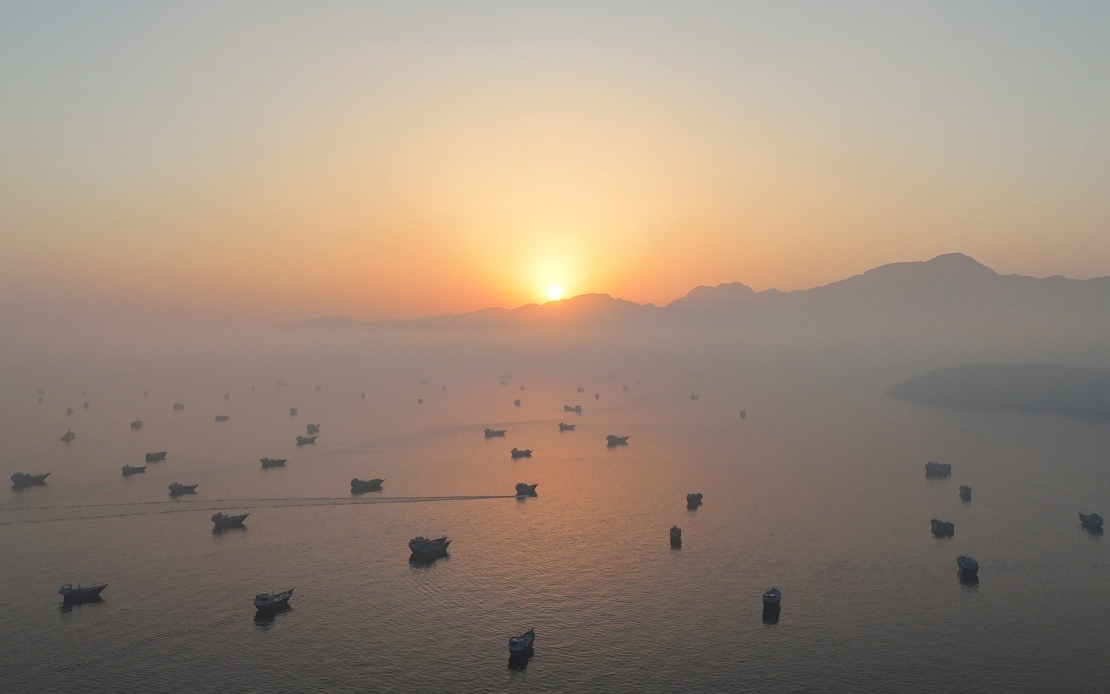
Iran's military authorities have escalated rhetoric over transit through one of the world's most critical chokepoints, declaring on Sunday that the Strait of Hormuz will remain closed to all commercial shipping without explicit Iranian coordination and clearance. The Islamic Revolutionary Guard Corps reported that two vessels had been compelled to halt and two others forced to reverse course after ignoring warnings as they attempted passage through what Tehran characterises as unsafe corridors. The development marks a significant hardening of Iran's position regarding the strategic waterway, which channels approximately one-third of global maritime oil trade.
According to IRGC statements, the four US-backed vessels involved in Sunday's incident had disabled their navigation systems whilst attempting to transit via routes not approved by Iranian authorities. This deliberate deactivation of transponders heightened tensions in an already volatile maritime corridor. The military branch asserted that its navy operates under direct orders to enforce compliance with Iranian-designated shipping lanes and prevent unauthorised transit. The language employed by the IRGC suggests that Sunday's confrontations were not isolated incidents but rather manifestations of a broader policy framework that Tehran intends to enforce consistently.
The IRGC's explicit warning—that "not even a drop of oil, gas or fertiliser will be allowed to pass through the Strait of Hormuz without coordination with and permission from Iran"—represents an unusually direct challenge to established international maritime law and freedom of navigation principles. This assertion of absolute control over one of the world's most economically vital waterways carries profound implications for global energy security, particularly for nations dependent on Middle Eastern crude oil and liquefied natural gas imports. For Malaysian readers and regional observers, the threat of Iranian restrictions on tanker movements carries direct consequences for fuel prices, energy costs, and the stability of supply chains already strained by geopolitical tensions.
The escalation occurs within the context of intensifying US-Iran military posturing. Beginning on July 8, the United States launched successive waves of military strikes against Iranian positions, with American Central Command characterising these operations as responses to Iranian harassment of commercial vessels transiting the Strait. Iran has reciprocated with strikes targeting US military installations across West Asian territories, creating a cycle of tit-for-tat military action that threatens to spiral into broader regional conflict. This pattern of rapid escalation underscores the fragility of the current security environment and the potential for accidental military confrontation that could inadvertently restrict shipping traffic entirely.
Iran's historical position as a guarantor of regional security has been undermined by Western sanctions and military pressure, leading Tehran to adopt increasingly assertive postures regarding its territorial waters and strategic corridors. The Strait of Hormuz, through which approximately 21 million barrels of oil transit daily, represents Iran's primary leverage point in negotiations with Western powers. By threatening to restrict tanker traffic, Iran signals willingness to impose severe costs on global energy markets should international pressure against its interests intensify. However, such tactics risk triggering military responses from Western naval forces committed to maintaining freedom of navigation in international waters.
The implications for Southeast Asia are substantial and multifaceted. Malaysia, as a significant energy importer and a nation with maritime interests throughout the region, faces potential disruptions to fuel supplies should Iranian restrictions become operational. The cost of insurance for tankers navigating the Strait has already risen markedly due to regional tensions, and further escalation could render energy imports prohibitively expensive. Additionally, the precedent of unilateral corridor control could inspire similar assertions by other regional powers, fragmenting the open maritime system upon which regional prosperity depends. Singaporean shipping, a regional linchpin, would face increased operational costs and security concerns.
The question of legitimacy in Iran's claims remains contested under international maritime law. The United Nations Convention on the Law of the Sea permits coastal states certain regulatory authorities within territorial waters and exclusive economic zones, but the Strait of Hormuz's status as an international waterway subject to transit passage rights creates legal complexity. Iran's assertion of absolute control exceeds its rights under established conventions, yet its capacity to enforce such restrictions through military force gives the claim practical weight regardless of legal standing. This divergence between legal principle and practical capability creates a destabilising environment where de facto control supersedes de jure arrangements.
The broader regional context reveals a security environment deteriorating across multiple dimensions. Iranian drone capabilities have improved significantly, as demonstrated by recent attacks on shipping and military installations. Simultaneously, Western powers maintain technological advantages in naval warfare and air superiority. This asymmetric military competition, conducted within confined geographic space heavily trafficked by commercial vessels, generates persistent risks of incidents escalating beyond intended scope. A single miscalculation or accident could precipitate military exchanges that jeopardise the passage of millions of barrels daily.
For international energy markets and Asian consumers in particular, the stakes of this confrontation are existential. Oil price volatility attributable to Middle Eastern tensions has historically produced significant economic disruptions across Asia. Any credible threat to Hormuz transit capacity triggers immediate market responses as traders price in supply risk premiums. Malaysia's manufacturing sector, energy-intensive operations, and transportation-dependent economy would face elevated production costs transmitted throughout supply chains. Regional governments confront difficult strategic choices between maintaining constructive relationships with both Iranian and Western powers while protecting vital energy security interests.
The positioning of international naval forces in response to Iranian threats reveals the determination of external powers to maintain traffic flow. US Navy aircraft carrier deployments and international coalition patrols demonstrate commitment to enforcing freedom of navigation despite Iranian opposition. However, the sustainability of such deployments against a determined adversary willing to absorb costs remains uncertain. Prolonged military standoff could eventually impose such severe commercial penalties that negotiated settlements become preferable to continued confrontation, potentially legitimising elements of Iran's demands through informal arrangements even as formal legal structures remain unchanged.

