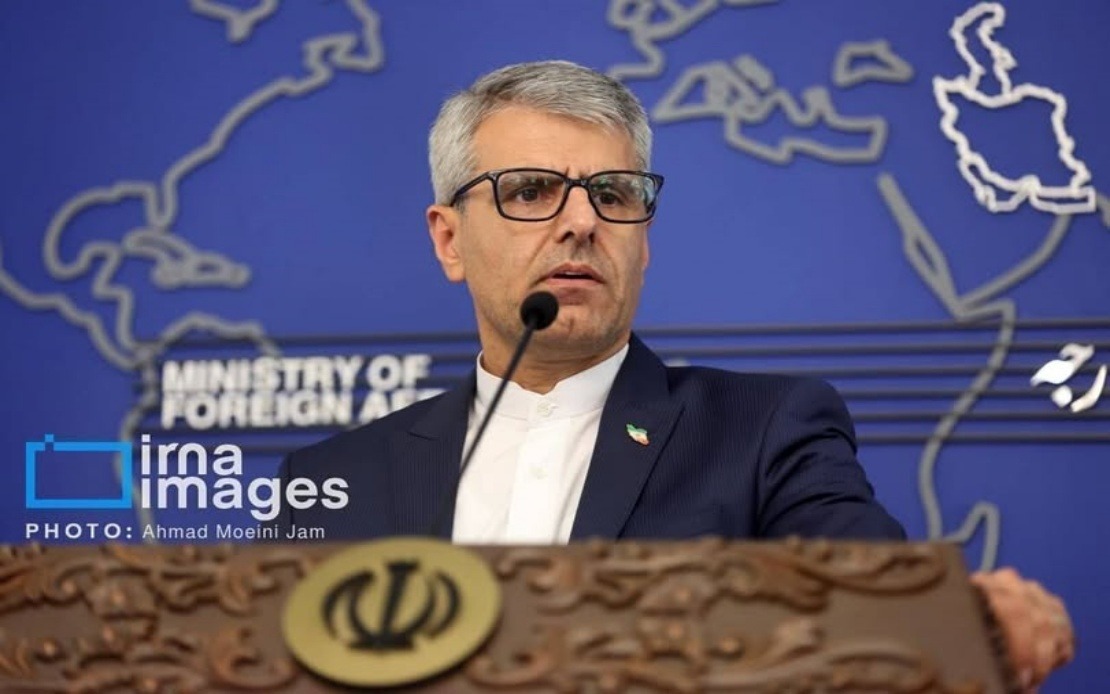
The Iranian government has escalated its demands regarding the Israeli presence in Lebanon, calling on Washington to enforce a binding timeline for what it characterises as an unconditional military withdrawal from all occupied Lebanese territory. Speaking in Istanbul on Sunday, Iranian Foreign Ministry spokesman Esmaeil Baqaei framed Lebanon's sovereignty and territorial integrity as foundational requirements for any lasting regional agreement, signalling that Tehran views this dispute as central rather than peripheral to broader diplomatic efforts between Iran and the United States.
The backdrop to these statements involves a series of understandings reached between Tehran and Washington following weeks of regional military tensions. Most notably, a memorandum signed on June 18 included provisions addressing the Lebanon situation, though implementation remains contested. Baqaei's remarks suggest Tehran believes the American side has not yet lived up to commitments within that framework, particularly regarding enforcement mechanisms that would compel Israeli compliance with withdrawal provisions.
Baqaei articulated Iran's negotiating position with precision, stating that his government considers safeguarding Lebanese dignity and security as non-negotiable preconditions for any agreement's durability. This language reflects how Tehran has consistently linked the Lebanon question to broader regional stability discussions with Washington. By framing the issue in terms of Lebanese sovereignty rather than Iranian strategic interests alone, Iranian officials attempt to broaden their diplomatic coalition and suggest that their demands represent a legitimate position rather than sectarian or geopolitical maneuvering.
Iranian Parliament Speaker Mohammad Bagher Qalibaf, who serves as the chief negotiator in talks with the United States, reinforced this position through a phone conversation with Lebanese Parliament Speaker Nabih Berri. Qalibaf confirmed that ending the Lebanon conflict ranked among the primary topics discussed during recent negotiations in Switzerland, underscoring how thoroughly integrated this issue has become within the larger diplomatic framework between the two nations.
Perhaps most significantly, Qalibaf revealed that the ceasefire agreement includes a monitoring mechanism—termed a conflict-control unit—comprising representatives from Iran, the United States, and Lebanon. This institutional innovation suggests that both sides recognised the necessity for ongoing verification and dispute resolution mechanisms, though the mere existence of such bodies does not guarantee effective implementation. Qalibaf's reference to Iranian objections over alleged violations of provisions indicates that trust remains fragile and that Tehran views compliance as insufficient.
The framing of demands within the broader 14-point understanding reached after months of escalation demonstrates how deeply the Lebanon question penetrates multiple layers of Iranian-American negotiations. What might appear as a single bilateral dispute actually connects to discussions about regional military de-escalation, prisoner exchanges, sanctions relief, and other strategic issues. This interconnectedness creates both opportunities and complications: resolving the Lebanon dimension could facilitate broader agreements, but conversely, deadlock on Lebanon could imperil the entire framework.
For Malaysian and Southeast Asian observers, these developments carry several implications. The region has historically sought to minimise external powers' involvement in its affairs, yet the Iran-US disputes over Lebanon demonstrate how Middle Eastern conflicts increasingly intersect with great power competition. Furthermore, any Israeli-Hezbollah escalation directly affects shipping lanes and economic activity across the wider Asia-Pacific, making the resolution of this dispute relevant to prosperity in Malaysia and neighbouring states.
The emphasis on establishing a timetable rather than merely achieving an understanding in principle reflects sophisticated diplomatic positioning. By demanding specificity regarding withdrawal schedules, Iranian negotiators create measurable benchmarks against which American performance can be evaluated. This approach allows Tehran to demonstrate to domestic audiences that it is securing concrete results rather than accepting vague commitments. Simultaneously, it places pressure on the United States to extract specific Israeli compliance commitments, though Washington's leverage over Tel Aviv remains limited.
Iranian officials' repeated invocation of unconditional withdrawal language serves rhetorical and substantive purposes. Rhetorically, it emphasises that Iran will not accept face-saving compromises or phased arrangements that might allow indefinite Israeli presence in Lebanese border regions. Substantively, it attempts to prevent negotiations from devolving into protracted discussions about conditions, sequencing, and exceptions that could delay or prevent implementation. This maximalist opening position provides negotiating room while establishing clear red lines.
The appointment of a high-level conflict-control unit suggests that both Tehran and Washington recognise Lebanese actors' inability to enforce compliance unilaterally. Lebanon's institutions, weakened by years of economic crisis, political dysfunction, and Israeli military pressure, lack the capacity to compel Israeli withdrawal independently. Therefore, external guarantors—whether Iran, the United States, or both acting together—become necessary to any credible arrangement. This reality complicates the rhetoric surrounding Lebanese sovereignty, as meaningful autonomy requires external enforcement.
Tehran's simultaneous emphasis on connecting Lebanon withdrawal to broader agreements regarding Iranian security reflects how comprehensively regional disputes have become enmeshed. By linking Israeli withdrawal demands to separate discussions about Iranian concerns, Tehran attempts to create leverage in multiple negotiating channels simultaneously. If progress stalls on one front, the entire package risks collapse, theoretically incentivising all parties to move forward.
Looking ahead, the success of these negotiations will depend substantially on whether Washington can credibly commit to influencing Israeli decision-making. The Israeli government has historically resisted external pressure regarding military deployment and strategic depth considerations. Iran's demands for American enforcement of Israeli withdrawal effectively require the United States to prioritise its negotiations with Tehran over its alliance relationships in the Middle East—a calibration that Washington has shown reluctance to make definitively.
The coming weeks will likely reveal whether these Iranian demands represent opening negotiating positions subject to modification, or fixed demands around which other elements of the agreement must crystallise. The establishment of the monitoring mechanism suggests some progress toward implementation procedures, yet the need for Qalibaf to voice complaints about violations indicates that meaningful compliance has not yet materialised. The trajectory of these discussions will significantly shape Middle Eastern stability and consequently influence regional shipping security and economic conditions affecting the broader Asia-Pacific.

