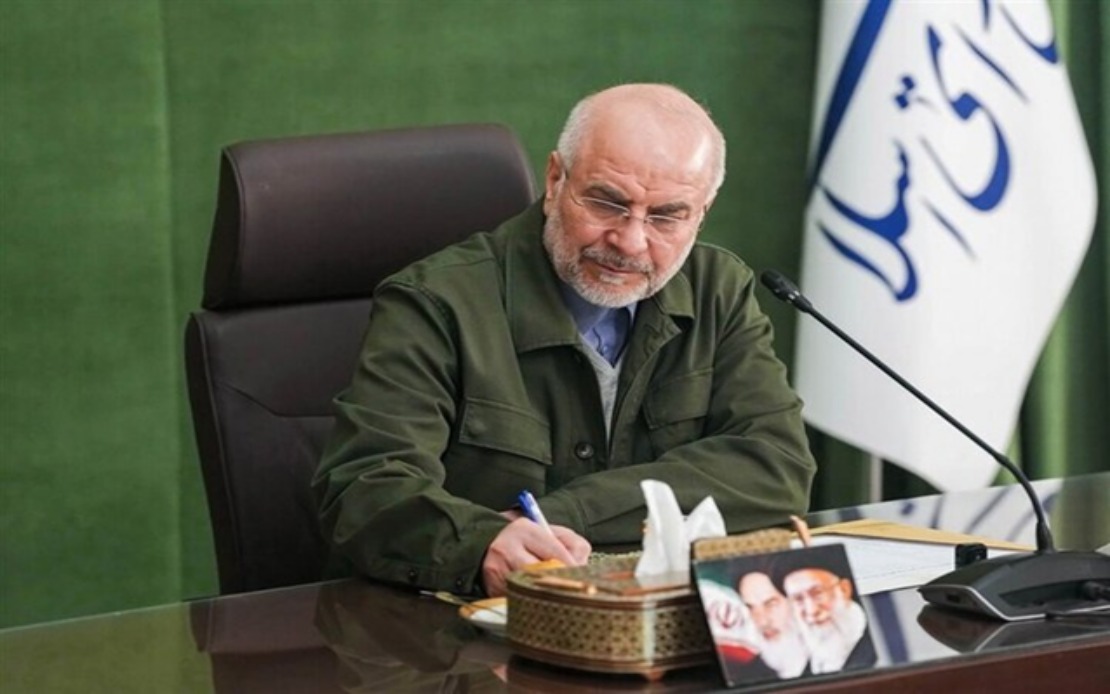
Iranian Parliament Speaker Mohammad Bagher Ghalibaf has disputed assertions from Washington that Iran's recently released assets will be directed towards purchasing American farm products, underscoring deepening disagreements between the two nations regarding how the thawed funds should be deployed. His statement on social media Thursday represents the most visible pushback yet from Tehran's leadership against what officials characterise as unfounded American assumptions about Iranian spending priorities.
Ghalibaf, who serves as a principal Iranian negotiator in ongoing discussions with the United States, articulated Iran's position with a pointed rhetorical flourish. He stated that America's claim about the unfrozen assets purchasing their agricultural products was false, and suggested that the only harvest Iran was reaping came from what Washington had sown over decades: a legacy of mutual suspicion and broken trust. The comment captures a broader Iranian narrative about historical grievances underpinning current negotiations.
The Iranian rejection follows conflicting statements from senior US officials earlier in the week. Vice President JD Vance suggested on Monday that the unfrozen Iranian assets could potentially be utilised to acquire American soybeans, corn, and wheat. President Donald Trump went further on Tuesday, asserting that the funds would be deposited into an escrow account controlled by the United States and used exclusively for purchasing American food and medical supplies, explicitly naming corn, wheat, and soybeans among permitted categories.
This divergence of interpretation reflects fundamental disagreements about the nature and conditions attached to the asset release. Tehran maintains that once funds are unfrozen, their deployment falls entirely within Iranian sovereignty and should be determined solely by national economic interests. The Iranian Foreign Ministry spokesperson, Esmaeil Baghaei, clarified on Tuesday that Iran would utilise the unfrozen assets in accordance with its own priorities without any external restrictions, emphasising that purchasing decisions would be governed by conventional commercial considerations of price and quality.
Iran's Central Bank Governor Abdolnaser Hemmati offered a more nuanced position, stating that whilst Iran holds no obligation to purchase American agricultural goods, the country would remain open to such transactions if American products proved competitively priced compared to alternatives in global markets. This formulation suggests Iran's willingness to engage in commerce with the United States based on economic merit rather than political requirement, a stance distinctly different from the preferential purchasing framework Washington appears to envision.
The escalating rhetoric around asset utilisation exposes cracks in the diplomatic foundation laid just over a week ago when both nations signed a memorandum of understanding on June 18. That agreement ostensibly created a 60-day negotiating window to pursue a comprehensive final accord addressing Iran's nuclear programme and the removal of American sanctions. The recent disputes suggest that whilst high-level frameworks have been established, substantial disagreement persists regarding implementation details and the practical conditions governing resumed economic relations.
Negotiations have proceeded on the surface with the latest round occurring in Switzerland over the weekend, yet the public exchanges between senior officials indicate that both delegations harbour significantly different expectations about what the unfrozen assets represent and how they should function within post-agreement economics. For Malaysia and other Southeast Asian nations monitoring the Iran-US rapprochement, these fissures carry implications for regional trade and investment patterns that may emerge following a potential comprehensive settlement.
The contention over agricultural purchases may appear narrowly commercial, but it encapsulates broader questions about sanctions removal, economic normalisation, and the degree to which Iran will be bound by conditions the United States seeks to impose through financial mechanisms. Washington's escrow proposal essentially attempts to retain control over Iranian funds even after unfreezing them, while Tehran insists that asset release must mean genuine restoration of economic autonomy without external oversight or prescribed purchasing requirements.
These disagreements also reflect deeper structural challenges in Iran-US relations beyond the nuclear file. The repeated invocation by Iranian officials of decades of mistrust and historical grievances indicates that even if a nuclear accord emerges, rebuilding genuine economic cooperation will require overcoming substantial accumulated suspicion on both sides. The manner in which current disputes are being managed publicly through social media and press statements rather than through quiet diplomatic channels suggests neither party is moderating expectations for domestic audiences.
For regional observers, the persistence of these tensions during what should be a period of genuine rapprochement raises questions about the durability and depth of any eventual agreement. If fundamental disagreements exist regarding something as concrete as how released Iranian assets can be spent, scepticism about more complex arrangements covering sanctions removal, nuclear inspections, and long-term relations appears justified. The 60-day negotiating window established by the June 18 memorandum will prove decisive in determining whether these current disputes represent negotiating posturing or substantive incompatibilities.

