Tensions between Iran and its Gulf neighbours are intensifying over the fates of Iranian military personnel held in both Qatar and Kuwait, with Tehran rejecting official explanations and demanding direct access to investigate. Mohammad Baqerzadeh, who leads the Iranian Armed Forces' search committee for missing persons, has called for an immediate inquiry, claiming that Qatari authorities have repeatedly obstructed efforts by an Iranian fact-finding team to enter the country over several months. The dispute highlights the fraught security environment across the Gulf region, where military incidents and territorial violations frequently escalate into protracted diplomatic standoffs with humanitarian dimensions.
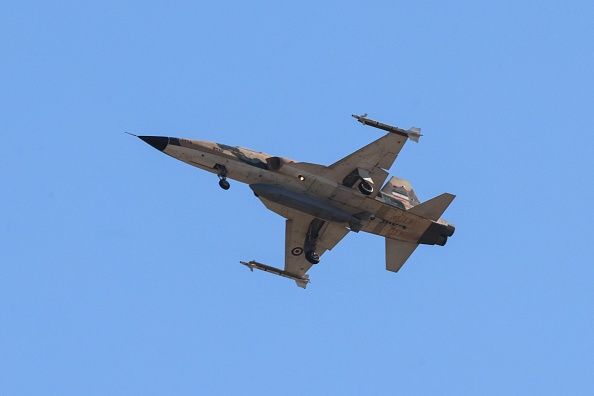
The immediate trigger for the latest confrontation involves two pilots whose aircraft strayed into Qatari airspace in March. Qatar's official account, released on Saturday, states that search and rescue teams recovered the remains of one pilot after the Iranian aircraft failed to respond to contact attempts. Doha insists it has acted transparently, claiming it offered to coordinate the handover of remains and invited Iranian officials to review the details of the search operation. However, Tehran categorically rejects these claims, with Baqerzadeh asserting that Qatar has fabricated its narrative and suggesting the pilots may have been taken into custody rather than killed.
The credibility gap between the two accounts reflects deeper mistrust characterizing relations between Iran and the wealthy Gulf Arab states aligned with Western interests. Qatar's assertion that it formally notified Iran and extended invitations for transparency rings hollow in Tehran's ears, particularly given the history of intelligence operations and proxy conflicts that have defined regional dynamics. From Iran's perspective, the initial delay in communication, combined with the subsequent refusal to grant access to an investigative team, suggests something more sinister than a straightforward aviation incident. This interpretation has hardened Iran's stance and prompted it to seek outside intervention.
Baqerzadeh's appeal to the International Committee of the Red Cross reflects Tehran's recognition that unilateral diplomatic pressure on Qatar has proven ineffective. By invoking the Geneva-based humanitarian organization, Iran hopes to leverage international norms governing the treatment of military personnel and the handling of remains. The ICRC's mandate includes visiting detained persons and investigating alleged violations of international humanitarian law, making it a logical choice for an Iranian government seeking to pierce the wall of denials from Doha. This move also positions Iran as the reasonable actor seeking clarity, while implicitly characterizing Qatar's non-cooperation as obstruction of legitimate humanitarian inquiry.
Parallel to the Qatar dispute, Iran has escalated accusations against Kuwait regarding four Iranian nationals it claims were arbitrarily detained. According to Tehran's version, the four individuals were members of the Revolutionary Guards conducting a routine maritime patrol when navigation equipment malfunctioned, inadvertently bringing their vessel into Kuwaiti waters. Kuwait, however, has portrayed them as suspected operatives planning hostile activities against the state, a characterization that suggests intelligence assessments of Iranian intentions rather than simple trespassing. The divergence between these narratives reveals how maritime incidents in the confined waters of the Persian Gulf readily transform into security crises freighted with political significance.
The broader context for these disputes involves Iran's evolving relationship with Gulf Arab states, particularly following the 2015 nuclear deal and its subsequent unravelling. While the formal Iran nuclear agreement has collapsed, channels of communication and limited cooperation with some Gulf states have persisted, yet fundamental trust remains absent. Kuwait, despite hosting a large Iranian diaspora and maintaining commercial ties, remains deeply concerned about Iranian influence and the activities of armed groups with Iranian backing. Qatar, which has pursued a more independent foreign policy despite its hosting of U.S. military installations, has nonetheless been cautious about framing incidents as aggressive acts by Iran.
For Malaysia and other Southeast Asian nations observing Gulf developments, these episodes underscore the volatile nature of the region and the potential for isolated military incidents to metastasize into broader confrontations. The pattern of competing narratives, denials, counter-accusations, and appeals to international bodies mirrors disputes that have occasionally flared in Southeast Asian waters, suggesting that establishing clear protocols for incident investigation and transparency holds universal relevance. The absence of established mechanisms for neutral fact-finding in the Persian Gulf stands in contrast to some maritime arrangements in Southeast Asia, where ASEAN-led frameworks have provided avenues for managing tensions.
Iran's insistence on sending its own investigative team to Qatar reflects both practical concerns about accountability and deeper anxieties about sovereignty. From Tehran's perspective, accepting Qatar's account without independent verification amounts to surrendering authority over investigation of its own military personnel. This reflects broader patterns in which weaker states feel compelled to demand direct involvement in inquiries affecting their nationals, fearing that reliance on foreign governments' transparency will yield incomplete or self-serving findings. The principle that states maintain rights to investigate incidents involving their citizens, particularly military personnel, resonates across international relations, even as implementation remains contested.
The humanitarian dimensions of the dispute warrant particular attention, as families of the detained and allegedly deceased personnel face prolonged uncertainty. In the case of the pilot whose remains Qatar claims to have recovered, Iran's relatives have received no official notification of death, no explanation of how remains were identified, and no details regarding repatriation procedures. This absence of closure generates ongoing anguish and sustains political pressure on Iranian officials to pursue answers. Similarly, the four individuals detained in Kuwait remain in legal limbo, with differing accounts of their status raising concerns about due process and access to legal representation.
The likelihood of near-term resolution appears limited. Qatar has shown little inclination to grant the Iranian team access, suggesting that Doha either lacks confidence in its account's credibility when subject to independent scrutiny, or fears setting a precedent that could embolden Iranian demands in future incidents. Kuwait similarly shows no signs of altering its position regarding the detained Iranians. Unless external pressure, whether from the Red Cross, the United Nations, or influential third parties, compels movement, these cases may join a growing roster of unresolved Gulf disputes that simmer beneath diplomatic surfaces, occasionally reigniting when new incidents provide catalysts.
The escalation also reflects Iran's evolving strategy of internationalizing grievances when bilateral channels prove unproductive. By framing the issue as a humanitarian matter falling within the ICRC's purview, and by articulating demands that align with international law and norms, Iran attempts to shift the terrain from bilateral negotiation to multilateral pressure. Whether this approach succeeds depends partly on whether the ICRC receives adequate cooperation from both parties and partly on whether other states view the cases as sufficiently important to raise them diplomatically. For now, the dispute remains frozen, with Iran demanding answers that Qatar and Kuwait show no willingness to provide on Iranian terms.

