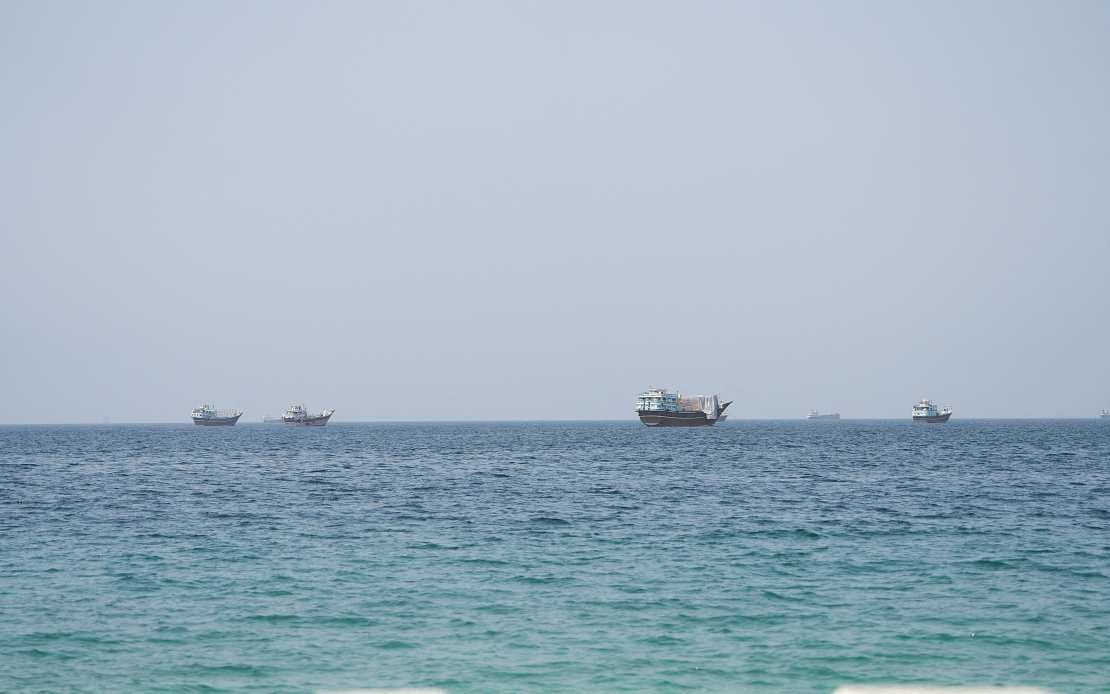
Tehran has characterised its ongoing negotiations with Muscat regarding maritime passage through the Strait of Hormuz as progressing in a constructive manner, signalling diplomatic movement on one of the world's most strategically critical waterways. Foreign Ministry spokesman Esmaeil Baqaei told reporters that discussions have reached the stage where consensus exists on shipping traffic mapping, with remaining work focused on refining technical language for a joint statement that would formalise the bilateral understanding.
The talks between Iran and Oman centre on establishing a framework for safe maritime transit through one of the globe's most economically vital chokepoints. Baqaei emphasised that the two nations aim to create formal mechanisms governing secure passage, environmental protection, and responses to maritime security threats. The discussions also address the practical matter of service fees and charges levied on vessels transiting the corridor, reflecting the commercial dimensions of managing international shipping lanes that routinely handle roughly one-third of global seaborne trade.
Iran's leadership has framed the Omani engagement as a purely bilateral arrangement divorced from broader geopolitical tensions, stressing that the objective is establishing lasting security conditions for commercial navigation. This framing carries significance for Malaysia and other Southeast Asian trading nations heavily dependent on Hormuz transit, as stability in these waters directly affects regional shipping costs and supply chain reliability. Oman's role as a neutral intermediary between Tehran and Western powers underscores its historical importance as a diplomatic bridge in the Persian Gulf region.
However, the bilateral progress masks deeper complications surrounding the Strait's future management. Iran has explicitly conditioned any comprehensive reopening of the waterway on the United States ending its naval blockade of Iranian ports, a precondition that reflects the standoff between Washington and Tehran. The Iranian position essentially links resolution of shipping transit issues to broader sanctions and military pressure concerns, complicating international efforts to restore normal commercial operations through the Strait.
The context for these negotiations extends back to June, when Iran and the United States reached a memorandum of understanding brokered through Pakistani and Qatari intermediaries. That agreement succeeded in halting active military hostilities and initiated broader talks aimed at a more durable settlement of disputes affecting regional stability. The memorandum explicitly envisaged a phased process restoring commercial navigation, reflecting recognition from both sides that the current impasse carries significant economic consequences.
Progress under that agreement, however, has stalled substantially. Both Tehran and Washington have accused each other of violating the memorandum's terms, leading to mutual recriminations that have frustrated efforts to implement the envisaged gradual reopening. These allegations suggest fundamental trust deficits remain between the parties, with each side interpreting the other's actions through a lens of suspicion. For regional economies and international shipping companies, this breakdown in implementation creates uncertainty about when normal passage conditions might resume.
The Omani bilateral talks may represent an attempt to build confidence and establish practical mechanisms that could eventually support broader negotiations. By working through technical maritime questions with a trusted regional partner, Iran may be demonstrating willingness to engage constructively on specific operational issues while continuing to press broader political demands. Similarly, establishing bilateral protocols with Oman could create precedents and institutions useful if larger-scale agreements eventually materialise.
The implications for Malaysia and Southeast Asian shipping are considerable. Maritime transport accounts for a substantial portion of regional trade, and any instability or uncertainty in the Hormuz passage affects freight rates, insurance costs, and supply chain planning across the region. Extended disruptions to normal transit conditions increase operational expenses for Malaysian exporters and importers while potentially redirecting some shipping through longer alternative routes around Africa, adding weeks to journey times and eroding competitiveness in time-sensitive industries.
Baqaei indicated that Iran's participation in the upcoming United Nations General Assembly in September remains subject to internal deliberations, with final decisions on delegation composition and level to be announced shortly. This procedural note suggests Iran retains flexibility regarding diplomatic engagement at multilateral forums, potentially leaving room for additional negotiating channels to address maritime security and sanctions issues during the assembly session.
The divergence between bilateral Omani progress and the stalled US-Iran memorandum implementation illustrates the multilayered complexity of Persian Gulf diplomacy. While technical solutions may be negotiable between neighbours with shared interests in maritime stability, the underlying geopolitical contest between Iran and the United States over regional influence and sanctions policy remains fundamentally unresolved. The success or failure of the Omani talks may ultimately depend on whether limited bilateral achievements can gradually accumulate sufficient confidence to unlock broader negotiations addressing the core political differences.

