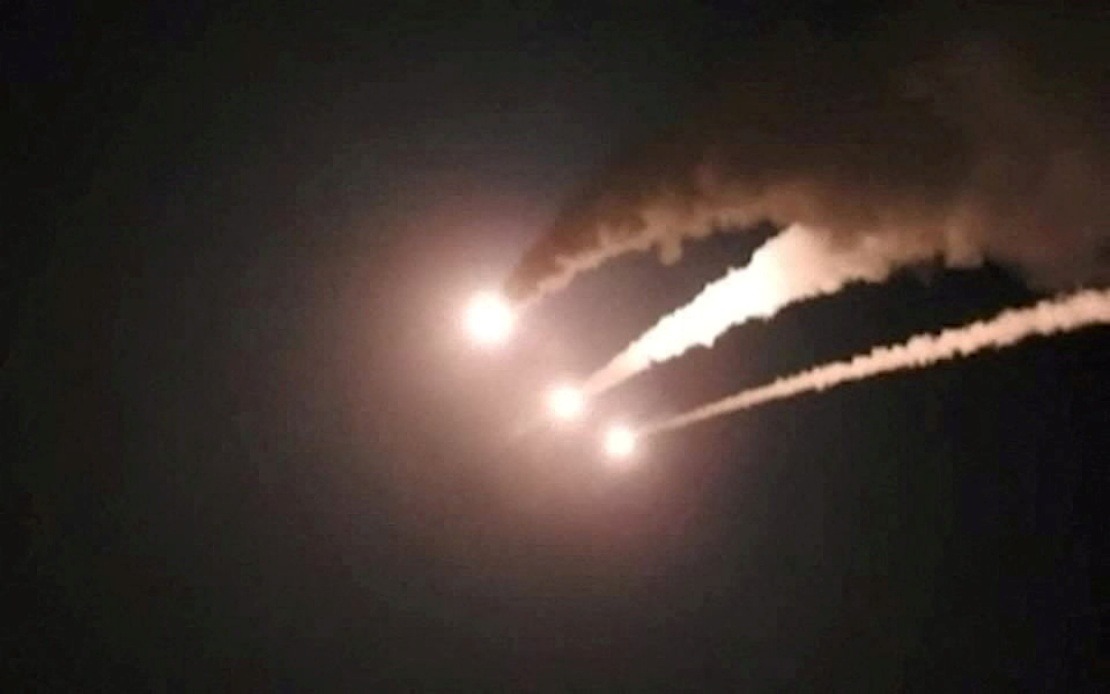
Tensions between Iran and the United States have reached a critical juncture in the Middle East, with Tehran issuing a stark warning that every American military facility in the region could become a target for Iranian drone attacks if Washington persists in breaching ceasefire terms. The Iranian Army delivered this escalatory message on Wednesday through state broadcaster IRIB, framing the threat as a proportional response to what it characterises as systematic American aggression against both military and civilian infrastructure in southern Iran, along with repeated violations of what Tehran describes as a fourteen-point ceasefire agreement.
The warning emerged following what Iranian officials claim was a drone and missile operation directed at more than eighty American military installations, including strategically critical assets such as Salman Port and the headquarters of the US Navy's Fifth Fleet stationed in Bahrain, as well as Ali Al-Salem Air Base in Kuwait. According to Tehran's semi-official Tasnim news agency, this strike was part of the Islamic Revolutionary Guard Corps' coordinated response to perceived American transgressions. The statement issued by Iran's Army underscored the gravity of the situation, explicitly declaring that "the consequences of repeatedly and blatantly violating the ceasefire with criminal America will be that all American bases in the region will be legitimate targets for the Army's drones."
Wednesday's events demonstrated the precarious state of Middle Eastern security architecture. Kuwait's Ministry of Defence confirmed that its air defence systems successfully intercepted missiles and drones, while air raid sirens were activated across Bahrain, indicating the operational reality of these threats rather than merely rhetorical posturing. The fact that both countries deployed active defences suggests each side anticipated and prepared for escalatory action, revealing a region on edge and struggling to maintain stability despite purported ceasefire agreements.
The American military quickly responded to these Iranian operations with its own strikes of comparable scale. United States Central Command announced that it had launched a new offensive targeting more than eighty Iranian facilities, framed as an immediate reaction to Iranian attacks on commercial shipping transiting the Strait of Hormuz. This tit-for-tat dynamic illustrates how rapidly regional tensions can spiral, with each side justifying its military operations as responses to the other's aggression, creating a cycle that undermines any genuine de-escalation efforts.
For Southeast Asian observers and policymakers, particularly Malaysia, these developments carry significant implications. The Strait of Hormuz remains one of the world's most crucial maritime chokepoints, through which a substantial portion of global oil and liquefied natural gas flows. Any sustained escalation involving Iranian and American military forces directly threatens the energy security and maritime commerce upon which regional economies depend. Malaysian shipping companies, petrochemical refineries, and energy importers face increased risks from potential supply disruptions or accidents resulting from military operations in contested waters.
The repeated invocation of ceasefire violations by both parties raises questions about the durability and enforceability of any diplomatic agreements in this theatre. Iran's reference to a fourteen-article ceasefire suggests previous negotiations, yet the continued accusations of breaches indicate fundamental disagreements about implementation and compliance mechanisms. Without robust international verification and enforcement frameworks, such agreements risk becoming window dressing for continuing adversarial posturing rather than genuine paths to stability.
The targeting of commercial shipping represents another alarming dimension. The American military's framing of strikes as responses to attacks on merchant vessels highlights the intersection of geopolitical conflict and civilian economic activity. For ASEAN nations that depend heavily on unimpeded maritime access and whose shipping companies operate throughout the region, the potential escalation of attacks on commercial traffic creates a humanitarian and economic crisis independent of the original bilateral dispute.
Iran's reliance on drone and missile capabilities reflects a strategic choice to develop asymmetrical military tools that can challenge American technological superiority while remaining below the threshold of conventional war. This doctrine, if persistently applied, creates an environment of sustained tension punctuated by violent incidents that prevents normal economic and diplomatic functioning across the region. The fact that both Bahrain and Kuwait experienced active military threats on the same day underscores how regional states become collision points for great power competition.
The broader context involves the fundamental question of regional order. The current situation suggests that whatever mechanisms exist for conflict management have proven insufficient to prevent escalation cycles. For Malaysia and other Southeast Asian nations pursuing policies of non-alignment and peaceful dispute resolution, the Middle Eastern trajectory presents a cautionary tale about the consequences of unmanaged military competition and the weakness of diplomatic frameworks when parties remain deeply committed to adversarial postures.
Moving forward, the sustainability of commercial shipping through the Strait of Hormuz and the stability of energy markets will depend on whether Iran and the United States can somehow reverse this escalatory momentum. The involvement of regional states like Bahrain and Kuwait, which host significant American military infrastructure, further complicates the situation by potentially drawing them into deeper conflict involvement. For Southeast Asia, maintaining strong relationships with all parties while advocating for restraint and respect for international maritime law represents the most prudent policy approach.

