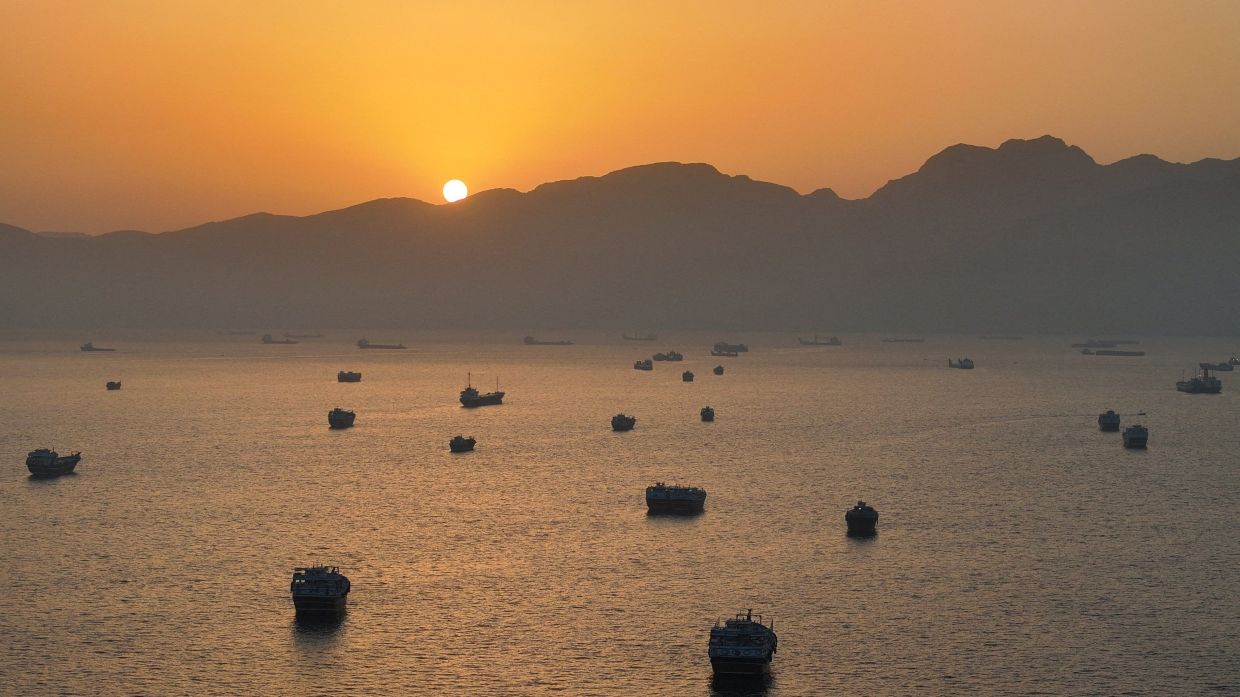
The gridlock strangling oil flows through the Strait of Hormuz is beginning to break as geopolitical tensions ease between Iran and the United States. On Wednesday, three heavily laden tankers carrying a combined 5 million barrels of crude oil commenced their passage out of the critical waterway, marking a tangible shift in regional maritime operations that has direct implications for refinery operations across Asia. The departure of these vessels signals that an interim understanding between Tehran and Washington is translating into practical commercial relief, allowing shipowners and energy traders to resume normal supply chains after weeks of disruption.
The South Korean-flagged VL Breeze, a Very Large Crude Carrier with a capacity of 2 million barrels, led the exodus carrying Qatari condensate and crude from Abu Dhabi destined for Daesan in South Korea. The vessel is operated under charter to Hyundai Oilbank, one of the major refiners in Seoul with substantial crude appetite. Concurrent with this departure, the Indian Oil Corporation's chartered VLCC Plata Carrier set sail with 2 million barrels of Saudi crude, while the Suezmax tanker Prudent Warrior began its journey toward Sohar in Oman with 1 million barrels of Iraqi Basrah crude. These coordinated movements represent the largest outflow of trapped inventory since the escalation of regional tensions earlier in the conflict.
The scale of the backlog underscores the severity of the disruption that had paralysed the world's most critical oil transit route. According to assessments by shipping intelligence firms Kpler and Vortexa, approximately 90 million barrels of crude oil had accumulated within the Persian Gulf, unable to reach international markets. For context, this quantity represents more than a full day of global oil consumption, illustrating the magnitude of economic disruption that even a temporary constraint on Hormuz flows represents. The bottleneck had forced refineries in Asia to contemplate production adjustments and activated emergency hedging strategies across energy commodity markets.
South Korea's maritime ministry confirmed that four vessels operated by South Korean shipping companies had successfully transited the strait and were making way toward their respective destinations, with one heading home to South Korea and others proceeding to alternative ports. However, the broader picture remains complicated: eighteen of the twenty-six vessels that became stranded since the onset of Middle East hostilities remain trapped within the Gulf, suggesting that normalisation will be a gradual process rather than an abrupt clearing. This extended timeline means refineries and trading houses must maintain contingency planning for several weeks as the backlog is methodically worked through.
The precise routing of these departing vessels raises questions about operational logistics in the region. Maritime authorities had not immediately clarified whether the tankers were utilising the temporary shipping corridors that Oman and the International Maritime Organisation had established to facilitate safer passage through contested waters. Oman's decision to designate two alternative routes—one positioned north and one south of the established shipping lane—alongside its commitment to maintain unrestricted passage without levying tolls, represented a significant diplomatic contribution to regional stability. The creation of these parallel corridors reflects international efforts to depoliticise maritime commerce and ensure that commercial activity can proceed even amid geopolitical friction.
Liquefied natural gas markets are experiencing their own thaw alongside crude oil movements. Two empty LNG tankers—the Shandong Redwood and Milaha Qatar—have been spotted west of the Strait of Hormuz and are positioning themselves to load cargoes from Qatar's liquefaction terminals. This brings the total number of empty LNG vessels in transit through the strait specifically to collect Qatari gas to nine, the highest count recorded since the conflict erupted. The surge in LNG carrier activity indicates that international demand for Qatari gas remains robust, and exporters are confident enough in current conditions to dispatch their fleets into the region.
Qatar's energy infrastructure is gearing toward full operational capacity sooner than many analysts had anticipated. According to reporting from the Financial Times, Qatar's Prime Minister Sheikh Mohammed bin Abdulrahman al-Thani disclosed that the nation would restore its liquefied natural gas production to normal levels within several weeks. This timeline represents a considerable acceleration from earlier forecasts, suggesting that regional conditions have stabilised sufficiently for major energy producers to commit capital and human resources to bringing idled capacity back online. For the global LNG market, Qatar's return to normal production carries outsized significance given that the country supplies roughly one-tenth of worldwide LNG exports.
The implications for Asian energy markets are substantial. Refineries across South Korea, India, and broader Southeast Asia have become increasingly dependent on Gulf crude and Qatari gas during periods when alternative supply routes are constrained. The commencement of vessel movements through Hormuz provides these facilities with confidence to plan production schedules and execute purchase commitments with greater certainty. For downstream sectors reliant on stable fuel and feedstock supplies—petrochemicals, power generation, and transportation—this resumption of flows removes a layer of unpredictability that had begun to inflate operating costs and complicate forward planning.
Global crude oil pricing reflects the alleviation of supply anxiety. As stranded barrels begin their journey to markets, the premium that traders had been imposing for supply risk should gradually compress, benefiting consuming nations and providing fiscal relief to governments and businesses managing energy expenditures. However, the persistence of eighteen vessels still trapped in the Gulf indicates that downward price pressure will likely remain gradual rather than sharp, affording producers in the region some protection against severe price erosion even as supply constraints ease.
The interim Iran-US arrangement that enabled these movements remains fragile and subject to rapid reversal should diplomatic efforts falter. Shipping executives and energy traders are monitoring the situation closely, recognising that the window of improved access to Hormuz could narrow unexpectedly. This underlying uncertainty means that market participants are likely to maintain elevated inventory levels at key refining hubs and continue diversifying sourcing strategies to mitigate exposure to potential future disruptions. The fact that even preliminary improvements in regional relations produce such visible commercial benefits underscores how profoundly geopolitical risk premia affect energy markets and the broader Asian economy.